Classic Movie Travels: Colleen Moore

Classic Movie Travels: Colleen Moore

Colleen Moore
Colleen Moore

Kathleen Morrison, later known as Colleen Moore, was born in Port Huron, Michigan, to Charles and Agnes Kelly Morrison on August 19, 1899. Moore’s family moved frequently, residing in cities like Hillsdale, Michigan; Atlanta, Georgia; Warren, Pennsylvania; and Tampa, Florida. Additionally, her family would typically spend summers in Chicago, where Moore’s Aunt Lib and Uncle Walter Howey lived. Howey, in particular, was well connected, as he was the managing editor of the Chicago Examiner, owned by William Randolph Hearst.

At age 15, Moore already had dreams of starring in films. Moore kept a scrapbook in which she would paste various pictures of her favorite actors after clipping them from motion picture magazines. However, Moore kept a page blank, reserved for when she would one day become a star. Reportedly, she and her brother began their own stock company, performing on a stage created from a piano packing crate. Incidentally, Chicago’s Essanay Studios was located fairly close to the Howey residence. Moore appeared in the background of several Essanay films, typically as a face in a crowd. Since film producer D.W. Griffith was in debt to Howey for helping him get both The Birth of a Nation (1915) and Intolerance (1916) through the Chicago censorship board, he was able to secure a screen test for Moore. Her contract with Griffith’s Triangle-Fine Arts was conditional, as Moore possessed one brown eye and one blue eye. Her eyes photographed favorably, so Moore left for Hollywood with her grandmother and her mother as chaperones and began her film career.

Moore’s first credited role was in The Bad Boy (1917), for Triangle Arts. This appearance was followed by An Old Fashioned Young Man (1917) and Hands Up (1917), gradually allowing Moore to develop her career and become noticed and enjoyed by audiences. She later signed a contract with the Selig Polyscope Company, appearing in films like A Hoosier Romance (1918) and Little Orphant Annie (1918), leading her to become popular among moviegoers. Moore also performed with Fox Film Corporation, Ince Productions—Famous Players-Lasky, and Universal Film Manufacturing Company, before completing the next stage of her career with the Christie Film Company.

Colleen Moore 2

Moore was married to producer John McCormick from 1923 until their divorce in 1930.

Moore starred in Flaming Youth (1923), solidifying her image as a flapper; however, Clara Bow soon became a rival to Moore with a similar image. Moore continued her film career with appearances in comedies and dramas. When Moore worked in The Desert Flower (1925), she injured her neck and spent six weeks in a bod cast. After her recovery, she finished filming and was able to leave for a publicity tour throughout Europe.

Two of Moore’s key passions were dolls and films; each of these interests would become prominent throughout her life. Though approximately half of her films are now lost, Moore is, remembered as a delightful silent film actress by film aficionados. Moore’s films would often feature her as a good girl putting on a bad girl façade, and always carrying out her roles with panache. Her aunts, however, took care to indulge her in another great passion, which is the focus of this article: dollhouses. They frequently brought her miniature furniture from their many trips, with which she furnished the first of a sequence of dollhouses.

In 1928, Moore enlisted the help several professionals to help build a massive dollhouse for her growing collection of miniature furnishings. The professionals included Moore’s father as chief engineer, set designer Horace Jackson, and interior designer Harold Grieve. Cameraman Henry Freulich worked on the lighting, which was installed by an electrician. This dollhouse has an area of nine square feet, with the tallest tower standing several feet high and the entire structure weighing one ton. This eventually became known as Colleen Moore’s Fairy Castle.

By 1929, the advent of sound had taken the film industry by storm, leading Moore to take a hiatus from acting. She married stockbroker Albert P. Scott in 1932 and they resided in Bel Air together until their 1934 divorce. Moore’s final film appearance occurred in that year in The Scarlet Letter (1934). 

In 1937, Moore married stockbroker Homer P. Hargrave, remaining with him until his passing in 1964. Hargrave would ultimately provide much of the funding for her dollhouse. Moore adopted Hargrave’s children, Homer and Judy, to whom she remained devoted throughout her life. In the 1960s, Moore formed a television production company with King Vidor and published two books: How Women Can Make Money in the Stock Market and Silent Star: Colleen Moore Talks About Her Hollywood. She remained a popular interview subject and frequent quest at various film festivals, discussion the silent film era.

Older Colleen Moore

Moore married for the last time to builder Paul Magenot. They remained together until her passing on January 25, 1988, in Paso Robles, California, from cancer. She was 88 years old.

Moore’s childhood home stands at 817 Ontario St., Port Huron, Michigan.

Huron Colleen Moore home
Moore’s childhood home, 817 Ontario St., Port Huron, Michigan

Colleen Moore’s Fairy Castle survives to this day. The dollhouse made its public debut at Macy’s in New York and traveled throughout the United States, raising approximately one half-million dollars for children’s charities. The dollhouse showcases ornate miniature furniture and art as well as the work of beyond 700 different artisans, and has been a featured exhibit at Chicago’s Museum of Science and Industry since the 1950s. The museum displays the dollhouse in its own exhibit hall, which features additional miniature items from Moore’s collection, items used to store and transport pieces for the dollhouse, and information about her film career. The Museum of Science and Industry is located at 5700 S. DuSable Lake Shore Dr., Chicago, Illinois.

Castle Colleen Moore
Colleen Moore’s Fairy Castle

In 1923, Moore and McCormick resided at 1231 S. Gramercy Place., Los Angeles, California. The home remains virtually unchanged on the exterior.

Gramercy Colleen Moore home
1231 S. Gramercy Place., Los Angeles, California

In 1925, Moore and her husband lived at 530 S. Rossmore Ave., Los Angeles, California. This home also exists today.

Rossmore home Colleen Moore
530 S. Rossmore Ave., Los Angeles, California

By 1929, Moore and her husband resided on a three-acre estate at 245 Saint Pierre Rd., Los Angeles, California. The home remains today.

Pierre home Colleen Moore
245 Saint Pierre Rd., Los Angeles, California

In 1964, Moore co-founded the Chicago International Film Festival, which is held annually to this day.

CIFF Chicago International Film Festival

Moore has a star on the Hollywood Walk of Fame, honoring her work in motion pictures. The star is located at 1549 Vine St., Los Angeles, California.

Colleen Moore Hollywood Walk of Fame Star
Moore’s star on the Hollywood Walk of Fame

Moore’s prints can be found in the forecourt of the TCL Chinese Theatre, located at 6925 Hollywood Blvd., Hollywood, California.

Colleen Moore handprints Graumans
Moore’s hand and foot prints at the TCL Chinese Theatre in Hollywood

–Annette Bochenek for Classic Movie Hub

Annette Bochenek pens our monthly Classic Movie Travels column. You can read all of Annette’s Classic Movie Travel articles here.

Annette Bochenek, Ph.D., is a film historian, professor, and avid scholar of Hollywood’s Golden Age. She manages the “Hometowns to Hollywood” blog, in which she profiles her trips to the hometowns of classic Hollywood stars. She has also been featured on the popular classic film-oriented television network, Turner Classic Movies. A regular columnist for Classic Movie Hub, her articles have appeared in TCM Backlot, Silent Film Quarterly, Nostalgia Digest, The Dark Pages Film Noir Newsletter, and Chicago Art Deco Society Magazine.

Posted in Classic Movie Travels, Posts by Annette Bochenek | 2 Comments

Monsters and Matinees: Move over Westerns and Make Way for Texas-sized B-Movie Horrors

Monsters and Matinees: Move over Westerns…

Cowboys and horses and Texas.

That’s been a winning hand for moviegoers and the film industry since 1910 when the state’s first film studio was opened in San Antonio by Gaston Méliès, brother of visionary filmmaker Georges Méliès.

For more than a century since then, the state’s photogenic and distinct landscapes have been seen in some of the greatest Westerns ever made like The Searchers, Giant, Sons of Katie Elder, Hud and The Alamo.

Vast plains, open ranges, mountains and sprawling ranches made the perfect backdrop for herds of cattle, cowboys, wagon trains and a giant lizard meandering down a lonesome road.

No, that’s not a mistake.

Though Westerns are synonymous with Texas, the Lone Star State also was the surprising home of a unique little cottage industry of horror and sci-fi B-movies by men like Larry Buchanan, Edgar G. Ulmer and Gordon McLendonn.

So, the horses and cattle ubiquitous in Texas-made films, share the landscape with such Texas-sized horrors and sci-fi treats as that giant lizard (The Giant Gila Monster), oversized killer dog-like beasts (The Killer Shrews), and evil aliens (Zontar: The Thing from Venus).

Actor Ken Curtis produced two films in Texas: The Killer Shrews, in which he also acted (above) and The Giant Gila Monster.

And you can’t talk Texas and horror without The Texas Chain Massacre, Tobe Hooper’s 1974 film that changed the face of horror.

There’s more. The Eye Creatures (AKA Attack of the Eye Creatures), a low-budget film even by low-budget standards, found John Ashley and his teen buddies trying to get someone to believe they saw aliens. The Amazing Transparent Man was a thief who spends time traveling the lonesome highway after he’s broken out of jail to carry on the nefarious deeds of a demented general.

The films are nearly 70 years old but haven’t been forgotten. They inspired author, artist and director Bret McCormick to become a filmmaker and write the 2018 book Texas Schlock. A new classic horror streaming service and vintage film restoration company called Film Masters has chosen Giant Gila Monster and Killer Shrews to debut its home video collection.

And they are being celebrated at the inaugural It Came from Texas Film Festival, Oct. 28-29 at the historic Plaza Theatre in Garland, Texas. While future festivals will showcase various genres, the first event will pay homage to horror and sci-fi films often shown at the drive-in during the 1950s, ‘60s and ‘70s.

Celebrating B-movies

The festival schedule reads like a watch-list for B-movie horror fans: Texas Chainsaw Massacre, The Amazing Transparent Man, Beyond the Time Barrier, Don’t Look in the Basement, Don’t Look in the Basement 2, The Eye Creatures, Giant Gila Monster, Killer Shrews, Manos: The Hand of Fate, Zontar: The Thing from Venus. Also included is a short film compilation by student filmmakers in the Garland High School Reel Owl Cinema film program.

Tom Neyman and his oversized robe star as The Master in Manos: The Hands of Fate.

As a B-movie fan, I recommend watching these films any way you can, but there’s no escaping the appeal of seeing them on the big screen.

“You’ve probably seen these films in your house on your TV or computer, but how many people are sitting with you and jumping at a scare or laughing? It’s such a different experience in a theater,” said festival director Kelly Kitchens, a longtime film festival publicist and a classic movie fan who added she is looking forward to seeing these films for the first time on the big screen and with an audience.

The festival’s B-movie focus came together organically. The festival dates happen to fall on Halloween weekend, plus organizers and members of the Garland Downtown Business Association felt that Texas Chainsaw Massacre had to be included – it has Texas in its title after all.

Texas Chainsaw Massacre changed the face or horror.

Texas Chainsaw changed everything in the horror genre,” said Kitchens, who calls the festival “a perfect little petri dish” to show the evolution of horror films before and after Texas Chainsaw.

While horror films of the 1950s and ‘60s are based on fears of the time such as nuclear horrors and invading countries that manifested in giant creates and alien invasions, Texas Chainsaw Massacre gave us the masked killer as the horror, creating the slasher genre and leading to such film franchises as Friday the 13th and Nightmare on Elm Street.

Film historian, educator and author Gordon K. Smith, who will be introducing films and showing trailers from the movies at the festival, said Texas Chainsaw Massacre remains hard to watch even today.

“It has a feverish quality that horror filmmakers have tried to do since and few have achieved,” Smith said in a telephone interview.

The festival is also the first time that the movies Don’t Look in the Basement (1974) from director S.F. Brownrigg and the sequel Don’t Look in the Basement 2 (2015) by his son, writer-director Tony Brownrigg, will be shown together. Both were filmed in Tehuacana.

Don’t Look in the Basement 2 is a real representation of what a Texas filmmaker can do. It’s well made and has a lot of great actors from Texas,” Smith said.

Another highlight is Rondo and Bob, a 2020 documentary by Joe O’Connell about Robert A. Burns, art director for Texas Chainsaw Massacre, and his fandom for 1930s and ‘40s actor Rondo Hatton, whose career was built around his unique facial features that were a result of acromegaly. This will be shown before a 49th anniversary showing of Texas Chainsaw Massacre.

Kitchens and Smith previously worked together on a long-running fundraiser for the Dallas Producers Association called It Came From Dallas where only short clips of Dallas-made movies were shown. That led to the idea of a festival showing full films that were made throughout Texas.

B-movie star John Agar and Susan Bjurman have to deal with Zontar: The Thing From Venus.

Embracing the shlock

Often when these films are mentioned it is with the descriptors campy and schlock. Some have even been riffed on as part of Mystery Science Theatre 3000 (MST3K). Others are found on streaming services under the banner “Shlock Classic.” But if you use that term with Smith, he’ll laugh and say “Yes – and what’s your point?”

“I know the difference between Giant Gila Monster and Schindler’s List. I’m not strictly devoted to B-movies,” he said. “Of course, there’s lots of low budget garbage in horror and sci-fi, but the ones we’re showing are classics of their own kind. They are fun and have substance for a lot of reasons.”

Kitchens agrees.

“It’s very much the way we are embracing it. It’s having like-minded people who think of campy and quirky as a term of endearment,” she said, sharing that the first time she saw some of these films was on MST3K. “I am looking forward to experiencing these with an audience and an audience that will absolutely be fans of the genre, the time period or classic films. I think it will be transformative and many of these will be new favorites.”

To that point, the festival will show The Giant Gila Monster with a live riff from The Mocky Horror Picture Show, an interactive movie mocking comedy troupe based out of Texas.

The sci-fi B-movies The Giant Gila Monster and The Killer Shrews were released as a drive-in double feature in 1959. Both were produced by Texas businessman Gordon McLendon who owned a series of drive-ins.

Texas B-movie masters

The independent “pioneers” in Texas helped build a film industry by simply showing people it could be done, Smith said. “They made it feasible to make low-budget films.”

Giant Gila Monster (1959) and Killer Shrews (1959) were produced back-to-back by Texas businessman and radio pioneer Gordon McLendon who also owned a Dallas drive-in chain and movie theaters throughout the south. He also co-starred in the films, both directed by Ray Kellogg and also produced by actor Ken Curtis (Gunsmoke, who also starred in Shrews), were often shown as a double feature.

The Eye Creatures and Zontar: The Thing from Space were directed by Larry Buchanan. Smith shares an interesting story about those alien costumes that looked like an art project made with bubbles (to give off the appearance of eyes).

“They only had two full suits and one monster head,” said Smith, adding they would keep them hidden behind a bush. “They had to keep using them over and over.”

To illustrate how close the Texas film community was, The Eye Creatures was filmed at McLendon’s ranch outside of Dallas. And S.F. Brownrigg, director of Don’t Look in the Basement, worked with Buchanan as the film editor of The Eye Creatures and sound supervisor for Zontar.

Noted director Edgar G. Ulmar was drawn to Texas by oil barons who wanted to be movie producers. For Beyond the Time Barrier and The Amazing Transparent Man, he used the Texas landscape to his advantage with long travel shots of open flat land and roads. For Time Barrier, he also used Carswell Air Force Base in Fort Worth and Eagle Mountain Marine Corps Air Station, along with Fair Park in Dallas, in telling the story of a test pilot who is accidentally sent into the future world of 2024.

While these films haven’t improved with time as some films do – those poor Eye Creatures costumes will never be in style – they have withstood a different test of time by holding their own long enough to be discovered by new audiences who don’t mind, as actor-producer Ken Curtis once said, that the killer shrews looked like a dog covered in a “shag carpet.”

Toni Ruberto for Classic Movie Hub

You can read all of Toni’s Monsters and Matinees articles here.

Toni Ruberto, born and raised in Buffalo, N.Y., is an editor and writer at The Buffalo News. She shares her love for classic movies in her blog, Watching Forever and is a member of the Classic Movie Blog Association. Toni was the president of the former Buffalo chapter of TCM Backlot and now leads the offshoot group, Buffalo Classic Movie Buffs. She is proud to have put Buffalo and its glorious old movie palaces in the spotlight as the inaugural winner of the TCM in Your Hometown contest. You can find Toni on Twitter at @toniruberto.

Posted in Film Festivals, Horror, Posts by Toni Ruberto | Tagged , , , , , , , , , , , , , , , , , , , , , , | 3 Comments

Western Roundup: Destry (1954)

Western Roundup: Destry (1954)

Destry Rides Again is a classic Western novel by Max Brand. It was filmed by Universal Pictures multiple times, including a 1932 version starring Tom Mix and the best-known version, a 1939 release with James Stewart and Marlene Dietrich.

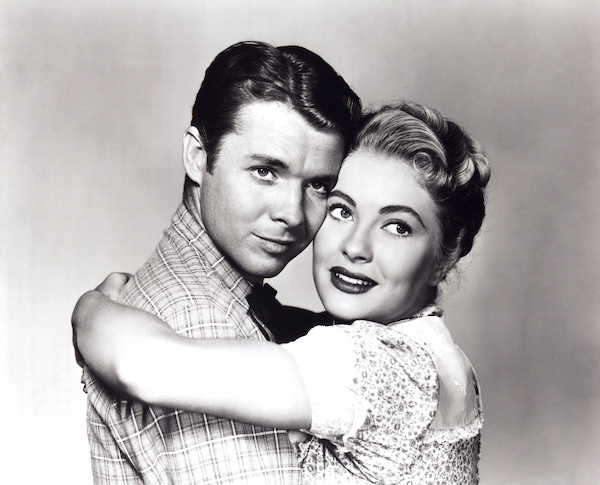
George Marshall directed the James Stewart version, and he was again at the helm when Universal remade the story once more in 1954. Audie Murphy was chosen for the lead role of Tom Destry.

DESTRY movie poster

The 1954 version, simply called Destry, has just been released on Blu-ray by Kino Lorber Studio Classics; to my knowledge this is the first time it’s been available for home viewing. Destry is part of the three-film Audie Murphy Collection II along with Sierra (1950) and Kansas Raiders (1950).

Audie Murphy Collection

I’ve periodically reviewed Murphy’s films here, as he’s both a great Western star and a personal favorite. I reviewed his Seven Ways From Sundown (1960) in 2020 and wrote about Hell Bent For Leather (1960) early last year. Since it’s been a year and a half since my last Murphy review, this new release is a perfect opportunity to visit another of his films.

This was my first time to see this version of the Destry story, and it’s interesting to note at the outset that with the exception of lead character Tom Destry, the characters have different names in each of Universal’s three versions.

While I’ve yet to see the Tom Mix edition, I’ve seen the one with Stewart, though it’s been a few years. While perhaps not a classic on a level with the Stewart film, I felt the Murphy version stands on its own feet as delightful Western entertainment. Murphy comes off extremely well in the title role, and he’s backed by a terrific cast.

In the familiar story, crooked Decker (Lyle Bettger) and his henchmen run a very wild little Western town and kill the sheriff (Trevor Bardette) who gets in their way.

Destry Thomas Mitchel and Lyle Bettger
Thomas Mitchell and Lyle Bettger

They appoint alcoholic Rags Barnaby (Thomas Mitchell) as sheriff, and Rags immediately sends for Tom Destry (Murphy), son of his late friend, who was a famed lawman.

Rags hasn’t met the adult Destry and when imposing cattleman Larson (Alan Hale Jr.) steps off the stagecoach, Rags is thrilled, only to learn he has the wrong man. Rags is then shocked when the diminutive Destry gets out of the stagecoach, assisting a pretty young lady (Lori Nelson) with her parasol and a birdcage.

Destry Audie Murphy and Lori Nelson
Audie Murphy and Lori Nelson

Nonethless, Destry ends up serving as Rags’ deputy. He doesn’t wear guns and prefers friendly discussions to battle, which initially shocks both Rags and the townspeople; over time, Destry’s positive, trusting attitude causes a number of people in town to reform. Rags stops drinking, saloon girl Brandy (Mari Blanchard) wakes up to realizing her life as Decker’s girl isn’t a good one, and combative Larson learns to deal with his problems in a more peaceable manner.

Destry Mari Blanchard
Mari Blanchard

Only the most hard-bitten character town, Decker, doesn’t change, along with his cronies.

The townspeople are later shocked to learn that Destry is actually an expert marksman — Bettger’s expression at this reveal is hilarious — but even this disclosure is strategic on Destry’s part. He’s learned about new-fangled ways to analyze which guns have shot which bullets, and he’s emptied the townspeople’s guns out for research into the murder of the previous sheriff.

Destry was the perfect role for Murphy, who was only 5′ 5″ and could seem unassuming — yet both onscreen and off, underneath the mild-mannered exterior was a very determined and even dangerous man.

Destry Audie Murphy and Mari Blanchard
Audie Murphy and Mari Blanchard

Murphy also proves himself adept at comedy, whether it’s his good-natured line deliveries or his reactions to Martha (Nelson), who clearly has a crush on the young deputy. I’ve seen many of Murphy’s films and found this a particularly winning performance.

Murphy has a host of great character actors to interact with; in addition to names mentioned above, the deep cast boasts Edgar Buchanan, Wallace Ford, Mary Wickes, and John Doucette.

Nelson is very personable as Martha, engaging in some delightful repartee with Murphy. The film’s other leading lady, Blanchard, shines as the saloon gal, performing several songs. Blanchard bears a strong resemblance to Lynn Bari in this — which isn’t a bad thing, as I’m a big Bari fan.

DESTRY poster 3

The script by D.D. Beauchamp and Edmund H. North, adapted from Felix Jackson’s story for the 1939 version, moves along well at a nicely paced 95 minutes.

Marshall, who by 1954 had directed countless Westerns, does an excellent job managing his large cast and drawing a fine performance from Murphy, who had been in films for a half dozen years at this point.

The movie was filmed in Technicolor by George Robinson. It was shot at Universal Studios and the Janss Conejo Ranch in Thousand Oaks.

Destry Blu Ray

The new Kino Lorber Blu-ray print looks terrific, with excellent sound. Extras consist of the trailer; a gallery of five additional trailers; and a commentary track by Lee Gambin and actor Gary Frank (Family).

I’ve previously seen one of the other films in this set, Sierra, and can confidently say that the Audie Murphy Collection II is a “must” for Western fans.

Thanks to Kino Lorber for providing a review copy of this Blu-ray.

– Laura Grieve for Classic Movie Hub

Laura can be found at her blog, Laura’s Miscellaneous Musings, where she’s been writing about movies since 2005, and on Twitter at @LaurasMiscMovie. A lifelong film fan, Laura loves the classics including Disney, Film Noir, Musicals, and Westerns.  She regularly covers Southern California classic film festivals.  Laura will scribe on all things western at the ‘Western RoundUp’ for CMH.

Posted in Films, Posts by Laura Grieve, Western RoundUp | 6 Comments

Silents are Golden: A Closer Look At – Orphans of the Storm (1921)

Silents are Golden: A Closer Look At – Orphans of the Storm (1921)

Lillian and Dorothy Gish in Orphans of the Storm (1921)

The early 1920s in the U.S.A. was a time of changing tastes and fashions, when society was trying to bounce back in the aftermath of World War I and focus on enjoying life to the fullest. Flapper culture was starting to make waves and young people were enjoying the freedom and excitement brought by the automobile. Moviegoing was nearly at its peak, with tens of millions of Americans flocking to the theaters every week.

In the midst of this transitional period, director D.W. Griffith was trying to deal with a transition of his own. Having moved his studio from Los Angeles to Mamaroneck, New York, he was facing increasing debts and needed to keep churning out hits to stay in business. This probably seemed doable at the time. He still employed some of the industry’s most talented actors and was still riding high on his reputation for ambitious epics like The Birth of a Nation (1915) and Intolerance (1916), although his earnest moralizing was starting to appear old-fashioned. He had received accolades for the artistic Broken Blossoms (1919) and in 1920 had triumphed with the rural-themed blockbuster Way Down East. Perhaps a new historic epic was in order, one that would take a cue from Way Down East and elevate a cliched old melodrama to something operatic.

D.W. Griffith Studio, Mamaroneck, NY
Mamaroneck studio from above (from the New York Public Library Digital Collections).

After mulling over his options and listening to the advice of his star player Lillian Gish, Griffith hit upon making an adaptation of The Two Orphans (Les deux orphelines), an 1874 French play by Adolphe d’Ennery and Eugène Cormon. It told the story of two sisters, Henriette and Louise, who travel to Paris to find a cure for Louise’s blindness. Henriette is kidnapped by a loutish marquis, leaving Louise to wander the streets alone until a family of beggars take her in to sing in the streets for coins. A huge success, The Two Orphans would be one of the most popular plays of the 19th century. To “sophisticated” audiences in 1921, it was certainly a prime example of an old-fashioned “melodrammer.”

An 1879 poster for the play, The Two Orphans

Wanting to give this relatively simple story an epic gloss, Griffith decided to set it right in the thick of the French Revolution, which also gave him an opportunity to bring to life historical figures like Robespierre and Georges Danton (who would be rather hyperbolically described as the “Abraham Lincoln of France”). The roles of Henriette and Louise would be played by Lillian and her sister Dorothy, a popular star who was mainly in light comedies at the time. Supporting actors would include Joseph Schildkraut in the role of the Chevalier de Vaudrey, who rescues Henriette (Dorothy would joke that his powdered wigs and satin costumes made him look prettier than she was). The wild-eyed Lucille La Verne played the beggar matriarch Mother Frochard. Audiences today might know her as the voice (and model) for the wicked queen in Snow White and the Seven Dwarfs (1937).

Frank Puglia, Sheldon Lewis and Dorothy Gish, Orphans of the Storm (1921)
Frank Puglia, Sheldon Lewis and Dorothy Gish

Under the guidance of art director Edward Scholl, the Mamaroneck studio went to work building giant sets representing Versaillies, the Bastille, Notre Dame, and other famous locations befitting a historical spectacle. Old photos of Paris streets were consulted by the head carpenter “Huck” Wortman, and costumes and props were carefully researched. French director Abel Gance apparently visited Mamaroneck during the American premiere of his film J’Accuse. The inspiration from seeing Griffith’s sets would result in his mighty feature Napoleon (1927).

Leslie King and Lillian Gish, Orphans of the Storm (1921)
Leslie King and Lillian Gish

To get in the proper frame of mind, the main cast studied A Tale of Two Cities by Charles Dickens and History of the French Revolution by Thomas Carlyle. Their acting would be a bit more stylized in the film, with characters having more exaggerated postures and attitudes (such as the pigtailed Creighton Hale serving as comic relief). This was a nod to the gesturing in the 19th century stage play of yore, and perhaps was also inspired by old illustrations. Huge crowds of extras were hired to play the wild mobs in the revolution scenes. The guillotine scene in particular was filmed on a Sunday so as many locals as possible could join in for $1.25 and a picnic lunch.

Dorothy and Lillian Gish, Orphans of the Storm (1921)
Dorothy and Lillian Gish

Having so many large-scale features under his belt by then, Griffith kept the filming running smoothly, even as its expenses increased (his main bank even refused to give him any more loans). As a whole, Orphans of the Storm became a tidy amalgamation of everything he did best: capturing the epic scale of the settings, reveling in historic details, adding little heart-tugging moments, and of course, choreographing several highly dramatic scenes, especially the ones tailored to the Gish sisters’ talents. The dramatic finale, where Henriette is taken to the guillotine, uses his famous cross-cutting techniques familiar from similar sequences in his 1910s epics.

Orphans of the Storm (1921) extras
Extras on set

While we might be tempted to think of Orphans of the Storm as a well-made but quaint drama today, it might surprise us to know that Griffith intended it to serve as modern political commentary. He was disturbed by the rise of bolshevism following the 1917 Russian Revolution, seeing explicit parallels with the violent crowds of the French Revolution. No fan of aristocratic tyranny, he was equally critical of mob rule, and made this clear when he wrote his film’s synopsis: “Orphans of the Storm shows more vividly than any book of history can tell that the tyranny of kings and nobles is hard to bear, but that the tyranny of the mob under blood-lusting rulers is intolerable.” He made his point with all the subtlety of a sledgehammer in several title cards, including mocking Robespierre by deeming him “the original pussy-footer!”

Orphans of the Storm (1921) poster
Orphans of the Storm (1921)

At the time, critics hailed Orphans of the Storm as Griffith’s finest work to date. But while it did reasonably well at the box-office, it wasn’t quite the blockbuster that Way Down East was. Following 1921, Griffith’s style of film would seem less and less fashionable to 1920s audiences. His Revolutionary War epic America (1924) would be a flop and his financial troubles would continue to mount. Today, Orphans is considered a lesser Griffith film than Broken Blossoms or Intolerance. But perhaps it’s best to view it with fresh eyes and an appreciation for how earnestly it tried to capture not just the look, but the feel of the drama of this historical period.

–Lea Stans for Classic Movie Hub

You can read all of Lea’s Silents are Golden articles here.

Lea Stans is a born-and-raised Minnesotan with a degree in English and an obsessive interest in the silent film era (which she largely blames on Buster Keaton). In addition to blogging about her passion at her site Silent-ology, she is a columnist for the Silent Film Quarterly and has also written for The Keaton Chronicle.

Posted in Posts by Lea Stans, Silents are Golden | Tagged , , , , , , , , , , , , , , , , , , | 3 Comments

Silver Screen Standards: The Seven Year Itch (1955)

Silver Screen Standards: The Seven Year Itch (1955)

The Seven Year Itch (1955) Tom Ewell and Marilyn Monroe
Tom Ewell and Marilyn Monroe take a tumble together in The Seven Year Itch (1955), in which Ewell plays a married man fantasizing about infidelity.

News of summer heatwaves naturally put thoughts of The Seven Year Itch (1955) and undies in the icebox into my mind, so it seemed like the perfect time to revisit this sweltering sex comedy from director Billy Wilder, which stars Tom Ewell and Marilyn Monroe as two New Yorkers going slightly mad in the unrelenting heat. Everything in the movie is overheated, from the temperatures in New York City to the imagination of Richard Sherman (Ewell), and with our real-world temperatures soaring into triple digits it’s easy to sympathize with the kind of craziness that comes over Richard as he fantasizes about cheating on his wife, even if there’s a troubling “boys will be boys” attitude toward marital infidelity that hangs over the whole story. The dated bits of the movie (like that bizarre opening gag) might complicate a modern viewer’s enjoyment, but they don’t outweigh the deliriously meta comedy of the film, which still has a very modern quality to it almost seventy years later.

The Seven Year Itch (1955) Tom Ewell and Carolyn Jones Nurse
Richard (Ewell) concocts a steamy noir fantasy about his appendectomy in which the nurse (Carolyn Jones) offers to run away with him.

Ewell had already played Richard Sherman in the original stage version of The Seven Year Itch, even winning the Tony Award for Best Actor for the role in 1953, so it’s not surprising that he seems so at home in the character. As iconic as Marilyn Monroe is, especially in the billowing white dress, this movie really belongs to Ewell, who has numerous long scenes where he’s only talking to himself or being carried away into another of his fever dream fantasies. The stage roots of the story show through this setup, but Richard’s imagination helps to transport us out of the confines of the cramped apartment. Richard himself possesses an odd mix of personality traits, a nervous wreck one minute and a preening narcissist the next, but his most consistent quality is his absolutely uncontrollable imagination. He’s barely connected to reality, and the absence of the apartment’s other residents – his wife (Evelyn Keyes) and son (Tom Nolan) – allows him to whirl away into delirium without check.

The Seven Year Itch (1955) Tom Ewell and Marilyn Monroe Piano
Richard’s daydreams about the Girl (Monroe) cast her as an elegant vamp, whom he seduces with his skill in playing Rachmaninoff.

As an imaginary version of Helen, Richard’s wife, observes in one early reverie, Richard imagines “in CinemaScope, with stereophonic sound.” It’s clear that Richard has spent a lot of time at the movies, as most of his fantasies revolve around cinematic tropes of various kinds. Each one winks and nods at the viewer, who is also, one must assume, spending a fair bit of time watching movies. Richard remembers his appendectomy recovery as a scene from film noir, with Carolyn Jones as the nurse who offers to break him out of the hospital and together make a run for the border. He also imagines his wife shooting him when she finds out about his infidelity, which would be a very noir ending to his affair. He imagines himself as the suave seducer from a sophisticated romance, playing Rachmaninoff’s Piano Concerto No. 2 on the piano for a vampish version of Monroe’s Girl (the classical music is itself a nod to its use in the 1945 film Brief Encounter). We even see Richard imagine himself taking Burt Lancaster’s place in the iconic beach scene of From Here to Eternity (1953), loyally trying to fend off yet another smitten female (Dolores Rosedale aka Roxanne). In other scenes he refers to Creature from the Black Lagoon (1954) and Riot in Cell Block 11 (1954), proving that his moviegoing tastes are widely varied. This is a movie about a man who has watched so many movies that he now imagines his own life as a series of cinematic scenes, and the meta humor of the situation is only truly appreciable by people who have also watched all of those movies and are now watching this movie, as well.

The Seven Year Itch (1955) Tom Ewell and Marilyn Monroe Beach
Richard imagines sex on the beach with a beautiful woman (Dolores Rosedale) in the style of From Here to Eternity (1953).

The surreal nature of the experience reaches its high point when Richard is finally asked directly about the attractive blonde visitor he claims to have in his apartment and replies, “Maybe it’s Marilyn Monroe!” Of course, it IS Marilyn Monroe, playing the unnamed Girl who has so unhinged Richard’s already unstable imagination, but we suddenly realize that Richard might be imagining her, too. Perhaps she’s just another of his CinemaScope fantasies (The Seven Year Itch is, of course, itself shot in CinemaScope). The only other person who has seen her is the janitor, the leering Mr. Kruhilik (Robert Strauss), but Richard’s imagination is completely capable of conjuring him, too. We remember how real Richard’s previous visions have been; the ghostly quality of his first vision of Helen has given way to fantasies of much more substance. We’re left, at the end, wondering if anything we’ve just seen was “real” within the world of the film, or if a lonely, overheated, middle-aged man has imagined the whole thing to compensate for being left alone in the city while his wife and son enjoy the cool pastimes of the countryside. It sounds like a movie Christopher Nolan or Rian Johnson might make today, and it’s that startlingly modern approach to surreal experience that makes The Seven Year Itch such a great picture.

For variations on the theme, see Tom Ewell with Jayne Mansfield in The Girl Can’t Help It (1956), or Tony Randall with Mansfield in Will Success Spoil Rock Hunter? (1957). In The Secret Life of Walter Mitty (1947), Danny Kaye plays another dreamer carried away by his imagination, while other cinephiles get lost in the movies in The Purple Rose of Cairo (1985) and The Last Action Hero (1993). For a sizzling double feature, continue to Wilder’s second and final collaboration with Marilyn Monroe, the aptly named Some Like It Hot (1959)

— Jennifer Garlen for Classic Movie Hub

Jennifer Garlen pens our monthly Silver Screen Standards column. You can read all of Jennifer’s Silver Screen Standards articles here.

Jennifer is a former college professor with a PhD in English Literature and a lifelong obsession with film. She writes about classic movies at her blog, Virtual Virago, and presents classic film programs for lifetime learning groups and retirement communities. She’s the author of Beyond Casablanca: 100 Classic Movies Worth Watching and its sequel, Beyond Casablanca II: 101 Classic Movies Worth Watching, and she is also the co-editor of two books about the works of Jim Henson.

Posted in Posts by Jennifer Garlen, Silver Screen Standards | Tagged , , , , , , , , , , , , , , , , , , , | Leave a comment

Monsters and Matinees: Revisiting the shades of fear in ‘The Leopard Man’

Revisiting the shades of fear in ‘The Leopard Man’

We’ve all been there.

There’s a noise behind us.

A rustling of bushes.

Or a movement in a dark street corner.

Is someone there? We casually walk a little faster while telling ourselves it’s just our imagination – or is it?

Yes, we’ve all been there (admit it, guys) and that’s why a similar scenario playing out in a movie feels so real.

Every sound and movement is intensified for Consuelo (Tula Parma) one of multiple women in peril in The Leopard Man.

I was reminded of this recently after stumbling on the 1943 film The Leopard Man on TV. It had already started and the atmospheric scene that was unfolding caught my attention.

A young woman named Teresa, on an errand for her mother, is anxiously walking through an arroyo at night. The wind picks up and it sounds like someone – or something – is walking behind her. She knows a leopard is on the loose and she hesitates and turns. The sound reveals itself to be, of all things, a tumbleweed. But there’s not relief on her face, only fear.

I have felt that uneasiness while walking alone on an unfamiliar street or through a parking lot at night so I kept watching.

A trip to the store is fraught with terror for Teresa (Margaret Landry) in The Leopard Man.

It wasn’t just because I could identify with the “little girl who’s afraid of the dark,” as she was called when she reached the shop to buy corn meal.

Nor did I watch to learn what was going on. I had seen the film and knew it was about murders in a small New Mexico town that are blamed on an escaped leopard.

It was because I was pulled in by the unexpected eloquence of the storytelling of the young woman’s journey into fear, a trademark of films by producer Val Lewton and director Jacques Tourneur.

The Leopard Man is one of three movies made by Lewton and Tourneur who were known for creating gorgeous, psychological horror films told through a poetic lens.

Their three films also required viewers to use their imaginations. The monsters – or whatever they were – weren’t seen, but their presence was felt and in a very terrifying way.

In Caligari’s Children The Film as Tale of Terror, author S.S. Prawer fittingly described Tourneur as being among the directors who “liked to work through suggestions that allowed the audience to piece together what they had only half-seen with their own horrendous imaginings.”

Here’s how it started.

* * * * *

RKO was going through a rough time with the fox office disappointments of its mysteries, detective stories and even Citizen Kane and The Magnificent Ambersons. The studio asked Lewton to head a new horror division with three prerequisites: His budget was limited to $150,000, the films could not be longer than 75 minutes, and he had to work from a title that was audience tested. (He would have to figure out a story to match.) To save money, Lewton also had to utilize what the studio already had on hand, like sets and contract players. His salary was reported to be a paltry $250 a week.

RKO was expecting B-movies; the films it received deserved an A.

The first was Cat People (1942) starring Simone Simon as a bride who believes she is a descendant of an ancient tribe of cat people. It became an instant hit and earned $4 million on its way to becoming RKO’s biggest moneymaker of the year.

Lewton and Tourneur used their winning formula again in 1943 with I Walked with a Zombie and The Leopard Man. (Lewton would also produce The Seventh Victim and The Ghost Ship that year with other directors – he worked fast.)

* * * * *

The Leopard Man is based on the novel Black Alibi by Cornell Woolrich. The screenplay was credited to Ardel Wray with dialogue by Edward Dein, but Lewton was involved, too. He cut down the number of characters, increased the role of the dancer Clo-Clo and changed the setting from South America to New Mexico.

An ill-advised publicity stunt in a night club involving a leopard goes doesn’t go well in The Leopard Man.

A promoter named Jerry Manning (played by Dennis O’Keefe) “rents” a leopard to gain attention for his client/girlfriend Kiki Walker (Jean Brooks).

Of course, it’s a terrible idea. Kiki enters the night club in a black gown that matches the leopard she has on a leash. The audience is aghast but Clo-Clo (played by Margo) sees through the stunt and scares the leopard away with her castanets. (The sound of the castanets is brilliantly used to unnerve viewers – and characters – throughout the film.)

This is where the film becomes a mystery, thriller and horror noir (watch the play of light and shadows throughout the movie) as the murders begins.

First, it’s young Teresa on her fateful journey. Jerry and Kiki feel guilty that their publicity stunt leads to her death, but that’s only the start. (Guilt is a big theme here that will also be felt by Teresa’s mother, a shop keeper and others throughout the town.)

Consuelo (Tula Parma) is taking her birthday flowers to her father’s grave at a cemetery where she’s also sneaking off to meet her boyfriend. Lost in thought, she gets locked in (it has a stone wall surrounding it) and we follow a scene eerily reminiscent of Teresa in the arroyo.

The fear is palpable on the face on Conseulo (Tula Parma) who is trapped inside a cemetery in The Leopard Man.

As she frantically searches for a way out, a howling wind picks up, moving every bush and tree as if there is something in them. “Let me out,” Consuelo screams recalling Teresa’s cries for her mother to “let me in.”

Tourneur moves our imaginations again as leaves begin to swirl, a long tree branch slowly drops down like there is a weight on it and then it violently snaps back into the air. There are screams.

When Consuelo and the cemetery keeper are found dead, everything points to the leopard: claw marks on the tree as if it descended the branches, leaves on the ground (they don’t fall this time of year, we’re told), and hair and a claw found near the bodies.

Charlie, the cat’s keeper (he travels in a wagon with the words “Charlie How-Come The Leopard Man” on the side), insists his leopard is innocent. “Cats don’t go looking for trouble,” Charlie says.

Dynamite, who plays the leopard in The Leopard Man, first worked with Val Lewton and Jacques Tourneur in Cat People.

Manning doesn’t buy it either. Why is the cat lingering around town and going after people instead of fleeing to the safety of the wilderness?

But our scientist and historian Dr. Galbraith (played by James Bell) has other ideas. “Caged animals are unpredictable, they’re like frustrated human beings.”

We’ll hear a few conversations like this between Manning, Galbraith and the authorities. Manning doubts the cat is the killer and wonders if a man could kill like this; Galbraith shares his scholarly knowledge of cats (the personification of force and violence) and men like Bluebeard and Jack the Ripper who killed for strange pleasure. The cops just want to find the killer cat before it kills again. Too late.

In a very noirish scene in The Leopard Man, Clo-Clo (played by Margo) applies lipstick on a dark street thinking that who – or what – is approaching her is friendly.

Clo-Clo should have listened when fortune teller Maria kept drawing the “death card,” warning that something black was coming for her.

On another of those atmospheric and tense night walks that this film does so well, Clo-Clo eventually arrives home (whew!) but realizes she lost money and runs back into the night.

This next intense scene could be inserted into almost any noir. The wet street, which was busy with cars and people just a few minutes earlier, is now empty except for lights and shadows. There is a sound like shuffling footsteps behind Clo-Clo. The camera focuses on her face with only her eyes visible. Her initial fear briefly changes to a smile and she begins to apply lipstick. Suddenly there is a realization on her face and she drops the lipstick. Again, there are screams.

* * * * *

The Leopard Man has historically been considered some type of ugly sister to the two extraordinary films that came before it: Cat People and I Walked with Zombie. That’s hard to fathom with the unusual beauty found throughout the film in images such as puddles reflecting on a young girl’s face, shadows painting the background and a smoldering cigarette burning on the street.

Too much, you think? Would you believe director William Friedkin, who was also captivated by the imagery?

The sudden lights and sounds of a train overhead scare young Teresa (Margaret Landry). It’s a jump-scare technique called the “Lewton bus.”

Let’s go back to that early scene of Teresa. Now clutching the bag of corn meal on her way home, she timidly walks into a short tunnel under a train bridge. The silence is only interrupted by soft drips of water. Then comes the “Lewton Bus,” named after what is considered the first jump-scare in movies. It was created by editor Mark Robson for Cat People in the famous scene where the quiet tension of a woman being stalked at night is shattered by the unexpected hiss of bus brakes.

As used in The Leopard Man, the “Lewton Bus” is a train traveling over the tracks that brings a high-pitched sound and a very noirish flashing display of light and shadow. Then it quickly falls quiet and Teresa steps into the open where the real horror is waiting.

The scene ends with her screaming outside her home for her Mamacita. But the lock is stuck, and her mother and little brother are too late. Blood seeps under the door, filling the grout lines of the tile at their feet. In typical Lewton-Tourneur style, we don’t see what’s on the other side of the door, but we can imagine and that’s just as horrifying.

Blood seeps under a door in a scene from The Leopard Man that is highly lauded by filmmaker William Friedkin.

Friedkin holds The Leopard Man in such high regard, that he made an audio commentary for it. He called this sequence – from Teresa’s walk to the blood pooling on the floor – “a strange journey that will lead to what I believe is one of the greatest horror sequences ever filmed.”

High praise from the man who directed The Exorcist.

 Toni Ruberto for Classic Movie Hub

You can read all of Toni’s Monsters and Matinees articles here.

Toni Ruberto, born and raised in Buffalo, N.Y., is an editor and writer at The Buffalo News. She shares her love for classic movies in her blog, Watching Forever and is a member of the Classic Movie Blog Association. Toni was the president of the former Buffalo chapter of TCM Backlot and now leads the offshoot group, Buffalo Classic Movie Buffs. She is proud to have put Buffalo and its glorious old movie palaces in the spotlight as the inaugural winner of the TCM in Your Hometown contest. You can find Toni on Twitter at @toniruberto.

Posted in Horror, Monsters and Matinees, Posts by Toni Ruberto | Tagged , , , , | 8 Comments

Noir Nook: Five Things I Love About Jane Palmer

Noir Nook: Five Things I Love About Jane Palmer

In addition to being a cracking good movie, Too Late for Tears (1949) holds a special place in my heart because it’s one of my younger daughter’s favorite noirs, and with good reason: it boasts a fine cast headed by Lizabeth Scott, Dan Duryea, and Don DeFore; an appropriately dramatic score from Oscar-nominated composer Dale Butts; and a first-rate tale based on Roy Huggins’s Saturday Evening Post serial about a housewife (Scott) who’ll do anything to hold on to a cache of cash. And it’s that very determined housewife, Jane Palmer, that’s the very best thing about Too Late for Tears.  In this month’s Noir Nook, I’m taking a look at five things I love about this unforgettable dame. (But watch your step – there are spoilers dead ahead!)

Lizabeth Scott as Jane Palmer in Too Late for Tears (1949)
  1. Jane’s introduction. In the span of just a few minutes, we learn quite a bit about Jane. When we first meet her, she and her husband, Alan (Arthur Kennedy), are driving to a dinner party, but Jane has changed her mind about going and wants Alan to turn the car around. Her reason? The dinner’s “diamond-studded” hostess, according to Jane, “[looks] down her nose at me like that big, ugly house up there looks down on Hollywood.” You might not realize at first that Jane is serious – after all, her voice is pleasant, her words are mannerly, and she’s actually smiling. But seconds later, she tries to literally remove the keys while the car is in motion, and we suspect that this is a gal who means what she says.
Arthur Kennedy and Lizabeth Scott in Too Late for Tears (1949)
Arthur Kennedy and Lizabeth Scott
  • Jane’s grace under pressure. Jane and her husband don’t make it much further down the road when a man in a passing car tosses a satchel full of money into their vehicle. Minutes later, the rightful recipient appears on the road and Jane takes off, steering the vehicle through the winding Hollywood Hills like a seasoned vet at the Indy 500. She’s not a bit ruffled by the dangerous situation – in fact, a slight smile plays about her lips as she confidently speeds through the darkened streets and before long, she manages to lose their pursuer. A few days later, when a stranger by the name of Danny Fuller (Duryea) shows up at Jane’s door, she’s cooler than the other side of the pillow. Danny initially claims to be a law officer, but he soon reveals that the money is his and he accuses her of already starting to spend it when he finds a hidden stash of new clothes and furs. “Spending it?” Jane repeats in a voice as smooth as butter. “I’m sorry, but you’re not making sense.” The next time Jane encounters Danny, we see more of the same; Danny breaks into her apartment while Jane is still in bed, but she doesn’t scream or hide. Instead, she asks him, “Did you think of knocking?”, and then, after brushing her hair, she calmly offers him a drink. Even Danny has to admit that she’s “got quite a flair.”
Dan Duryea and Lizabeth Scott Too Late for Tears (1949)
Dan Duryea and Lizabeth Scott
  • Jane’s cleverness. Once it becomes clear that Alan isn’t going to allow Jane to keep the money, she comes up with a practically foolproof plan to remove him from the picture. And that’s just the beginning; with every obstacle that’s tossed in her direction, Jane manages to leap over it with aplomb. When she visits the train station to retrieve the money that Alan checked into the baggage claim, she correctly surmises that she’s being watched and pays a stranger to pick up the satchel for her. Suspicious of the man who shows up claiming that he served in the war with Alan (DeFore), she arranges for one of Alan’s actual Army buddies to refute his story. And once she’s finished using Danny, she kills him – after craftily convincing him to purchase the poison!
Lizabeth Scott as Jane Palmer in Too Late for Tears (1949)
Chances like this are never offered twice. This is it.
I’ve been waiting for it, dreaming of it all my life. Even when I was a kid.
  • Jane’s self-awareness. Jane knows exactly who and what she is. She’s not kidding herself that she’s some noble character – she’s aware that she won’t be satisfied until she has enough money to go where she wants, buy what she wants, and be who she wants. And not only that, but she knows why she’s the way she is, as she explains to a rather clueless Alan: “You’ve got to let me keep that money. I won’t let you just give it away,” Jane tells him. “Chances like this are never offered twice. This is it. I’ve been waiting for it, dreaming of it all my life. Even when I was a kid. And it wasn’t because we were poor – not hungry-poor, at least. I suppose, in a way, it was far worse. We were white collar-poor, middle-class poor. The kind of people who can’t quite keep up with the Joneses and die a little every day because they can’t.”
Don DeFore and Lizabeth Scott Too Late for Tears (1949)
Don DeFore and Lizabeth Scott
  • Jane’s humanity. It can’t be denied or swept under the rug – Jane Palmer is a straight-up sociopath, a cold-blooded killer. And for most of the movie, she demonstrates a total lack of conscience and a single-minded sense of purpose that supersedes everything else in her life – she’ll lie, connive, and even resort to murder, if need be. But to her credit, there’s one scene where she shows that she’s not completely ruthless. She and Alan are in a boat on a lake, where she plans to shoot him and throw his body overboard. But to our surprise (and her own), she’s seized with an attack of conscience (“I feel… chilled,” she whispers). She abruptly tells Alan she wants to return to the shore – and that she wants to mail the claim check to the police. Unfortunately for Alan, he actually laughs at Jane, dismissing (or not even noticing, really) her troubled demeanor, which leads to a series of ill-fated actions that end with his death. If only Alan had listened to her… but he didn’t, and once the deed was done, there was no turning back for Jane. In for a penny, in for a pound, as they say. But at least she tried.

And there you have it – the top five reasons why I can’t get enough of Jane Palmer in Too Late for Tears. Are you a fan of this fatal femme? Leave a comment and let me know!

– Karen Burroughs Hannsberry for Classic Movie Hub

You can read all of Karen’s Noir Nook articles here.

Karen Burroughs Hannsberry is the author of the Shadows and Satin blog, which focuses on movies and performers from the film noir and pre-Code eras, and the editor-in-chief of The Dark Pages, a bimonthly newsletter devoted to all things film noir. Karen is also the author of two books on film noir – Femme Noir: The Bad Girls of Film and Bad Boys: The Actors of Film Noir. You can follow Karen on Twitter at @TheDarkPages.
If you’re interested in learning more about Karen’s books, you can read more about them on amazon here:

Posted in Noir Nook, Posts by Karen Burroughs Hannsberry | Tagged , , , , , , , | 1 Comment

Classic Movie Travels: Jackie Cooper

Classic Movie Travels: Jackie Cooper – from California to New York City

Jackie Cooper

John “Jackie” Cooper, Jr., was born on September 15, 1922, in Los Angeles, California, to John George and Mable Cooper. John G. Cooper worked as a lyricist, writing lyrics to “Do You Ever Think of Me?”; “Desert Love”; and “Playdays.”  When Cooper was two years old, his father left his family. Cooper’s mother worked as a stage pianist. Mabel Cooper’s siblings were also employed in the film industry, with her brother, Jack Leonard, working as a screenwriter and her sister, Julie Leonard, working as an actress. Julie was married to director Norman Taurog. Mabel soon remarried to studio production manager C.J. Bigelow.

Cooper’s first foray into entertainment occurred very early in his life. His grandmother, Mary Polito, took him to her auditions, hoping that taking a child along would ensure extra roles for her. At age three, Cooper appeared in Lloyd Hamilton comedy films under the name “Leonard.” He progressed from bit parts to more substantial roles over time, pivotally being recommended to director Leo McCarey.

A young Jackie

Ultimately, McCarey secured Cooper’s audition for Hal Roach’s Our Gang, leading Cooper to have a three-year contract with the studio. He joined the series with the Our Gang short, Boxing Gloves (1929). Initially, Cooper was a supporting character in the series but soon became a main character called “Jackie.” He replaced actor Harry Spear in the series and executed notable performances in Teacher’s Pet (1930), School’s Out (1930), and Love Business (1931).

Cooper was loaned to Paramount to star in Skippy (1931), directed by Taurog. Delivering a strong performance, Cooper was nominated for an Academy Award for Best Actor, making him the youngest actor to be nominated in that category. Soon, Cooper found himself in high demand, leading Roach to sell his contract to MGM. Cooper went on to appear in many other features as a child star, including The Champ (1931), The Bowery (1933), Treasure Island (1934), and more.

During World War II, Cooper served in the U.S. Navy and remained in the reserves until 1982. He eventually retired at the rank of captain and received the Legion of Merit.

Cooper was married to June Horne from 1944 to 1949, with whom he had one son: John “Jack” Cooper, III. Next, he was married Hildy Parks from 1950 to 1951. Finally, he married Barbara Rae Kraus, with whom he had three children: Russell, Julie, and Cristina. They remained married until her passing in 2009. Per Cooper’s wishes, none his children went into show business.

Cooper attended Beverly Hills High school and continued to act in his teen and adult years, successfully transitioning from child star to adult actor. He appeared on television in The People’s Choice and Hennessy, as well as carrying out various guest appearances. In addition to taking on stage work, Cooper worked as vice president of program development at Columbia Pictures Screen Gems TV division, packaging and selling serial’s such as Bewitched to be sold to different networks. Moreover, Cooper worked as a director on episodes of M*A*S*H in addition to other productions, including the biopic Rainbow (1978), which focused upon the early life of his friend, Judy Garland.

Jackie appeared as Perry White in the Superman film series

Behind the scenes, Cooper was interested in automobile racing and participated in various events. He also penned an autobiography, entitled Please Don’t Shoot My Dog, in 1982. Throughout the 1970s and 1980s, Cooper appeared as editor Perry White in the Superman film series. He left the industry during his wife’s illness in 1989, and remained retired from that point on. His final film appearance was in Surrender (1987).

Cooper passed away on May 3, 2011, from natural causes at age 88. He was buried with full military honors at Arlington National Cemetery in Arlington, Virginia.

Today, some of Cooper’s former residences remain. In 1930, he lived with his grandmother, mother, and uncle at 527 N. Kilkea Ave., Los Angeles, California. The home stands today.

527 N. Kilkea Ave., Los Angeles

In 1935, he lived with his mother and stepfather at 702 N. Crescent Dr., Beverly Hills, California. This home also stands.

702 N. Crescent Dr., Beverly Hills

In 1942, Cooper was employed at RKO and resided at the Sunset Tower Hotel, located at 8358 Sunset Blvd., West Hollywood, California. This hotel still exists.

8358 Sunset Blvd., West Hollywood

In 1950, he and Parks resided at 11 Waverly Place, New York, New York, which also stands.

11 Waverly Place, New York City

In 1991, Cooper lived at 9621 Royalton Dr., Beverly Hills, California, which remains.

9621 Royalton Dr., Beverly Hills

He also resided at 804 N. Rodeo Dr., Beverly Hills, California, which has since been razed.

–Annette Bochenek for Classic Movie Hub

Annette Bochenek pens our monthly Classic Movie Travels column. You can read all of Annette’s Classic Movie Travel articles here.

Annette Bochenek, Ph.D., is a film historian, professor, and avid scholar of Hollywood’s Golden Age. She manages the “Hometowns to Hollywood” blog, in which she profiles her trips to the hometowns of classic Hollywood stars. She has also been featured on the popular classic film-oriented television network, Turner Classic Movies. A regular columnist for Classic Movie Hub, her articles have appeared in TCM Backlot, Silent Film Quarterly, Nostalgia Digest, The Dark Pages Film Noir Newsletter, and Chicago Art Deco Society Magazine.

Posted in Classic Movie Travels, Posts by Annette Bochenek, Uncategorized | Tagged | 3 Comments

Western RoundUp: News RoundUp

Western RoundUp: News RoundUp

As we enter year six of my Western RoundUp column here at Classic Movie Hub, I’m going to do something a little different this month!

In this column I’ll be sharing a few different pieces of news about recent and upcoming events related to classic movie Westerns. As will be seen below, much of the news ties together.

We’ll start with my May visit to the annual Cowboy Cookout benefit at McCrea Ranch. It was my first time attending the benefit, which supports ongoing restoration work at the ranch, since 2019.

Joel McCrea Ranch House
The McCrea Ranch House

As I wrote here in a 2019 column on the Cowboy Cookout, McCrea Ranch was long owned by Joel McCrea and his wife Frances Dee and is on the National Register of Historic Places. Their grandson Wyatt McCrea was at the ranch to greet guests:

Joel McCrea's grandson, Wyatt McCrea
Joel McCrea’s grandson, Wyatt McCrea

A highlight of the benefit is the opportunity to visit the McCreas’ home, which is located down a road some distance from most of the ranch buildings.

This was the McCreas’ view from their front porch…

View from the front door of The Joel McCrea Ranch
View from the front door of The McCrea Ranch

…and this was a view out their back door.

View from the back door of The Joel McCrea Ranch
View from the back door of The McCrea Ranch

Guests at the McCrea Ranch fundraiser this year included Bruce Boxleitner, who narrates the ranch’s Visitor Center video:

Bruce Boxleitner

Also on hand was actor Rudy Ramos, seen here with Boxleitner glimpsed at the right.

Rudy Ramos
Rudy Ramos

McCrea Ranch regularly hosts screenings of movies featuring Joel McCrea and Frances Dee. Coming in August is a screening of the Western The Lone Hand (1953) with a special appearance by former child actor Jimmy Hunt, who played McCrea’s son in the movie. Ticket information may be found at the McCrea Ranch website.

The Lone Hand (1953) movie poster

Speaking of Joel McCrea, some wonderful news is the upcoming August 2023 Blu-ray release of his film Wichita (1955). It will be released by the Warner Archive Collection.

Wichita (1955)
Wichita (1955)

You can read more about Wichita in my 2018 column on Wyatt Earp Westerns. It’s an excellent film which was directed by Jacques Tourneur, and I highly recommend it.

Also just out is a brand-new 4K/Blu-ray Criterion Collection release of five films with McCrea’s Ride the High Country (1962) costar, Randolph Scott.

The Ranown Westerns, a collection of five Randolph Scott directed films
The Ranown Westerns, a collection of five Randolph Scott films

The Ranown Westerns set contains five films in which Scott was directed by Budd BoetticherThe Tall T (1957), Decision at Sundown (1957), Buchanan Rides Alone (1958), Ride Lonesome (1959), and Comanche Station (1960).

Some of the extras are imported from earlier releases, but the set also contains a new program on Randolph Scott by Farran Smith Nehme, whose work I highly respect. I’ll add that I’m hoping this set will eventually have a more affordable Blu-ray-only release.

Three of these Ranown movies were shot in Lone Pine, California. More on that below.

This summer Kino Lorber Studio Classics is releasing two new Blu-ray collections of Audie Murphy Westerns.

Some of the films in these sets have not been previously available in the U.S., even on DVD. Among the half-dozen titles in these sets is another Lone Pine favorite, Hell Bent for Leather (1960).

Finally, the Lone Pine Film Festival has started to release information on this year’s Western screenings and movie location tours. The festival guest list is also starting to take shape. 2023 guests will include Patrick Wayne, Robert Carradine, and Bruce Boxleitner.

2023 poster for The Lone Pine Film Festival

One of the most remarkable aspects of the Lone Pine Film Festival is being able to watch a movie and then immediately visit its locations.

This year festival guests will watch Hell Bent for Leather (seen below at left) and then visit where it was filmed in the Alabama Hills (seen at right).

Likewise, guests will watch a screening of Ride Lonesome and see the station featured in the screenshot below, then be able to see where it was actually filmed, as seen toward the left of the panoramic Alabama Hills shot below.

The panoramic shot above also includes the location of the Tall T hideout, which was at the rightmost “mountain” of rocks.

My husband Doug is the festival’s horseback tour guide, and this year there will be at least two horseback visits to some of these sites available, along with car caravans to locations for walking tours.

Tickets for the Lone Pine Film Festival, held in early October, will be on sale soon. Please visit the Lone Pine Film Festival website for much more information.

Those interested in the festival or Lone Pine locations can also click on my name at the top of this column and find several more columns on those topics.

The photographs and screenshots accompanying this article are from the author’s personal collection.

– Laura Grieve for Classic Movie Hub

Laura can be found at her blog, Laura’s Miscellaneous Musings, where she’s been writing about movies since 2005, and on Twitter at @LaurasMiscMovie. A lifelong film fan, Laura loves the classics including Disney, Film Noir, Musicals, and Westerns.  She regularly covers Southern California classic film festivals.  Laura will scribe on all things western at the ‘Western RoundUp’ for CMH.

Posted in Posts by Laura Grieve, Western RoundUp | Tagged , , , , , , , , , , , , , , , , , , , , , , , , | 8 Comments

Silents are Golden: A History of the Iconic Vitagraph Studios

Silents are Golden: A History of the Iconic Vitagraph Studios

If you have even a passing interest in silent film, you’re no doubt familiar with the Keystone Film Company and Biograph–to say nothing of the Georges Méliès and Edison studios. But how well do you know Vitagraph Studios?

Vitagraph studio personnel Hollywood
Studio personnel posing at Vitagraph’s Hollywood location.

Very prolific in its day and older than Hollywood itself, Vitagraph was not only one of the earliest film studios but it created one of the very first movie stars – and it’s usually credited with creating the very first animal star, too. It was also well respected by its contemporaries. In honor of the studio’s 21st anniversary in 1918, the film magazine Motography wrote: “The history of Vitagraph is largely the history of the motion picture industry, for the organization has never lost its place in the front rank of producers.”

The Battle Cry of Peace (1915)
Still from Vitagraph’s popular feature The Battle Cry of Peace (1915).

It certainly had humble beginnings. Founder James Stuart Blackton, whose family emigrated from England when he was ten years old, became a reporter and illustrator in New York City. He also performed in a versatile vaudeville act with Albert E. Smith, which used magic tricks, ventriloquism, lightning sketches, magic lanterns, and more. In 1896 Blackton had the good fortune of being assigned to interview Thomas Edison about his filmmaking process. While touring the famed revolving Black Maria studio Blackton was offered a chance to be filmed doing a lightning sketch of Edison. Fascinated by the whole experience, Blackton would purchase the finished film, several other films, and a Vitascope (or projector). These turned out to be a great addition to the vaudeville act, and it wasn’t long before Blackton and Smith reasoned: why not create their own films? And thus Vitagraph was born – and in direct competition to the studio that created the Vitascope, we might add.

Blackton and Smith’s initial studio couldn’t have been simpler. They haggled their way into renting an office for cheap in a building at 140 Nassau Street. Its location on the 13th floor was in easy proximity to the roof, where they built a small set. Since this predated the invention of decent studio lighting, access to lots of natural light was a must. Smith claimed that their first film was The Burglar on the Roof (1897 or 1898) – clearly inspired by their surroundings – showing a burglar stealing items through the skylight before getting beaten by women brandishing brooms. Their budget was a grand total of $3.50, and supposedly the plot twist was inspired by the janitor’s wife stumbling onto the set and mistaking the acting for the real deal.

James Stuart Blackton's drawing of Vitagraph studios
James Stuart Blackton’s drawing of the location.

Vitagraph started churning out a number of very short dramatic films and light comedies and also wasted no time making newsreels, famously capturing the Spanish American war in 1898 (although some films were “assisted” by staging naval battles in a bathtub at the studio). One film with the self-explanatory name Tearing Down the Spanish Flag (1898) was released almost the second the war began, causing quite a hubbub. Vitagraph would also have a sense of security after a film distribution deal was worked out with the famously lawsuit-happy Edison company. This would help keep the studio relatively safe from accusations of patent infringement–a real headache during cinema’s early years.

Vitagraph location in Brooklyn
Vitagraph’s mid-1900s location.

In 1906 Vitagraph had enough success and resources to build a proper studio in the Midwood neighborhood of Brooklyn (they had previously moved to a better location on Nassau Street but had outgrown it). Located at East 14th Street and Locust Avenue, it had a large glass-roofed studio, offices, shops and storage buildings, and of course the all-important editing room. 1906 was also the year that actress Florence Turner signed with Vitagraph. At the time, actors in motion pictures were uncredited, but audiences became familiar with certain faces and demanded to see more of them. In Turner’s case, audiences called her the “Vitagraph Girl” and wanted to know who she was. She’s considered one of the earliest movie stars, just barely predating Florence Lawrence (who joined Vitagraph right around the same time).

Florence Turner headshot
Florence Turner.

As both the technology and art of motion pictures rapidly advanced, Vitagraph would gain hundreds of employees – around 1200 by 1915 – and more film stars. Leading man Maurice Costello is considered the first matinee idol, often acting in adaptations of famous books such as A Tale of Two Cities (1911). He also caused some consternation at the studio when he declared his intention to work only as an actor, and not to help clean, build sets or work in the wardrobe department (in those casual early days, actors doing double duties was commonplace). Jean the Vitagraph dog, a well-trained Scotch collie owned by writer Laurence Trimble, is considered cinema’s first animal star.

Maurice Costello headshot
Maurice Costello.

Heavyset comedian John Bunny would join the studio in 1910 and become one of the most familiar faces in American film, especially once he was paired with rail-thin comedienne Flora Finch. The pair was very popular, and theaters would frequently request “more Bunnyfinches” from Vitagraph. Their most well-known comedy today is probably A Cure for Pokeritis (1912), where the fed-up wife Flora decides to deal with her husband’s poker addiction by staging a fake police raid. Sadly, Bunny’s reign in films was short and he died of Bright’s disease in 1915. Finch would continue on in comedies, although the “Bunnyfinches” were certainly the high points of her career.          

Flora Finch, John Bunny and Mary Anderson in Father's Flirtation (1914)
Finch, Bunny and Mary Anderson in Father’s Flirtation (1914)

Vitagraph would enjoy a solid reputation until its business took a hit during World War I, despite its feature The Battle Cry of Peace (1915) being considered one of the war era’s greatest propaganda films. Other large studios were gaining ground and foreign distributors were starting to fall away. Following the war, slapstick comedian Larry Semon became Vitagraph’s biggest star, but as the stunts and gags in his comedies became more and more elaborate – and expensive – the alarmed studio had him become his own producer.

In 1925, after nearly 30 years in the business, a diminished Vitagraph was bought out by Warner Brothers. Redubbed “Vitaphone,” it would specialize in a flurry of early sound shorts. Throughout the following decades the Vitagraph name would be variously revived before being retired for good in the 1960s. And while the once-prolific Midwood studio complex was demolished in 2015, a tall brick smokestack bearing the name “VITAGRAPH” still remains, a reminder of those long-ago days of ten-minute dramas and Bunnyfinches.

Vitagraph Studios Logo
Vitagraph logo

–Lea Stans for Classic Movie Hub

You can read all of Lea’s Silents are Golden articles here.

Lea Stans is a born-and-raised Minnesotan with a degree in English and an obsessive interest in the silent film era (which she largely blames on Buster Keaton). In addition to blogging about her passion at her site Silent-ology, she is a columnist for the Silent Film Quarterly and has also written for The Keaton Chronicle.

Posted in Posts by Lea Stans, Silents are Golden | Tagged , , , , , , , , , , , , , , , , | 2 Comments