31 Days of Oscar Blogathon: Olivia de Havilland in The Heiress

 And the Academy Award goes to Olivia de Havilland in The Heiress!

Ah, the wonderful Olivia de Havilland.  The sweet and lovely ingenue who starred opposite Errol Flynn in eight fabulous adventure films… and of course, the actress who played the ever-so-sweet Melanie Hamilton (much to the chagrin of Scarlett) in Gone with the Wind. Yes, I think most of us would agree that Olivia played her share of kind and virtuous roles… and she played them well…

Olivia de Havilland and Errol Flynn in Captain BloodOlivia with the dashing Errol Flynn in Captain Blood

…..

But, as much as I adore those ‘demure’ Olivia roles (and can watch these films a million times and never get bored), I am mighty glad that she became increasingly frustrated with the roles assigned to her, and decided to fight for the right to expand her craft and grow as an actress by playing more challenging and varied roles. And when I say ‘fight’ I do mean fight — it involved taking Warner Brothers to court and being virtually blacklisted for a few years, but in the end it resulted in a landmark decision (the De Havilland Law) that essentially reduced the power of the studios and increased the creative freedom of actors. Needless to say, Olivia won the respect and admiration of her peers, and, well, the rest is history… 🙂

Washington Square novel and The Heiress Play

That said, during that time, the quality and variety of Olivia’s roles began to change, and that brings us to the subject of this post — Olivia’s Oscar-Winning Performance in William Wyler’s The Heiress (1949) — which was based on the 1947 play that was adapted from the 1880 Henry James novel Washington Square.

olivia de havilland in the heiress

In the film, Olivia plays Catherine Sloper — the homely, shy, spinster daughter of wealthy widow Dr. Austin Sloper (Ralph Richardson).  She is clearly a disappointment to her father as she is nothing like her mother; instead she is “an entirely mediocre and defenseless creature with not a shred of poise”.  She meets and falls in love with ‘eligible’ young bachelor Morris Townsend (Montgomery Clift), who promptly proposes marriage to her.  Her father suspects that Morris is a fortune hunter (how could he possibly love such a homely and dull girl), and threatens to disinherit Catherine. Catherine plans to elope with Morris, but after she reveals to him that her father will disinherit her, Morris doesn’t show up for the elopement as planned, leaving her crushed and broken-hearted.  She becomes resentful and cold towards her father, and even argues with him bitterly when he is gravely ill.  Her father dies shortly after, and she inherits his fortune.  A few years later, Morris returns, begging her for forgiveness and professing his true love, saying that he left her years ago only to prevent her from being disinherited. Catherine pretends to believe and forgive him, and asks to elope with him again. And that is when she takes her ultimate revenge…

Olivia’s Oscar-Winning performance believably takes us through Catherine’s evolution from an excruciatingly naive, timid and love-starved girl into a cold, calculating and heartless woman. And — we understand her every step of the way, as she is the unfortunate victim of her father’s distance and disdain, and her lover’s selfishness and rejection. Nice job Olivia!

And now for some quotes (please note that I had to take some liberty with the pictures)…

…..

olivia_de_havilland_montgomery_clift_the_heiress_2

Catherine: Oh, Morris, are you very sure you love me?
Morris: Oh, my own dearest, how can you doubt it?

…..

olivia de havilland, montgomery clift, ralph richardson, the heiress

Dr. Sloper: Well, I suppose you’ll be going off with him any time now.
Catherine: Yes, if he will have me.
Dr. Sloper: Why not? You’ll be a most entertaining companion.
Catherine: I will try to be.
Dr. Sloper: And your gaiety and brilliance will make up the difference between the $10,000 a year you will have and the $30,000 he expects.
Catherine: He expects nothing. He does not love me for that.
Dr. Sloper: No? What else, then? Your grace? Your charm? Your quick tongue and subtle wit?

…..

olivia de havilland and montgomery clift in the heiress

Catherine: My father doesn’t like me…In this one thing, I know I am right…I understood it tonight for the first time in my life…We must never ask him for anything or depend upon him for anything. We must be very happy and expect nothing from him, ever.
Morris: Catherine, dear, he can’t dislike you that much. He’s bound to come around.
Catherine: No, Morris. He will not, but even if he would, I would not.
Morris: I see.

…..

olivia de havilland in the heiress, he must come

Catherine: He must come. He must take me away. He must love me…  Morris must take hold of me. Morris will love me — for all those who didn’t.

…..

olivia de havilland and ralph richardson, the heiress

Catherine: You have cheated me. You thought that any handsome, clever man would be as bored with me as you were. It was not love that made you protect me. It was contempt.
Dr. Sloper: Morris Townsend did not love you, Catherine.
Catherine: I know that now, thanks to you.
Dr. Sloper: Better to know it now than 20 years hence.
Catherine: Why? I lived with you for 20 years before I found out you didn’t love me. I don’t know that Morris would have hurt me or starved me for affection more than you did. Since you couldn’t love me, you should have let someone else try.
Dr. Sloper: You have found a tongue at last, Catherine. Is it only to say such terrible things to me?
Catherine: Yes, this is a field where you will not compare me to my mother.

…..

Olivia de Havilland in The Heiress Catherine: He came back with the same lies, the same silly phrases… He has grown greedier with the years. The first time, he only wanted my money. Now he wants my love, too. Well, he came to the wrong house, and he came twice. I shall see that he never comes a third time.

Aunt Lavinia: (Miriam Hopkins) Catherine, do you know what you’re doing?
Catherine: Yes.
Aunt Lavinia: Poor Morris. Can you be so cruel?
Catherine: Yes, I can be very cruel. I have been taught by masters.

…..

olivia de havilland, last scene the heiressThe final elopement night…

Catherine (to her maid): Bolt it, Maria… Bolt the door, Maria.
Morris (outside ringing the doorbell): Catherine? Catherine… Catherine, Catherine, Catherine!!!

…..

And the Oscar goes to…

olivia de havilland wins oscar for the heiress

Olivia de Havilland for Best Actress, The Heiress

…..

A big Thank You to Kellee (@IrishJayhawk66) of Outspoken & Freckled, Paula (@Paula_Guthat) of Paula’s Cinema Club and Aurora (@CitizenScreen) of Once Upon a Screen for hosting this fun 31 Days of Oscar event! There are so many more wonderful Classic Bloggers participating in this event so please be sure to check out the other entries.

–Annmarie Gatti for Classic Movie Hub


Posted in Blogathons, Posts by Annmarie Gatti | Tagged , , , , , , | 10 Comments

TCM’s 31 Days of Oscar: CMH Picks for Week One (Feb 1)


Turner Classic Movies: 31 Days of Oscar
CMH Picks: Week One

‘Tis the season to be jolly.  No, I am not talking about the Holidays… I’m talking about every movie lover’s favorite time of the year: Awards Season. Yes, the time of year when Hollywood’s most ambitious and artistic films are scrambling for that Oscar gold. And if you’re a classic movie fan, then you even have more to be happy about: TCM’s 31 Days of Oscar programming event. During the entire month of February (spilling a bit into March), TCM celebrates the Academy Awards by airing nothing but Oscar nominated and winning films. And, as I am sure you already deduced, this means there are A LOT of really good films airing this month – and not nearly enough time to watch them all. So, how will you ever decide what to watch? Well, since we here at CMH believe in civil service, we thought we’d do our duty by doing some of the thinking for you. In fact, we already have given it a good deal of thought, and although there were some tough choices to make, we’ve picked what we consider to be the best of the batch for each day of the event. So, without further ado, here is this week’s picks:

Monday, February 1st: And The Oscar Goes to… at 8pm EST

And the Oscar goes to

A TCM original documentary

This TCM original documentary gives a insightful behind-the-scenes look at the Academy Awards and Oscar-winning films through the eyes of Hollywood insiders. Hosted by TCM’s own Robert Osborne, the film features familiar faces such as Tom Hanks, Liza Minnelli, Helen Mirren, Whoopi Goldberg and George Clooney.

…..

Tuesday February 2nd: Random Harvest at 9:15am EST

Random HarvestRonald Colman and Greer Garson star in Random Harvest (1942, Mervyn LeRoy director)

This is perhaps my favorite romance centered film, well, ever. With top-notched performances by Greer Garson and Ronald Colman, the film contains some of the most subtly brutal representations of romantic longing I have ever seen in a film. Even if romance isn’t your thing, I would still suggest this film.

…..

February 3rd: North by Northwest at 5:30pm EST

north_by_northwestCary Grant stars in North by Northwest (1959, Alfred Hitchcock director)

Yes, I’m sure you have seen this one at least a dozen times, but that doesn’t mean you can’t watch it a dozen more. What I love about this film is that, while it explores the common Hitchcock-themes of mistaken identity and ‘the wrong man’ on the run, it is surprisingly light and lacks some of the more brutal commentary seen in films like Rear Window and The Birds. Simply put, it is one Hitchcock’s more delightful films to watch.

…..

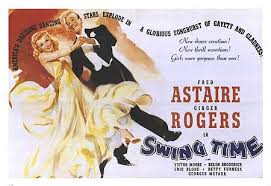
February 4th: Swing Time at 8:00pm EST

Swing Time 1936

Fred Astaire and Ginger Rogers star in Swing Time (1936, George Stevens, director)

Considered by many critics and historians to be the best of the Astaire/Rogers collaborations, Swing Time is my pick for Wednesday night. Although the plot may be a bit weak with this one, the music and dance numbers Pick Yourself Up, Waltz in Spring, and Never Gonna Dance more than make up for that fact.

…..

February 5th: Robin And The 7 Hoods at 5:45pm EST

Robin and the seven hoods

Frank Sinatra, Dean Martin, Sammy Davis JR., and Bing Crosby star in Robin and the 7 Hoods (1964, Gordon Douglas director)

If you like Robin and the Rat Pack, this movie is pure delight. Set in prohibition era Chicago, the film takes the classic Robin Hood lore and modernizes it to utilize the skills of Frank Sinatra, Dean Marin, Sammy Davis JR. and Bing Crosby.  Sure, it’s not the headiest films you’ll see, but it is a lot of fun!

…..

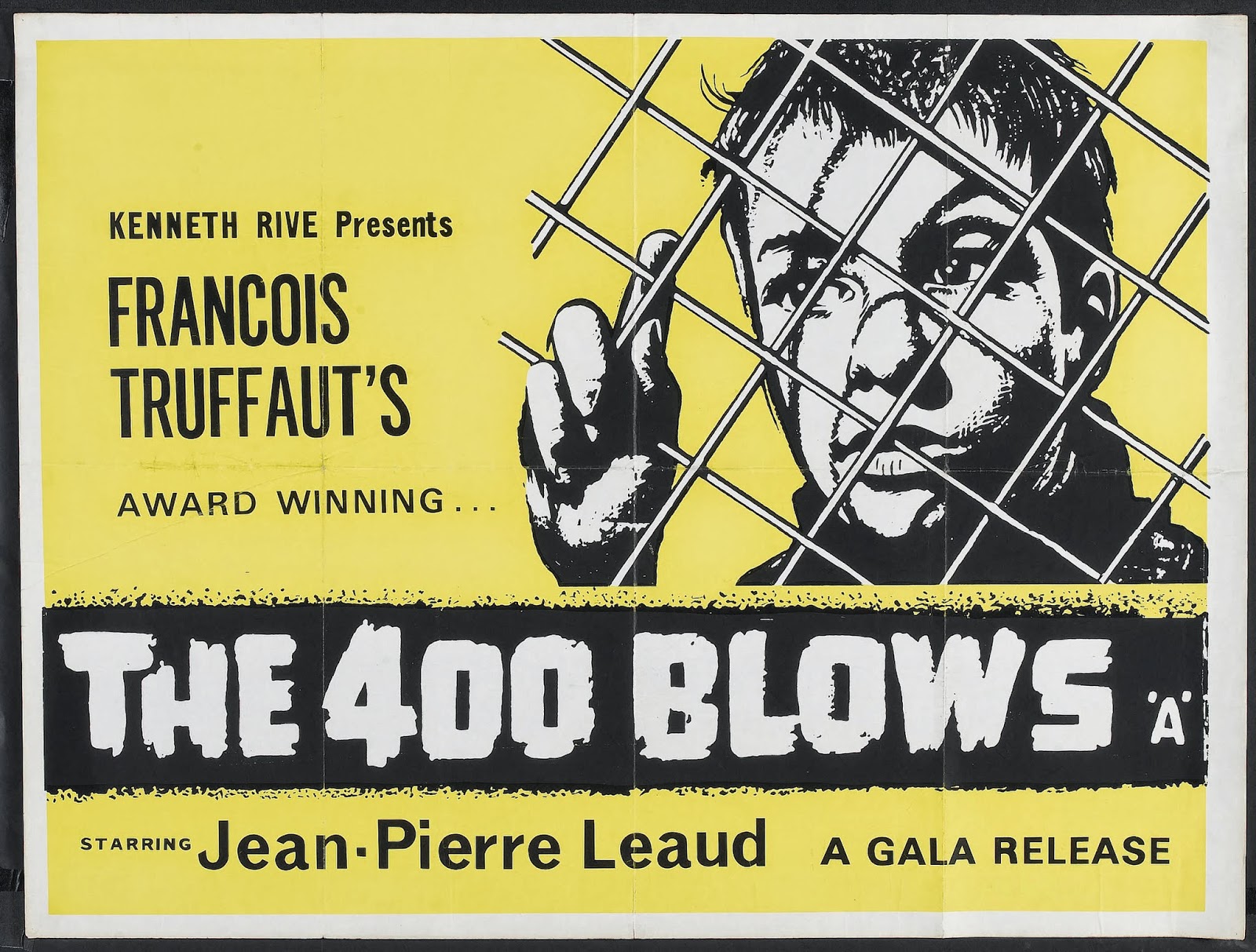
February 6th: The 400 Blows at 12:00pm EST

the 400 blowsJean-Pierre Leaud stars in The 400 Blows (1959, Francois Truffaut director)

If you were ever a misunderstood and confused kid, this is the film to watch. This French New Wave darling remains one of the most powerful and influential coming-of-age films even today. Also, if you are not familiar with the French New Wave movement, this will be a great introduction!

…..

February 7th: The Philadelphia Story airing at 8pm

The Philadelphia storyKatharine Hepburn, Cary Grant, and James Stewart star in The Philadelphia Story (1940, George Cukor director)

Because whether you watched it one or one-hundred times, it just never gets old. Jimmy Stewart is still adorable, Cary Grant is still a high preist, and Katharine Hepburn is still a virgin goddess…do you by any chance get the joke?

…..

Minoo Allen for Classic Movie Hub


Posted in Posts by Minoo Allen, TCM | Tagged , , , , , , , , , , , , , , , , , , , , , , , , | 2 Comments

Book Giveaway: “Harold Lloyd: Magic in a Pair of Horn-Rimmed Glasses” (Twitter Contest Week of February 1)

Harold Lloyd Biography Giveaway!
Entry Task for this week’s Twitter Contest.

Time for our fabulous February Classic Movie Book Giveaway, courtesy of Bear Manor Media! To kick things off, we’ll be giving away a copy of  Harold Lloyd: Magic in a Pair of Horn-Rimmed Glasses this week — the first of our four Classic Book Giveaways this month via Twitter (click here to see the other books we’ll be giving away this month)…

In order to qualify to win a copy of  the book, you must complete the following task by Saturday, February 7 at 7PM EST (i.e. any time between now and February 7 at 7PM EST). The winner will be selected via random drawing and announced via Twitter on Sunday February 8 around 7PM EST.

Harold Lloyd Biography


ENTRY TASK (2-parts) to be completed by Saturday, February, 7PM EST:

1) Answer the below question via the comment section at the bottom of this blog post 

2) Then TWEET (not DM) the following message:
Just entered to win “Harold Lloyd: Magic in a Pair of Horn-Rimmed Glasses” courtesy of @ClassicMovieHub and @BearManorMedia #BookGiveaway

THE QUESTION:
What is your favorite Harold Lloyd movie — (or if you haven’t seen one yet) what Harold Lloyd film would you like to see first?

And if you can’t wait to win, you can use our EXCLUSIVE 30% DISCOUNT COUPON CODE CMH30A and buy them at Bear Manor Media via the below link (click image):

Bear Manor Media Exclusive Coupon Code for Classic Movie Hub Fans

Please note that only Continental United States residents (excluding Alaska, Hawaii, and the territory of Puerto Rico) are eligible to enter this giveaway contest. (see contest rules for further information)

BlogHub members ARE also eligible to win if they live within the Continental United States (as noted above).

If you have any questions, please feel free to DM me on Twitter @classicmoviehub.

…..

–Annmarie Gatti for Classic Movie Hub

Posted in Books, Contests & Giveaways, Posts by Annmarie Gatti | Tagged , | 9 Comments

Classic Movie Coincidence: Clark Gable and John Ford

Clark Gable and John Ford share a birthday and a film:

Clark Gable starred in Mogambo which was directed by John Ford. Both Gable and Ford were born February 1, seven years apart!

Clark Gable and John Ford on the set of MogamboClark Gable and John Ford on the set of Mogambo

Clark Gable was born William Clark Gable on in Cadiz, Ohio, and John Ford was born John Martin Feeney on in Cape Elizabeth, Maine.

…..

–Annmarie Gatti for Classic Movie Hub


Posted in Classic Movie Coincidence, Posts by Annmarie Gatti | Tagged , | Leave a comment

Announcing February’s Classic Movie Book Giveaway: Harold Lloyd, Francis X. Bushman and More!

February is yet another exciting “Classic Movie Book Month” here on Classic Movie Hub!

For many of us, it’s cold outside! So, why not ‘warm up’ a little by sitting back, relaxing and reading a wonderful classic movie book! And, of course that wouldn’t be such a bad idea either if you happen to live in a warm and sunny place too! That said, Classic Movie Hub is happy to announce this month’s Classic Movie Book Giveaway courtesy of Bear Manor Media! And that’s not all! CMH is also thrilled to say that Bear Manor has created an EXCLUSIVE 30% off DISCOUNT COUPON CODE for their huge selection of books (and more) JUST for CMH FANs!

Okay, here’s all the info…  In a nutshell, we’ll be giving away four books via twitter (one book every Saturday in February as noted below) plus two books via Facebook and this blog (as noted below). Winners will be picked via random drawings. 

Classic Movie Book Giveaway Bear Manor Media

Twitter Contest:
February 7: Harold Lloyd: Magic in a Pair of Horn-Rimmed Glasses (one book)
February 14: The Prints of Classic Hollywood (one book)
February 21: King of the Movies: Francis X. Bushman (one book)
February 28: The Prints of Classic Hollywood (one book)

Facebook / Blog Contest:
February 14: Harold Lloyd: Magic in a Pair of Horn-Rimmed Glasses (one book)
February 28: King of the Movies: Francis X. Bushman (one book)

Follow us on Twitter or Facebook – or check back on this blog weekly – to see the official contest announcements and find out how you can enter to win one of the DVDs. 

And if you can’t wait to win a dvd, you can use your 30% DISCOUNT COUPON CODE CMH30A and buy them at Bear Manor Media via the below link (click image):

Bear Manor Media Exclusive Coupon Code for Classic Movie Hub Fans

Click here for the full contest rules and details. 

Please note that only Continental United States (excluding Alaska, Hawaii, and the territory of Puerto Rico) entrants are eligible.

And — BlogHub members ARE eligible to win if they live within the Continental United States (as noted above).

 …..

–Annmarie Gatti for Classic Movie Hub

Posted in Books, Contests & Giveaways, Posts by Annmarie Gatti | Tagged , , , , | 6 Comments

Lawrence of Arabia: Part Two – The Destruction of Myth

Lawrence of Arabia: Part two – The Destruction of Myth

Hello dear readers and thank you for coming back to my Lawrence of Arabia blog posts. Last November, as part of the British Empire Blogathon, I wrote Part One of this two-part series. If you did not get a chance to read it and feel the need to catch-up, I have conveniently provided the link for you right here:

Lawrence of Arabia: Part One – The Creation of Myth

But if you’re a true child of the internet and want the TL;DR version (aka the ‘too long, didn’t read’ version), here is what I had to say: I offered the notion that Lawrence of Arabia is a story told in two parts. The first part, everything before the intermission, is the creation of the great myth of the Western Imperial Liberator. This month I am finishing up my thoughts on the film, delving deeper into how part two of the film takes that notion and flips it on its head – effectively deconstructing that notion and showing the dangers and foils of those false realities. And with that, I begin.

Peter O'Toole charging the Turks, Lawrence of Arabia, David Lean, 1962Lawrence’s flowing white robes – a symbol of his myth

When the intermission ends and part two of David Lean’s sweeping epic begins, we are introduced to the character of American newspaper man, Jackson Bentley who is on the search for the great Lawrence of Arabia. But before he is able to find Lawrence, Bentley speaks with one of the Lawrence’s best allies, Prince Faisal, the political leader of the Arab Revolt. Bentley states very plainly what he is looking for: a romantic figure with the charisma and narrative to urge the neutral United States into the Great World War. In other words he is searching for a myth he can publish – that proper western gentlemen who, despite his wartime duties, remains civil and elegant even in “savage territory.” Prince Faisal states with the cynical tongue of a trained politician that. if what want is a romantic hero to lead your country into war, “then Lawrence is your man.”

When Bentley finally catches up with Lawrence and his Arabian Army in the middle of the desert, he learns first hands what makes this man his ‘romantic figure.’ Despite the Arabian Army’s guerilla warfare tactics, such as blowing up Turkish trains then inundating them with gunfire from strategically well-hidden sand dunes, Lawrence does not kill without reason or without mercy. Although he is surrounded by “savagery and looting,” Lawrence remains the ever-calm, ever-dignified Western leader.  Even after a wounded Turkish solider shoots Lawrence in the shoulder from behind, Lawrence will not kill the man. In a daring move, Lawrence does not even hide from the gunfire, standing directly in the shooter’s line of fire, almost daring the scared solider to try and kill him. You see, at this point in the film, Lawrence IS myth, both in his own eyes and in the eyes of his men. What is a mere bullet to the man who united the Arab world against the Turkish Empire? It was not even Lawrence that killed the wounded solider, but Auda abu Tayi (Anthony Quinn) who put an end to the Turkish man’s life – allowing his Arabian allies to do the dirty work for him.

The rest of the scene plays out like a pure visualization of the white man burden and the cult of personality. Bentley asks Lawrence for a picture, telling him to just walk. And so he does, he just walks. And as he walks, the army of Arabs shout in unison “Lawrence, Lawrence, Lawrence, Lawrence,” and he jumps atop the derailed trains, standing there above his men, arms stretched like their own personal messiah. His flowing white robes make Lawrence seem like a god basking in the heat of the desert sun.

Peter O'Toole, Lawrence of Arabia, David Lean, 1962Peter O’Toole  in Lawrence of Arabia (1962, directed by David Lean)

At this point in the film, the myth is made and no one believes it more than Lawrence. When asked if he was hurt from the bullet wound he says, “Not hurt at all. Didn’t you know? They can only kill me with a golden bullet.” Despite his smile and jesting tone, it’s clear that he believes the hyperbolic language used to describe his exploits. If anything, his next conversation with Bentley demonstrates just how much he believes in his own myth. When asked by Bentley: What are the Arabs fighting for, Lawrence answers: “Freedom…They’re going to get it Mr. Bentley. I’m going to give it to them.” This line, above all else, demonstrates his belief in his own mythologized self and, thus, the myth of western imperialism.  However, Lean also allows the audience a glimpse into the reality of the situation, remarkably different from Lawrence’s grasp on the situation. Lawrence’s army was not, in fact, his army. They joined the guerilla campaign to loot the Turkish trains for all the riches their camels could carry and promptly return to their homes. Because of this, the northern Arab Army was losing numbers so rapidly that even the men who “stayed on for Lawrence” begin to doubt Lawrence’s ability and even his loyalty to the Arab cause. Despite, or perhaps even because of such opposition, Lawrence still believed that, with his will power and his intellect alone, he would be able to give an entire people their freedom. He believes in his myth so much that he bets his Arab men that he can enter an Arab town and “blend in with the natives” despite his white skins blonde hair and blue eyes. And this is where the myth falls apart.

In order to show those in the Arab Army who question his sincerity to the Free Arabia cause, Lawrence goes as a scout into the Darra with Ali. Despite Ali’s multiple warnings to lay low and not draw attention to himself, Lawrence flamboyantly walks around the city as if to make his presence know. He swaggers on the streets as if he owns them, parading himself around like he hadn’t a care in the world. That is, until the great Lawrence of Arabia and Ali are taken in to the Turkish authorities. Due to his inability to humble himself, even in the face of a Turkish Captain, he is not only stripped, poked, and prodded but eventually severely flogged and perhaps even raped, as the film quietly implies. And when the Turks are done with him, they throw him out into the dirty streets as if he is no more than mere trash. And with this, the myth is broken – both in the eyes of the viewer and even Lawrence himself. After this, he is an entirely changed man. Now humbled and brought back to humanity, he attempts to leave the desert  – his great mythological conquest – behind for a simple ordinary life as a simple ordinary man.

Peter O'Toole after flogging, Lawrence of Arabia, David Lean, 1962The stuff that deconstructed myths are made of.

Of course, Lawrence’s conquest wasn’t simply his own, despite what he wished to believe, but served a major purpose for British Empire as well. So, rather then allowing Lawrence to remain in England, General Allenby (Lawrence’s commander) manipulates the emotionally distraught solider back into the fight by feeding Lawrence’s ego – saying it is his destiny to reach greatness.  Lean uses the entirety of this conversation to play on this notion of myth building, but clearly the man meant to represent this has been broken both mentality and emotionally under the weight of that said myth. He cannot become that great symbol of Western Imperialism because it just that – a myth. However untruthful as this myth may be, Lawrence is hooked and heads back to the desert.

However, once in the desert we still see the further cracks in Lawrence’s mythological armor. The men he recruits are not the Arabian freedom fighters he once led, but rather ruthless mercenaries motivated by their pocketbooks. And when they happen upon a column of retreating Turkish soldiers who have just slaughtered an Arabian village, Lawrence’s final dissent out of the mythical world of dignified Western Imperialism and into the realities of war begins. A lone solider from the destroyed village demands, “No prisoners” then charges the Turks and is killed. Rather go around the army and head to their intended goal of Damascus, as Ali suggests, Lawrence sees red. The once mild-manner but genius Major of the British Empire yells “No Prisoners” and heads the charge. The result is nothing short of a massacre with Lawrence’s men easily defeating the already wounded Turkish army. But more disturbing was Lawrence’s sheer glee in the act, clearly relishing in the senseless killing of his perceived enemy. The moral high ground he once gracefully occupied is nothing but a relic of the past – just like the myth of Western Imperialism. The brutality used by Lawrence when all of his false notions of “giving Arabs their freedom” is the brutality that was there since the start. Each bullet Lawrence lodges into the wounded body of an already defeated enemy is another bullet in the myth of the dignified, glorious Lawrence of Arabia and Western Imperialism as a whole.

Peter O'Toole after massacre, Lawrence of Arabia, David Lean, 1962His flowing white robes marred with the blood of his enemy and symbolizing the end of great myth of Western imperialism.

…..

Minoo Allen for Classic Movie Hub

Posted in Blogathons, Posts by Minoo Allen | Tagged , , , , , , , , , , | Leave a comment

Cary Grant DVD Giveaway: Houseboat (Twitter Contest Week of January 26)

Cary Grant “Houseboat” DVD Giveaway!
Entry Task for this week’s Twitter Contest.

Okay, this is it — our forth and final Cary Grant DVD Giveaway on Twitter this month! This week CMH is giving away a copy of the romantic comedy, “Houseboat,” starring Cary and the beautiful Cinzia, oops I mean Sophia Loren (click here to see what else we gave away this month)…

In order to qualify to win a copy of  ”Houseboat” on DVD, you must complete the following task by Saturday, January 31 at 7PM EST (i.e. any time between now and January 31 at 7PM EST). The winner will be selected via random drawing and announced via Twitter on Sunday February 1 around 7PM EST.

cary grant and sophia loren in houseboatCary Grant and Sophia Loren

…..

ENTRY TASK (2-parts) to be completed by Saturday, January 31, 7PM EST:

1) Answer the below question via the comment section at the bottom of this blog post 

2) Then TWEET (not DM) the following message:
Just entered to win “Houseboat” on DVD courtesy of @ClassicMovieHub #CaryGrant #DVDGiveaway

THE QUESTION:
What is your favorite Cary Grant film and why?  
(I know, I know, it would be a tough choice for any of us!)

AND — I am happy to say that Continental United States (excluding Alaska, Hawaii, and the territory of Puerto Rico) AND Canadian entrants are eligible to enter. (see contest rules for further information)

BlogHub members ARE also eligible to win if they live within the Continental United States (as noted above) and/or Canada.

If you have any questions, please feel free to DM me on Twitter @classicmoviehub.

And if you can’t wait to win the DVD, you can purchase it on amazon via the below link (click on image):

Good Luck!


…..

–Annmarie Gatti for Classic Movie Hub


Posted in Contests & Giveaways, Posts by Annmarie Gatti | Tagged | 23 Comments

Silent Chicago: Chariot Races and Copyright Infringement: A Tale of Ben Hur (Remakes and the Early Days of Film, 4)


Chariot Races and Copyright Infringement: A Tale of Ben Hur

In 1907, the state of the American film industry was rather poor and was still, largely, in its infancy. D.W. Griffith had just joined the industry as an actor, but he wouldn’t make his directorial debut until 1908. The Essanay company had just gotten its start and Mary Pickford wouldn’t make her film debut until 1909. The length of the movies had gotten longer, but they were still barely a reel in length, often topping out at about 10 or 11 minutes. The stories tended to be very simple, but the Kalem Company believed it could bring epic storytelling, albeit in an abbreviated form, to the big screen.

ben hur 1907 Kalem versionThe Title Card for the first filmed version of Ben Hur in 1907

In December 1907, Kalem released “Ben Hur” as a one-reeler, consisting of 16 scenes. Wallace’s epic 500-page book had been distilled down to the biggest plot points, with intertitles employed mainly to transition between scenes, acts and settings. In typical silent film fashion (use what you have!), the crew took advantage of a chariot race being held by a local fire department on Manhattan Beach, rather than staging their own. At the time “Ben-Hur” was lauded as “the most superb moving picture spectacle ever produced in America,” and was very successful. So successful, in fact, that it pushed Lew Wallace’s living relatives to sue Kalem for copyright infringement. Up until this point, no precedent had been established for acquiring rights for films, and the subsequent court case helped to define rights acquisition and copyright protection.

While Kalem’s rather minimal effort was wildly successful, it very quickly became a dated one-reeler. Film technology advanced by leaps and bounds, especially when directors like D.W. Griffith and Allan Dwan began to pick up the microphone. Soon, the film’s wide shots, overly dramatic acting, rather simple costumes and lack of dialogue intertitles were looked upon as primitive and laughable. The material deserved another shot, and in 1922, shortly before MGM was formed, Samuel Goldwyn acquired the rights to the work. Production on the film began, but when the merger was final and Louis B. Mayer and Irving Thalberg entered the picture, the production undertook a massive overhaul. Cast and crew members were replaced until Fred Niblo was at the helm as director with Ramon Novarro cast as Ben Hur, Francis X. Bushman as Messala, May McAvoy as Esther and Carmel Myers as Iras. While location shooting in Italy was brought to an end, extravagant sets were constructed on the streets of Hollywood to continue the illusion. Technicolor excerpts were filmed for specific scenes, an incredible chariot race sequence was staged, and by the time all was said and done, the film cost $4 million dollars to complete (a far cry from the estimated $500 it took to create Kalem’s version nearly 20 years before).

Ben Hur- The Story of Christ, Ramon Navorro, 1927The famed Chariot Race from the 1927 remake of Ben-Hur: The Tale of Christ

Although it took until 1931 for the film to turn a profit (four years after it was released), the expense was certainly worth it. It remains an incredible screen spectacle, and certainly represents the silent film industry at the height of its power. The chariot race and sea battle are exciting, thrilling and remarkably daring, leaps and bounds above the race caught on film for Kalem. Although three decades had passed before production began on the 1959 version, the silent spectacle was not far from the filmmakers’ minds.

Director William Wyler had been directing films since the mid 1920s, but he brought a unique point of view to the 1959 version of “Ben-Hur.” Though uncredited, he served in the role of assistant director during the production of the silent version and was on set for the complicated and stressful filming of the chariot sequence. He brought the knowledge and experience he gained during that time, and used the advancements that had been made since its release, to build upon an already thrilling scene, and also sought direct inspiration from the scene (and the entire film) itself. “Ben Hur: A Tale of the Christ” was 30 years old by the time “Ben-Hur” premiered, but it was still pretty fresh in the minds of the cast members. The year the film premiered, Charlton Heston quipped that he landed the starring role because “I happen to be one of two men in Hollywood who can drive a chariot. Francis X. Bushman is the other — but he’s over 70.”

Ramon Novarro, Charlton Heston, William Wyler at Ben Hur premiereRamon Novarro, Charlton Heston and William Wyler at the 1959 premiere of Ben Hur

Fortunately for film fans, all three versions of “Ben Hur” have survived the passage of time, and can be enjoyed pretty readily. It’s not fair to compare the three on a technical level, but each embodies the period in which it was made perfectly, and beautifully illustrate the advancements an industry made in less than a century.

Kalem’s version is available via the silent/streaming site Harpodeon, while MGM’s versions are available via Netflix and a host of other retail sites.

…..

Janelle Vreeland for Classic Movie Hub

Posted in Posts by Janelle Vreeland, Silent Chicago, Silent Films | Tagged , , , , , , , , , , | 1 Comment

Cary Grant DVD Giveaway: Notorious (Twitter Contest Week of January 19)

This gallery contains 1 photo.

Cary Grant “Notorious” DVD Giveaway! Entry Task for this week’s Twitter Contest. Okay, we’re ready for our next Cary Grant DVD Giveaway on Twitter this month, as part of our month-long Cary Grant Birthday Celebration!  This week CMH is giving away a copy … Continue reading

More Galleries | 19 Comments

5 Things You May Not Know About Cary Grant


5 Things You May Not Know About Cary Grant

too pretty

Like that today is his birthday. Happy 111th Birthday to the legend Cary Grant.

…..

1) He wasn’t actually Cary Grant…

Cary Grant Archie LEach

Cary Grant or Archibald Leach? You decide.

Cary Grant. The name just rolls off the tongue. It sounds almost as smooth and debonair as the way Cary Grant acts. It might surprise you, then, to learn that Cary Grant isn’t Cary Grant. When the actor, now famously remembered as Cary Grant, was born, he was born with the name Archibald Leach. Yup. Little Archie Leach. When he arrived in Hollywood in 1931, the studio execs at Paramount immediately ordered a name change for the UK born actor. And thus Cary Grant was born. Archie Leach liked the name so much that he legally changed it to Cary Grant in 1941.

…..

2) He had a troubled childhood…

Cary GRant and katherine hepburn in Bringing up baby

Cary Grant looking troubled with Katharine Hepburn in Bringing Up Baby (1938, Howard Hawks director)

Despite his worldly, wealthy, and sophisticated screen persona, Grant’s formative years were anything but. His father was a womanizer and his mother an emotionally unstable woman who long suffered from crippling clinical depression. Although she had high hopes for her only child, the young Cary Grant did little to distinguish himself while attending Bishop Road Primary School. At the age of 9, Grant was informed by his father that his mother had taken a “long holiday,” when in reality he had placed her in a mental institution. Grant would spend the next twenty years believing the lie, until his father confessed the truth on his deathbed. Soon after placing Elsie in the asylum, his father would remarry much to his son’s dismay. Fed up with his Dickensian life, at age 13 Grant left his insufferable environment to join a troupe of traveling acrobats.

…..

3) His first love wasn’t acting…

CAry GRant and Dog

Maybe it was this dog?

Yes, just like many other classic film stars, Grant’s first taste of performance wasn’t on the sound stage, but On the vaudeville circuit. At the tender age of 13, Grant left his unhappy household to join the Bob Pender Troupe, a traveling group of vaudeville comedians. While part of the troupe, Grant focused on acrobatics, tumbling, and vaudeville, which allowed him to gain a strong sense of kinesthetics and comedic timing.  The group traveled to American in 1920, successfully touring the country for two years. When the Troupe was ready to return to the UK, Grant decided to stay in America, working as a circus performer for the next decade in places such as Coney Island.

…..

4) His wartime efforts…

Cary Grant in I was a Male War Bride

Cary Grant in I Was a Male War Bride (1949, Howard Hawks director)

In the 1940s Hollywood became heavily involved with the World War II effort. Many stars left their comfortable careers and joined the armed forces while others danced away at the Hollywood Canteen. Although Grant was unable to fight “over there,” he did join the war effort in a big way. How so? Well, with dollars — and lots of them. First by donating his entire $137,000 salary from The Philadelphia Story to the British War Relief Fund and then by donating his entire salary from Arsenic and Old Lace, $100,000, to the U.S War relief fund. In 2015 money, that’s more 3.5 million dollars.

…..

5) He was almost James Bond…

Cary Grant and Audrey Hepburn in Charade

Cary Grant doing his best James Bond in Charade opposite Audrey Hepburn (1963, Stanley Donen)

Yes, that’s right. The suavest character to ever grace the big screen was almost played by the suavest actor. The producers of Dr. No sought out Cary Grant for the Role of James Bond. However, when Grant learned the role would be part of a franchise and thus had to commit to more than one film, he declined.

…..

Minoo Allen for Classic Movie Hub

Posted in Legends Tribute, Posts by Minoo Allen | Tagged , , , , , , , , , , | 5 Comments