Silent Chicago: Murder in the Windy City: The Story Behind “Chicago”: The Chicago Silent Era (Part 8)


Murder in the Windy City: The Story Behind “Chicago”

The story of Roxie Hart and Velma Kelly has been told time and time again in the form of musicals, Broadway shows and films, but it began as a play written by a Chicago Tribune writer who spent part of her career chronicling the cases of the real life Roxie and Velma.

trade paper

 “The name on everybody’s lips is gonna be Roxie”

Maurine Dallas Watkins moved to Chicago in 1924 and landed a job with the Chicago Tribune as a cub reporter. During her 7-month stay with the paper, she covered the stories of women she dubbed the Merry Murderesses — 14 women who were imprisoned at the Cook County Penitentiary on charges of murder. The prettiest, and most notorious, of these murderesses was a 24-year-old named Beulah Annan. Beulah made headlines when she shot her lover Harry Kolstedt and then sat listening to the song “Hula Lou” for hours afterward. Her story changed over time, from drunken murder to self-defense, but her husband Albert famously stood by her side during the trial. Once she was acquitted, however, she divorced him.

Beulah AnnanThe real “Roxie Hart”

Just a month before Beulah had murdered her lover, 40-year-old Belva Gaertner was arrested under similar charges. Dubbed the most stylish of the spouse slayers, Belva was accused of shooting her lover Walter Law while the pair were driving around the city. When the dead body of Walter was found in her car, she admitted they had been driving drunk, but she claimed she couldn’t remember what had happened. Although she, like Beulah, was married at the time of her affair, Belva and her husband were separated at the time. Despite that, the pair stayed married until his death some years later. Belva, like Beulah, was acquitted of all charges.

the real Belva Gaertner

The real “Velma Kelly”

Although Maurine left her position as cub reporter after just 7 months, the stories of these modern day Salomes stuck with her. While taking a writing class at Yale University, she penned the first iteration of the story of “Chicago.” The story was based on the trials of Beulah and Belva in particular, with Beulah providing the inspiration for Roxie Hart and Belva inspiring the character of Velma. She turned the story into a play called “Chicago, Or Play Ball” and it opened on Broadway on December 30, 1926.

By this time, the film industry had moved out of the midwest and settled in and around Los Angeles. Despite this, Hollywood was quick to take notice of the sensational story and its successful Broadway run, and Cecil B. DeMille quickly snapped up rights to the story. He took a bit of a risk casting former Sennett Bathing Beauty Phyllis Haver in the role of Roxie, but it was a risk that paid off. Following the film’s release on December 27, 1927, Photoplay magazine sung Phyllis’s praises, saying, “The picture belongs to Phyllis Haver who gives a marvelous characterization. We agree with Mr. DeMille that she is his greatest ‘find’ since Gloria Swanson.”
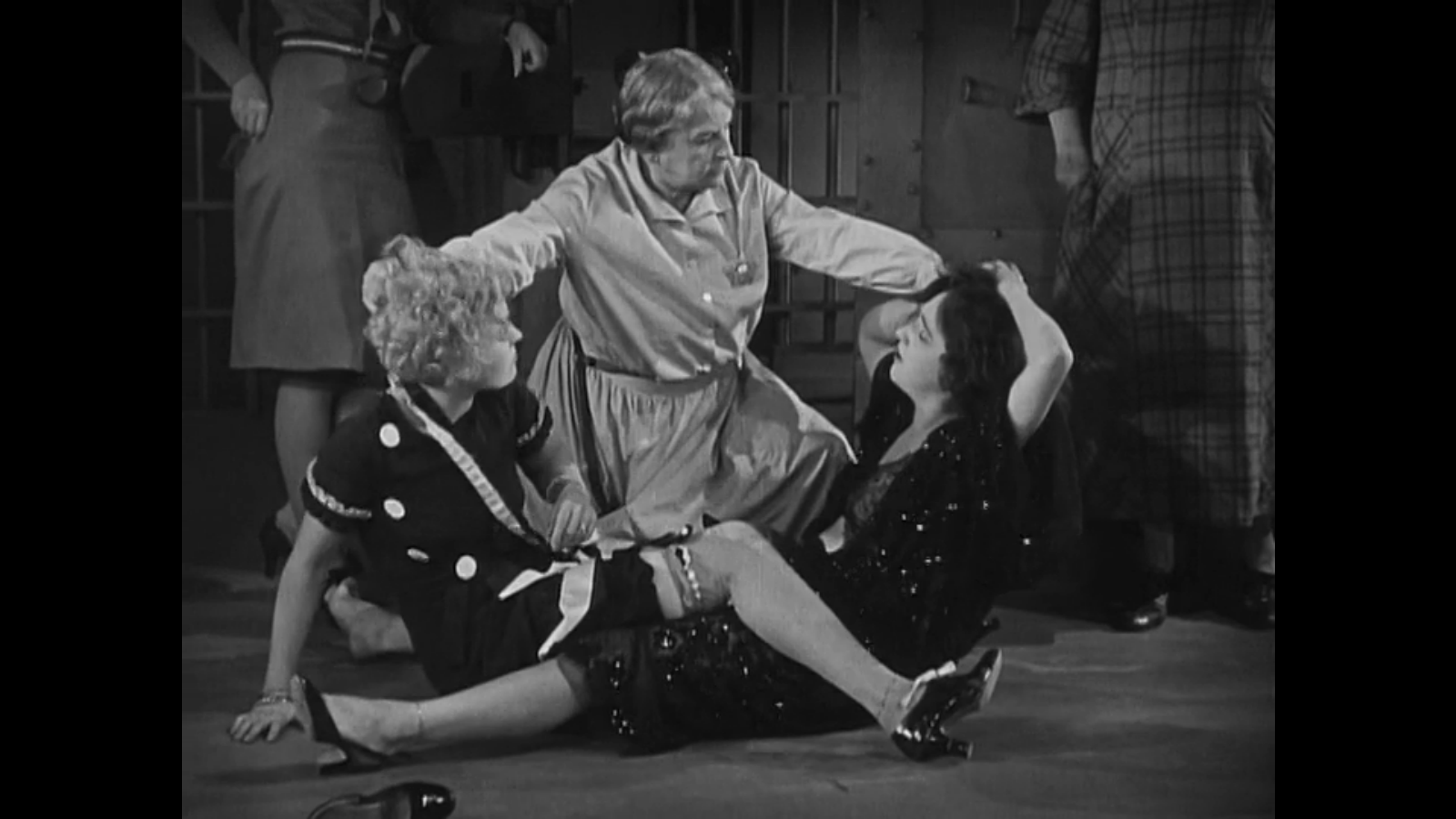
 chicAGO+FIGHT

Hey, that isn’t Queen Latifah.

For years, this first film adaptation was difficult for audiences to view, causing it to become largely overshadowed by later adaptations. Recently, though, the team at Flicker Alley acquired and released a fantastic restored print on DVD. Fandor has also acquired the film and now streams it on its site. Take the time to seek out this forgotten gem and experience the story of “Chicago” from a time when it was still fresh in the minds of those living in the Windy City.

…..

Janelle Vreeland for Classic Movie Hub

Here’s a link to the restored DVD available on amazon: CHICAGO The Original 1927 Film Restored

Thank you to Janelle for this wonderful Silent Film Series.  You can read more of Janelle’s articles about Silent Film and Chicago history-related topics at Chicago Nitrate or Curtains, or you can follow Janelle on Twitter at @SpookyJanelle .

Posted in Posts by Janelle Vreeland, Silent Chicago, Silent Films | Tagged , , , , , , , | Leave a comment

TCM Star of The Month: Maureen O’Hara

Maureen O’Hara: Technicolor’s Queen

July: what a beautiful month. With the summer season finally in full swing, everything seems extra vibrant, extra lively, and full of color. It makes sense, then, that Turner Classic Movie would choose the vibrant and lovely Technicolor Queen, Maureen O’Hara, as their Star of The Month.

maureen-o'haraMaureen O’Hara

Maureen O’Hara always had a personality as colorful as her hair. As a child she would round up the neighborhood kids, organizing her very own backyard staged productions to show off her potential as an actress. As she grew older her dreams of performing never stopped despite her father’s urgings otherwise, and before the age of 20, O’Hara found herself starring in the major Hollywood picture, 1939’s The Hunchback of Notre Dame. The film, of course, was a hit and audiences soon fell in love with the young Irishwoman’s take on the gypsy, Esmeralda. However, it would not be until three years later that the woman would gain her title “The Queen of Technicolor.”

In 1942 O’Hara starred in her first Technicolor film To the Shores of Tripoli. Although her pearly complexion and green eyes photographed beautifully in three-stripe technology, one thing was still missing: her fiery red hair! Yes, for some reason some higher-up on the production line decided to dye her hair brunette for the film. For her next Technicolor film, this mistake would be corrected, and with it a film legacy would begin. Over the next two decades, O’Hara would be featured in an impressive 34 Technicolor films, more than almost any other actress of her time.  With her natural hair color revived, O’Hara’s reign as the Queen of Technicolor began. Her fire-red hair, milky complexion and emerald eyes perfectly complimented the Technicolor-process so well that Herbert T. Kalmus, inventor of the process, often used her image to promote and sell his product. So, let us celebrate this champion of the Technicolor world by tuning into some her classics. Below are just a few I would suggest.

…..

The Black Swan

Maureen O’Hara and Tyrone Powers in The Black Swan (1942, Henry King) airing Tuesday, July 15 at 8:00PM on TCM

…..

buffalo-bill-1944Maureen O’Hara and Joel McCrea in Buffalo Bill (1944, William A. Wellman director) airing Tuesday, July 22 at 9:45PM on TCM

…..

mclintock

Maureen O’Hara and John Wayne in McLintock (1963, Andrew McLaglen director) airing Tuesday July 22 at 11:30 on TCM

…..

Minoo Allen for Classic Movie Hub

Posted in Posts by Minoo Allen, TCM | Tagged , , , , , , , , , , , | 1 Comment

Five Facts about Cinematographer Gregg Toland


Five Facts about Cinematographer Gregg Toland

Hello, dear readers. I thank you for joining me on this most joyous of days. No, I am not just talking about this lovely lazy Sunday. I am talking about June 29th: National Camera Day! Today we celebrate any and all things camera-related, including pictures, films, and the people who make them. And to contribute to that celebration we here at CMH want to focus on one of classic Hollywood’s, nay, one of Hollywood’s most influential cameramen in general: Greg Toland. So without further ado, here are 5 fun facts about Cinematographer Gregg Toland.

…..

Record Breaker

Gregg Tolland

Pictured: Gregg Toland. Not pictured: Gregg Toland at 27. The internet has let me down for the first time.

In 1931, Toland was given his first assignment as lead cinematographer. At the age of 27, he became the youngest first Cameraman in Hollywood history. So yes, you can pretty much call him a boy genius…or at least one hard-working young man.

…..

Inventor

The camera blimp

Yes, the camera blimp was just about as big as real blimp.

In the days of silent cinema, motion-picture cameras were incredibly loud, making whirly, clicking noises. This did not matter, of course, when movies were silent but posed a big problem once sound was introduced. Toland then invented a soundproof housing blimp that enclosed the camera; this silenced the whirling and clicking noises thus allowing more movement and artistic freedom to the directors.

…..

Innovator

Deep Focus

Notice how the foregrounded Fredric March and Harold Russell are just as crisp and in-focus as the backgrounded Dana Andrews in The Best Years of Our Lives. (1946, William Wyler director)

Toland championed the use of deep focus cinematography, which means that all the planes of the image, from the foreground to the background, are all in sharp, crisp focus. He achieved this by helping to develop his own lenses, film stock and lighting techniques.

…..

william-wyler and gregg toland

Gregg Toland at his favorite place: on set with William Wyler.

According to many of those he worked with, Toland was happiest when on set and was prone to depression when not working on a project.

…..

The Other Boy Genius.

Tolland and Welles

Gregg Toland with Director Orson Welles on the set of Citizen Kane.

Toland is as responsible for Citizen Kane as Orson Welles…kinda. Because Kane was Welles’ first film, he knew he needed a strong cinematographer to help him create his vision. With free reign to experiment as he pleased, Toland used deep focus-photography, ceilinged sets, low-angle lighting, and extreme POV shots that the film is now famous for. All of these techniques then allowed for Welles to stage entire scenes in one shot, thanks to the freedom of movement that the deep-focus lens allowed. Welles was so impressed and thankful for Toland’s contribution to the film that he did something rare in the World of Hollywood: he gave Toland equal screen credit to himself, placing both the cinematographer and the director on the same title card.

…..

Minoo Allen for Classic Move Hub

Posted in Posts by Minoo Allen | Tagged , , , , , , , , , , , , | Leave a comment

The MGM Blogathon – All Aboard The Band Wagon


The MGM Blogathon

 All Aboard The Band Wagon

Nothing in this world fills me with more unadulterated joy than a well made musical. Every since I was a wee-little lady I wanted nothing more than to live in a Technicolor world – where everyone’s problems could be confronted and resolved with a concise song and dance number. I mean, wouldn’t that be perfect? Imagine, instead of having an awkward, drawn out conversation about how you may or may not feel, you simply begin to tap your feet and let the world of music and dance glide you through your troubles. Musicals take the best that real life has to offer and spin it into a whole new perspective outside of the bounds of reality. Whether demonstrating serious emotional engagements between characters or telling a story about a private detective chasing a femme fatale, musicals take the everyday aspects of life and transform it into magical fantasy; a feast for the eyes and the ears. And, in my opinion, few musicals accomplish his better than MGM’s 1953 musical The Band Wagon.

The Band Wagon Poster

Fred Astaire and Cyd Charisse in The Band Wagon (1953, Vincente Minnelli director)

The Band Wagon is one of those cheeky, art-imitating-life situations everyone in Hollywood loves so much. In the film, Fred Astaire plays former-Broadway-hotshot-turned-Hollywood-leading-man, Tony Hunter, who now finds his star is diminishing after his many years in Tinsel Town. Sound familiar? Well, it should because in 1953 that was the basic summary of Astaire’s real-life career. But, rather than become angry at the thought of lampooning his own image, as screen writers Betty Comden and Adolph Green feared he would be, Astaire found the part excellently written and was happy to play a good-natured caricature of himself. Reality kept creeping into the script with Comden and Green even inserting parodied versions of themselves in the film as the squabbling playwrights Lester and Lily Marton, excellently played by Oscar Levant and Nanette Fabray. Now, despite the film’s ‘art-imitating-life’ writing and casting decisions, the film is still a musical and the best part of musicals is the fact that they aren’t realistic. As I mentioned earlier, they are fantasy: Technicolor, sequin-laced, sparking gems of fantasy. And with that in mind I want to talk about my two favorite fantastical elements of the film, the song and dance numbers Dancing in the Dark and Girl Hunt.

One of the most interesting aspects of the Arthur Freed produced musical on the MGM lot was how perfectly they blended the emotional realism of the integrated musical with disconnected spectacle of the backstage musical. From Easter Parade to Singin’ in the Rain and beyond, the Freed unit had a talent for seamlessly mixing ‘inner-world’ emotional content with the ‘outer-world’ of the staged production. In The Band Wagon, the most emotional, integrated number is the famed Dancing in the Dark.  

dancing_in_the_darkFor being called Dancing in the Dark, it really doesn’t look all that dark.

The scene itself is simple: The two leads that have been butting heads the entire time decide to take a walk in Central Park and get to know one another. They talk, of course, and seem to settle their differences. But as the old saying goes, talk is cheap and their real understanding comes when the talking is over and the dancing begins. Dancing in the Dark, in my opinion, is one of the most elegant dances in all of cinematic history. Although Fred Astaire is his usual graceful self, the real star of this number is Cyd Charisse.

With a background in Russian Ballet, Charisse’s grace and skill as a dancer were almost unmatched in Hollywood. At the start of number, it is not Astaire’s face we see, but hers. We, as the audience, are put in the position of Astaire, watching her, almost passively, as they swoon and sway around one another. When he approaches her, attempting to get closer, his hands remain clasped neatly behind his back, indicating that she is the one in control. Even when he breaks form, going for the embrace, he never does so without permission. Their initial touches are gentle and light. Astaire may hold her hand but he is not holding her, acting merely as an accessory to her own dance moves more than anything else. The only truly embrace when Charisse extends her hand, offering Astaire friendship, courtship, and perhaps something a little more. As the dance continues, she falls deeper in his arms, accepting not only his dancing support but his emotional support as well. By the end of the song, an understanding has occurred and Astaire no longer fears touching her, in fact, it is quite the opposite as he envelops her waist, allowing her to willfully sink into his arms. And for the rest of number, as Charisse twists, turns and plies her way through Central Park, Astaire remains her pillar of support. When the dance is done and the two are holding hands in a New York City horse-drawn carriage, it is clear that the pair have fallen in love. While Dancing in the Dark provides us with the seamless integration of love and dance, The Girl Hunt gives the audiences some good old fashion cinema of attractions.

the girl huntI want to go to there.

The Girl Hunt is quite possibly my favorite musical number ever filmed. I mean, how could it not be when it features three of my favorite things: Technicolor, film-noir, and musicals. In the film the sequence acts as a choreographed musical number within the film itself, performed on stage before a live studio audience: the backstage musical at its best. And because the number exists only on a stage within the world and not in the reality of the world itself, the number is basically in its own isolated world where anything is possible.

The Girl Hunt parodies the great film noir pictures of the day, particularly those of the Mickey Spillane variety, with Astaire playing the rough and tumble private detective, Rod Riley. The number opens like any respectful film noir, with a voice-over, a cityscape and a damsel in distress all dressed in white. While said damsel (played by Charisse) is twirling herself into Astaire’s arms, an unknown assailant is blown to pieces in a mysterious explosion, leaving nothing behind but a hank of hair, a rag and a bone. Like any private dick worth his dollar, Astaire immediately knows that the cheetah print rag is from a high price, high fashion boutique. Here he finds more thugs, more danger and a femme fatale, all dressed in black who just also happens to be played by Cyd Charisse. This is where the power of the backstage musical truly arises.

GIRL HUNT 1For love of your preferred deity, some one please buy me one of those antlered mannequins.

The set, which would never truly fit on a theatre stage, is a sight to behold. Walls of royal purple fill the screen while marble mannequins adorned in sequin antlers hang from the walls. Is it realistic looking? No, but that’s the point. This number is a spectacle and meant to be looked at, not analyzed through a realist lens. And when you think about it, nothing in this number really makes that much sense at all. Are the two Charisse’s the same woman? What’s going on with that emerald ring? Where do the thugs keep coming from? None of these question are ever really answered, but you know what? It doesn’t matter because everything on the screen is so beautiful, so entertaining and such a spectacle that all of the plot holes and inconsistencies pale in comparison to the well decorated, well choreographed, and well directed piece of art.  From the first glimpse of the abstracted New York City skyline to the Technicolor delight of the club scene, everything is the A-plus, non-stop spectacle that Minnelli and MGM studios aimed to show their audiences. To put it simply and to quote the The Band Wagon itself “That’s entertainment.”

…..

A big Thank You to Silver Scenes for hosting this fun MGM Blogathon event! There are so many more wonderful Classic Bloggers participating in this event so please be sure to check out the other entries.

Minoo Allen for Classic Movie Hub

Posted in Blogathons, Posts by Minoo Allen | Tagged , , , , , , , , , | 12 Comments

In Celebration of Summer — and the Stars!


Just for Fun: Summer and The Stars

It’s finally here! Yes, June 21st has arrived and with it the first official day of summer. So get out your bathing suits, fishing poles and get ready to run for the ice-cream truck because the season of long, lazy days has arrived. So, to celebrate this most glorious of seasons, let us sit back, relax and take some notes from these stars of summer.

…..

audrey-hepburn-summer-nap

Audrey Hepburn lounging around, seemingly very riveted by whatever book she is reading.

…..

bette_davis_ice_cream

Bette Davis eating ice cream dressed as a sailor while wearing what appears to be the hippest sunglasses in Hollywood.

…..

carole lombard umbrella

Carole Lombard in the very practical clothing combination of a bathing suit and heels.

…..

cary-grant-summer-white

Cary Grant, what a sight. Lounging in his summer white.

…..

Errol Flynn

Errol Flynn enjoy a calm summer afternoon on his boat.

…..

Gregory Peck Beach

Gregory Peck enjoying some beach time.

…..

henry-fonda surfing

Henry Fonda surfing the waves like he was born on the board.

…..

James Stewart fishing

James Stewart, enjoying a beer and fishing with an old friend. Clearly he’s catching winners.

…..

Sophia Loren beach

And on that day, every man wishes to be Sophia Loren’s beach ball.

…..

tony-curtis-fishing

Tony Curtis on the beach while enjoying the sea-life by ripping it from the water with his fishing pole.

…..

William Holden on Boat

William Holden enjoying summer, being what I like to call a “babe.”

…..

–Minoo Allen for Classic Movie Hub

Posted in Holiday Tributes, Just for Fun, Posts by Minoo Allen | Tagged , , , , , , , , , , , , , , | 1 Comment

Silent Chicago: The Diamond from the Sky: American’s Crown Jewel: The Chicago Silent Era (Part 7)


The Diamond from the Sky: American’s Crown Jewel

diamond 1

The serial film was nothing new when the American Film Manufacturing Company released “The Diamond from the Sky” in 1915. In fact, just months before, the Thanhouser Film Corporation had wrapped up their hugely successful 23-part serial “The Million Dollar Mystery.” With a $10,000 reward offered to the movie fan who could offer up the best solution to the serial, “Mystery” left large shoes for “Diamond” to fill. But by the time the final installment in the 30-chapter serial aired, “Diamond” had out-earned “Mystery” at the box office, and a sequel was in the works.

Built off of a story suggestion submitted by an experienced newspaper man, Roy McCardell, “The Diamond from the Sky” represented a huge risk for American. The company, which was known for its promotions, ran a contest looking for scenarios. They promised that the winning storyline would not only be made into a film, it would net the writer a check for $10,000. Taking such suggestions from regular moviegoers would be enough to make any studio nervous, but McCardell’s suggestion for the “Diamond” storyline convinced the company that they had made a safe bet.

diamond cast 2

Meet the cast.

The story was a “picturized romantic novel” that followed the exploits of the feuding Stanley family, and starred Charlotte Burton, Irving Cummings and William Russell. The star of the serial, and the major selling point for American’s publicity department, however, was Charlotte Smith aka Lottie Pickford, the younger sister of America’s sweetheart, Mary Pickford. With a budget of $800,000, with veteran characters actors, romance, thrills, suspense and a Pickford in tow, “Diamond” couldn’t miss.

lottie pickfordLittle Lottie Pickford

When it was released on May 3, 1915, American was confident it would perform well, and it didn’t disappoint. Critics cheered and audiences flocked to the theater. During its initial day of release, it surpassed the money “The Million Dollar Mystery” had earned in its first day of release, and as the weeks and the story progressed, it continued to outearn its predecessor. It was American’s biggest success of 1915, and remains one of the highest earning serials of the silent era.

The success of “Diamond” was so great that it inspired American to run a $10,000 promotion for a storyline for a “Diamond” sequel. It even helped push studios who had previously shied away from the serial, namely American’s Chicago rival Essanay, to try their hand at the genre. It also helped usher in a new age of scenario writing. Previously, scenario writers could expect $10 to $50 for their storyline suggestions. With $10,000 prizes up for grabs, though, not only was the art of scenario writing elevated, so, too, was the position of the scenario writer.

 diamond still 5

Although the film had a great impact on contemporary film, and holds a special place in silent film history, it’s a lost film. If only audiences today could see Roy McCardell’s $10,000 idea in action.

 …..

Janelle Vreeland for Classic Movie Hub

Thank you to Janelle for this wonderful Silent Film Series.  You can read more of Janelle’s articles about Silent Film and Chicago history-related topics at Chicago Nitrate or Curtains, or you can follow Janelle on Twitter at @SpookyJanelle .

Posted in Posts by Janelle Vreeland, Silent Chicago, Silent Films | Tagged , , , , , , , | Leave a comment

All in the Family: Character Actor Grant Mitchell, Civil War General John Grant Mitchell and President Rutherford B. Hayes

Grant Mitchell’s Family: a Quick American History Lesson

Veteran Character Actor Grant Mitchell appeared in over 120 films throughout the 1930s and 1940s playing his share of husbands, dads, businessmen, bank clerks and school principals. Some of his most memorable ‘A-film’ roles include Senator MacPherson in Mr. Smith Goes to Washington, Mr. Stanley in The Man Who Came to Dinner, and Reverend Harper in Arsenic and Old Lace.

Mitchell (born John Grant Mitchell, Jr.) was the only son of Civil War Union Army General John Grant Mitchell. Union Army General John G. Mitchell and his son Character Actor Grant Mitchell

Grant Mitchell (born John Grant Mitchell, Jr.) was the only son of American Civil War Union Army General John Grant Mitchell.  General Mitchell participated in several important Civil War campaigns including the Battle of Chickamauga, the Battle of Nashville and The Carolinas Campaign (the final campaign in the Western Theater).

…..

President Rutherford B. HayesPresident Rutherford B. Hayes, Grant Mitchell’s Great Uncle

And if that’s not enough of an American History connection, Grant Mitchell’s Great Uncle was President Rutherford B. Hayes (Mitchell’s paternal grandmother Fanny Arabella Hayes was President Hayes’ sister). And Grant Mitchell’s Great Great Great Grandfather was  Ezekiel Hayes, a Connecticut militia captain during the American Revolutionary War (Ezekiel Hayes was President Rutherford B. Hayes and Arabella Hayes’ Great Grandfather).

…..

–Annmarie Gatti for Classic Movie Hub


Posted in All in the Family (Family Connections), Posts by Annmarie Gatti, Trivia | Tagged , , , | 1 Comment

Classic Movie Quotables: In Celebration of Dads on Father’s Day


In Celebration of Dads on this Wonderful Day…

For many of us that grew up in traditional households, our Moms may have been the hearts of our home, but our Dads were our heroes — working all day long to provide for us, giving us their undivided attention when they came home from work, and generally setting a strong example of how to live life with integrity.

That said, we here at CMH want to share some of our favorite Classic Movie quotes about Dads in celebration of Father’s Day… some profound and some just plain fun…

 …..

How Green Was My Valley, Donald Crisp and Roddy McDowall

“Everything I ever learned as a small boy came from my father and I never found anything he ever told me to be wrong or worthless. The simple lessons he taught me are as sharp and clear in my mind as if I had heard them only yesterday.”
Irving Pichel (narrating) as Huw Morgan in How Green Was My Valley

…..

Father of the Bride, Spencer Tracy and Elizabeth Taylor

“You fathers will understand. You have a little girl. She looks up to you. You’re her oracle. You’re her hero. And then the day comes when she gets her first permanent wave and goes to her first real party, and from that day on, you’re in a constant state of panic.”
Spencer Tracy as Stanley Banks in Father of the Bride

…..

James Stewart in Mr. Smith Goes to Washington

“Dad always used to say the only causes worth fighting for were the lost causes.”
James Stewart as Jefferson Smith in Mr. Smith Goes to Washington

…..

It Happened One Night, Clark Gable and Claudette Colbert, piggyback ride

“Your father didn’t know beans about piggy-back riding.”
Clark Gable as Peter Warne in It Happened One Night

…..

james stewart and lionel barrymore, it's a wonderful life

“Just remember this, Mr. Potter, that this rabble you’re talking about… they do most of the working and paying and living and dying in this community. Well, is it too much to have them work and pay and live and die in a couple of decent rooms and a bath? Anyway, my father didn’t think so. People were human beings to him. But to you, a warped, frustrated old man, they’re cattle. Well in my book, my father died a much richer man than you’ll ever be!”
James Stewart as George Bailey in It’s a Wonderful Life

…..

to kill a mockingbird, gregory peck atticus finch mary badham scout swing

“If you just learn a single trick, Scout, you’ll get along a lot better with all kinds of folks. You never really understand a person until you consider things from his point of view…until you climb inside of his skin and walk around in it.”
Gregory Peck as Atticus Finch in To Kill a Mockingbird

…..

Frank Sinatra and Eddie Hodges, A Hole in the Head

Tony: Okay, once more, who’s the greatest champ of all time?
Ally: For one million dollars?
Tony: For one million dollars!
Ally: That’s easy! You are!
Frank Sinatra as Tony and Eddie Hodges as Ally in A Hole in the Head

…..

how green was my valley, donald crisp roddy mcdowall

“Men like my father cannot die. They are with me still, real in memory as they were in flesh, loving and beloved forever. How green was my valley then.”
Irving Pichel (narrating) as Huw Morgan in How Green Was My Valley

…..

 –Annmarie Gatti for Classic Movie Hub

Posted in Father's Day Tribute, Posts by Annmarie Gatti, Quotes | Tagged , | 2 Comments

Happy Father’s Day: A Celebration of Classic Movie Father’s


A Celebration of Classic Movie Fathers

In terms of days dedicated to parents, Father’s Day is the one that pretty much gets the shaft. With Mother’s Day we are consistently inundated with content on our TVs, laptops, tablets, smart phones and every other omnipresent screen available reminding us that the day dedicated to our moms is coming. Of course this is usually followed by some kitschy advertisement selling flowers, cards, household appliances, or even groupon offers for a spa getaway. Sure, Father’s Day gets some attention, like a watch advertisement here and there, but for the most part it simply just doesn’t get the same lovin’ that Mother’s Day does. Well, we here at CMH are feeling a little rebellious today and want to change that. So, to celebrate the Day of the Dad,  here is a mixed bag of some of the more interesting Fathers that classic Hollywood has to offer.

Spencer Tracy as Stanley Banks in for Father of the Bride

Spencer Tracy in Father of the Bride

Spencer Tracy and Elizabeth Taylor in Father of the Bride (1950, Vincente Minnelli director)

One of the hardest things a person can do is be a parent. Well, if Father of the Bride taught me one thing it’s that yes, raising a child is hard but letting go of your child is even harder. In the film, Spencer Tracy plays the cool, calm, and usually collected Stanley Banks, who is caught off guard when his only daughter Kay (Elizabeth Taylor) announces that she is going to get married. The rest of the film follows Banks as he traverses the challenges of wedding planning with all the kookiness and compromise that comes with such affairs. And by the end of the film, Banks does what every good father must do: Watch his child grow and blossom into adulthood with the knowledge that he has been there for his child every step of they way.

…..

Charles Coburn as Colonel Harrington in The Lady Eve

The Lady Eve (1941)

Charles Coburn and Barbara Stanwyck conning their mark, Henry Fonda in The Lady Eve (1941, Preston Sturges director)

To say all dads are perfect is a lie. Heck, to say that any dad is perfect is also a lie. Dads are simply humans and humans have flaws. In The Lady Eve, Charles Coburn’s Colonel Harrington has deeply involved his daughter (Barbara Stanwyck) in his con-artistry. A flaw, maybe, but at least the two completely understand what they are doing and simply enjoy doing so. And, indeed, they are a great father/daughter team. And part of that is what I find so good about Harrington. Not once does he ever try to hide or even try to change his true nature from his daughter. However, when the time comes, Harrington is able to separate his love for his daughter from the vices that bring him his daily bread. So, even if he is flawed, it is his hard truths and well-intentioned priorities that make Harrington a good dad.

…..

James Stewart as George Bailey in It’s a Wonderful Life

Sunday, December 19 (8-11 p.m. ETJames Stewart in It's a Wonderful Life

James Stewart with his wife, Donna Reed, and kids in It’s a Wonderful Life (1947, Frank Capra director)

Jimmy Stewart’s portrayal of George Bailey is one of the most iconic film roles in all of film history – and with good reason. Throughout his life, Bailey has been a man of grand dreams and grander ambitions. However, each and every time he is on the verge of realizing them, he sacrifices his own well-being and immediate personal happiness for the sake of his friends, family and community. In fact, it is this willingness to create community stability and the trust he has in his own family that almost causes his personal ruin. His reason for possibly ending it all is even noble: he realizes that he is, money-wise, worth more to his kids dead than alive. But, as we all know, by the end of the film all is well and the community that George spent his life building comes together to help the man that dedicated his life to helping them.

…..

Fredric March as Al Stephenson in The Best Years of Our Lives

Fredric March The Best Years of Our LivesFredric March with his family, Myrna Loy, Teresa Wright, and Michael Hall in The Best Years of Our Lives. (1946, William Wyler director)

Al Stephenson (Fredric March) is man who is a bit out of touch with his children. Absent through much of their adolescent years due to his time spent at war, he doesn’t really understand them. And as a man of war, he has seen things and done things that his children probably can’t even imagine.  This, however, doesn’t stop him from loving them or having their best interests in mind. Despite the hardships he faced defending his country, he still thinks of his children first. This is clearly evident when Stephenson tells his fellow war veteran and comrade-in-arms, played by Dana Andrews, to break up with is daughter because Andrews is married to another woman. Although he is well aware the two clearly have feelings for one another, Stephenson refuses to allow his daughter to be caught in the scandal of becoming the “other woman.” While the conversation isn’t an easy one and he knows his daughter will be furious with him, he is willing to make the hard decisions to ensure the well-being of the child he loves.

…..

Gregory Peck as Atticus Finch in To Kill a Mockingbird

Gregory Peck To Kill a Mockingbird

Gregory Peck in the role he was born to play, Atticus Finch in To Kill a Mockingbird (1962, Robert Mulligan director)

Let’s be honest here, who else in classic film history could possibly top Gregory Peck’s pitch-perfect portrayal of Atticus Finch? As a pillar of moral integrity, fighter of racial injustice, and genuine voice of the mistreated/oppressed, there is no other father quite as great as Atticus. He is an incredibly devoted father, as passionate about his children as he is about social justice. Both kind and understanding while also being productive and patient, Atticus does the most important thing a parent can do: teach by example. He taught his children the meaning of courage, equality, empathy, and honor while bestowing on them the freedom of individual growth. Atticus Finch: ultimate role-model, ultimate advocate and ultimate Dad.

Some ‘Honorable Mentions’ also go to:

Gregory Peck as Penny Baxter in The Yearling

Gregory Peck and The YearlingGregory Peck, Jane Wyman, and Claude Jarman JR. in The Yearling (1946, Clarence Brown director)

…..

Lionel Barrymore as Grandpa Vanderhof in You Can’t Take it with You

lionel barrymore you can't take it with youLionel Barrymore with Jean Arthur in You Can’t Take it With You (1938, Frank Capra director)

…..

Leon Ames as Alonza Smith in Meet Me in St. Louis

Alonzo Smith meet-me-in-st-louisLeon Ames and Mary Astor in Meet Me in St. Louis (1944, Vincente Minnelli director)

…..

Lamberto Maggiorani as Antonio Ricci in The Bicycle Thief 

Lamberto Maggiorani bicycle thiefLamberto Maggiorani and Enzo Staiola in The Bicycle Thieves (1948, Vittorio De Sica director)

…..

Minoo Allen for Classic Movie Hub

Posted in Father's Day Tribute, Posts by Minoo Allen | Tagged , , , , , , , , , , , , , | 2 Comments

Silent Chicago: Flying High With Flying A in the Windy City -The American Film Manufacturing Company: The Chicago Silent Era (Part 6)


Flying High With Flying A in the Windy City: The American Film Manufacturing Company

Formed by Samuel Hutchinson and Charles Hite, the American Film Manufacturing Company was incorporated in 1910 and held the distinction of being the only independent film company in Chicago. Hite had years of film experience already behind him, as the owner of the C.J. Hite Moving Picture Company, the C.J. Hite Film Rental Company and co-owner (with Hutchinson) of the H&H Film Service Company, so he brought a knowledge of the film industry with him that would prove invaluable.

hutchinson 2 Samuel Hutchinson

When the American name was announced in the fall of 1910, the company already had several recognizable names as part of its stock. Allan Dwan, Charles Ziebarth, J. Warren Kerrigan, G.P. Hamilton and Aubrey M. Kennedy were all raided from Essanay’s Chicago-based cast and crew, while Adrienne Kroell came from the Chicago branch of Selig Polyscope. So extensive was the raid on the Essanay lot, that Essanay co-founder George K. Spoor filed an injunction against the company to prevent further raids.

Initially, productions were staged and filmed at the leased studio of the defunct Phoenix Company at 1425 Orleans St., but by 1911 American’s own studios had been erected at the 312 Ashland block. It was at this time that Hite turned his attention to Thanhouser studios in New York. Though he retained interest in American, American was no longer a major concern for Hite, and it mostly fell to Hutchinson to oversee.

 american cHICAGO

American Film Manufacturing

The studio consisted of three acting companies; two were based locally and shot in the American studios and in local locations, while the third was sent out west to film Westerns. Eventually, that company set up shop in California, first in La Mesa and then in Santa Barbara, forming the western Flying A branch.  By 1913, filming had ceased in Chicago itself. While the acting company was out on the west coast, the day-to-day business operations, promotions and film printing continued to take place in Chicago. Hutchinson himself continued to live and spend the majority of his time in the Windy City. By 1916, the American offices had once again relocated, moving to 6227-35 Broadway in Chicago.

 american front entrance

American Studios location number two

The company saw success as it added the likes of Mary Miles Minter and Marshall Neilan to its stock, and its serials, like “The Diamond from the Sky,” and three- and four-reel productions consistently drew crowds and favorable reviews from critics. When it began to feel pressure from its distributor (Mutual Film Corporation) to make more features, though, it began to fall apart. Personnel who were once gainfully employed working on several smaller, shorter projects were suddenly underworked. Desperate, they began to move to Los Angeles where most of the other studios were located. The exodus of underworked crews, the first World War, the Flu Epidemic of 1918, and the dissolution of Mutual all contributed to American’s downfall and by the early ‘20s Flying A was no more.

american ad

All American ad. See what I did there?

Although, like competitors Essanay and Selig Polyscope, American is often forgotten when discussing early days of film, it remains a major part of film and silent film history. The influential writers, directors and players who walked through American’s doors have forever left a mark on the world of film, even without a major mogul like Louis B. Mayer at the helm.

…..

Janelle Vreeland for Classic Movie Hub

Thank you to Janelle for this wonderful Silent Film Series.  You can read more of Janelle’s articles about Silent Film and Chicago history-related topics at Chicago Nitrate or Curtains, or you can follow Janelle on Twitter at @SpookyJanelle .

Posted in Posts by Janelle Vreeland, Silent Chicago, Silent Films | Tagged , , , , , | Leave a comment