Happy Birthday! February Classic Movie Birthday Calendar!

In Celebration of February Classic Movie Birthdays!

Yes, it’s February, so in honor of Valentine’s Day, we’re showing some Classic Movie Love with our February Classic Movie Birthday Calendar. Lots of fabulous birthdays this month including legends Clark Gable, James Dean, John Barrymore, Jack Lemmon and Elizabeth Taylor… beloved character actors Thelma Ritter, Alan Hale and “Cuddles” Sakall… plus ‘print the legend’ John Ford… not to mention stars that also made it ‘big’ on TV and radio…

That said, please enjoy perusing our Calendar for your favorite stars, and if you want to see even more February birthdays, visit the CMH Birthday Database here.

February Classic Movie Birthday Calendar from Classic Movie Hub: Yes, it’s February, so in honor of Valentine’s Day, we’re showing some Classic Movie Love with our February Classic Movie Birthday Calendar. Lots of fabulous birthdays this month including legends Clark Gable, James Dean, John Barrymore, Jack Lemmon and Elizabeth Taylor… beloved character actors Thelma Ritter, Alan Hale and “Cuddles” Sakall… plus ‘print the legend’ John Ford… not to mention stars that also made it ‘big’ on TV and radio……..

–Annmarie for Classic Movie Hub


Posted in Birthday DATABASE | Tagged | Leave a comment

An Invitation to Mayberry

An Invitation to Mayberry…

Woody Allen once said 80 percent of success is showing up. Had Art Spelman followed that advice half a century ago, it’s just possible we might be honoring him today as a celebrated alumnus of Mayberry.

Edward Arthur Spelman appeared one day on the Desilu set of The Andy Griffith Show in the midst of its celebrated run. He’s not certain of the date, but I put it in spring or summer of 1965.

Art Spelman guitarist 1970Art Spelman, recent photo

It was an eventful time. Don Knotts was leaving the program after five marvelous years as Andy Griffith’s deputy and comedy partner, a relationship I explore in the new Simon & Schuster book Andy and Don. Producers were searching high and low for someone to replace him.

Art was a young flamenco guitarist. He was dating a woman who knew someone who knew someone, and he wound up visiting the Andy Griffith studio as an invited guest. It wasn’t long before he met Andy.

“And I played for Andy, and he liked it,” recalled Art, who is now 77 and living in Tennessee.

What follows is Art’s account of the months he says he spent as friend, confidant and protégé to Andy Griffith. I have yet to find a surviving member of cast or crew who remembers him; then again, after all these years, there’s hardly anyone left to ask. His account sounds plausible, and it matches my own understanding of events on the set in the months after Don’s departure.

Andy Griffith had a boundless passion for music. As a youth, Andy credited the trombone with delivering him from the sullen anonymity of a working-class existence in the North Carolina hamlet of Mount Airy. He later discovered guitar, and much of his early vaudeville act comprised guitar-and-voice parodies of folk ballads and hymns. Andy would remain fascinated with music throughout his adult career, using every opportunity to bring professional musicians to the set and frequently joining them in jam sessions. The most obvious example is the Dillards, the bluegrass combo that appeared in several Griffith episodes in the guise of hillbilly clan the Darlings.

andy griffith front porch guitarAndy playing guitar on his front porch while Barney relaxes…

Soon enough, Art found himself fielding regular invitations to visit Andy on the Desilu set.

“He wanted me to teach him,” Art recalled. “That’s why I kept getting the invitations. Every once in a while, when I went on the set, I’d pick up the guitar and I’d show him licks. . . . Every Friday, after the show, we would go and have a drink. I think it was Jack Daniels. He’d have a big bottle there.”

Andy went around introducing Art to his co-stars as his guitar teacher. Art was in Hollywood heaven. He played catch with Ronny Howard. He met George Lindsey and Jim Nabors, who, contrary to his celebrated sweetness, dismissed the young visitor with an indifferent glance.

Andy and Art spent many hours talking about music and fame. Art told Andy he was looking for his break. Andy observed, “You know, Art, somebody told me the definition of ‘break’ is the point where opportunity and preparation meet. You could have all the opportunities in the world, and all the breaks in the world, and none of it will do you any good.”

The secret, Andy said, was preparation. Andy would know: He had spent years perfecting his caricatures of Southern clichés before he hit it big in 1953 with a record titled “What it Was, Was Football.”

In time, Andy learned that Art, too, had talents beyond music. He was a big fan of Sid Caesar and had perfected an ensemble of comedic accents. Art was also a man of taste, and one night he left Andy deeply moved with a commentary on his past work with the great filmmaker Elia Kazan.

Art told Andy, “Your movie A Face in the Crowd was one of the best films I ever saw. That was pure genius.”

Andy looked startled. “You really liked that?”

“It was genius. I’m gonna tell you something: I think you should’ve got the Academy Award for that.”

Andy was floored. “Really?! Thank you!”

Soon, Andy was plotting to insert Art into his hit show. One week, he told Art he wanted to feature his guitar-playing in a forthcoming episode titled “Andy’s Rival.” The story had Sheriff Andy grow jealous of another man who seemed to be courting Helen Crump, his girlfriend. Andy wanted to reshoot a scene in which the would-be suitor impresses Helen with his playing, swapping in a close-up of Art’s hands playing the guitar.

art spelman guitarist 1970Art Spellman, 1970

The talk came to nothing. But then, Andy approached Art with a far more serious offer.

“Listen,” Andy said. “I don’t know if you’d be interested in this, but Don Knotts is leaving the show, and we’re looking for a replacement for him.”

“God,” Art replied. “What do you have in mind?”

“I like the comedy, the accents you do,” Andy said.

“Thank you,” Art replied. “But I’ve always considered Don Knotts one of the comic geniuses. What am I going to do?”

“Just do your usual shtick, your German accents and stuff.”

Art protested: “Andy, I don’t know what the hell I can do in terms of Don Knotts.” But Andy raised the topic again and again, and finally Art agreed to meet with some agents from the William Morris talent agency.

“I said I would,” Art recalled. “Then, I got scared to death.” He didn’t show up.

It’s hard to know how serious Andy was about casting Art as a character in The Andy Griffith Show. In any case, Andy never did find a suitable replacement for Don. Several comedic actors paraded through Mayberry and one, Jack Burns, spent several painful weeks as Barney’s would-be replacement. In the end, no one worked out, and Andy carried on without a sidekick.

After skipping out on the meeting, Art was too embarrassed to return to the Desilu studio. Some weeks passed, and he took a job as a courier. He showed up at Desilu one day to collect some film and ran into Robert Culp, the star of I Spy and an acquaintance of Art’s.

“Man, where’ve you been?” Robert asked. “Andy Griffith is really pissed with you.”

“What’s he pissed about?”

“Because you had an appointment and didn’t keep it.”

Art sat in his car, feeling sheepish. Then Andy walked up to his own station wagon and spotted Art, who was blocking his space. Andy glared at his erstwhile protégé as he asked, “May I back out?” He said nothing else.

Art eventually quit the courier job to play his guitar, searching for the point where opportunity and preparation meet. He found it, and he enjoyed a long and fruitful career as a professional musician. Last year, Art published a book about his memories of childhood in wartime L.A.

He never saw Andy Griffith again.

…..

–Daniel de Visé for Classic Movie Hub

Daniel de Visé is Don Knotts’ brother-in-law and author of Andy and Don, a lively and revealing biography, and the definitive work on the legacy of The Andy Griffith Show and two of America’s most enduring stars. The book features extensive unpublished interviews with those closest to both men. De Visé shares a wealth of new information about what really went on behind the scenes, including personal struggles and quarrels. Click below to purchase the book on Amazon.


Posted in Posts by Daniel de Vise, TV Roles | Tagged , | 1 Comment

Five Facts About Fred MacMurray


Five Facts About Fred MacMurray

Fred_MacMurray Potrait

Other than that he was beautiful…

…..

1) He was a super hero

Fred MacMurray as Captain Marvel

Can you see it?

Fred MacMurray has the power of superhuman strength/speed, flight as well as a genius level intellect. OK, so maybe MacMurray himself doesn’t have these powers but DC superhero Captain Marvel does and it just so happens that the creators of Captain Marvel based his appearance on MacMurray. Just look at the picture above. Can you see the resemblance?

…..

 2) Officially Legendary

Fred_MacMurray flubber

Fred MacMurray stars in The Absent Minded Professor (1961, Director Robert Stevenson)

In the early 1960s, MacMurray starred in the live action Disney films The Shaggy Dog, The Absent-Minded Professor, and its sequel Son of Flubber. His work on these films clearly left a mark at the World Happiest Studio because in 1987 the man became the first person to be honored as a Disney Legend.

…..

3) Man of Many Talents

Fred_MacMurray saxophone

MacMurray swinging the sax

Like most Hollywood legends, MacMurray’s talents didn’t end when the camera stopped rolling. He was a man of many accomplishments. In high school he excelled at sports, eventually earning a full ride to Carroll University under a football scholarship. He was also a skilled musician whose first job was playing saxophone in the pit orchestra for the Los Angeles Theater. Oh, he also played the piano, trumpet and was an avid golfer.

…..

4) Frugal Freddy

Fred_MacMurray saxophone

MacMurray would be proud: Using the same picture twice, thus saving precious internet resources

Despite being one of the highest paid actors in Hollywood, MacMurray had quite the reputation for being on the cheap side. At a time when the stars of Hollywood would slip away to hotspots such as Musso & Frank Grill, Frugal Freddy would bring a brown-bagged lunch to work. Heck, he was even known for eating hard boiled Easter eggs well after the holiday ended because he didn’t want to waste them.

…..

5) He’s TCM Star of the Month

Fred_MacMurray the apartment

Fred MacMurray and Jack Lemmon star in The Apartment (1961, Billy Wilder director)

That’s right, Fred MacMurray is Turner Classic Movie’s Star of the Month. All month long they have been playing his films during their Wednesday primetime lineups and tonight is not different. Be sure to tune in at 10:15PM to watch the actor play against type as the selfish corporate executive, Mr. Sheldrake, in Billy Wilder’s The Apartment. If by some small chance you haven’t seen it, make sure you do. You won’t be disappointed.

…..

Minoo Allen for Classic Movie Hub

Posted in Posts by Minoo Allen, TCM | Tagged , , , , , , , , , | 2 Comments

The Other California Film History (Exclusive Guest Post by Author H. P. Oliver)

The Other California Film History

Most vintage movie fans know about southern California’s motion picture heritage and the region’s outstanding museums dedicated to preserving film history. Relatively few of those fans, however, know about the unique role northern California played in motion picture history and the outstanding museum dedicated to telling its story.

Hidden away in the foothills east of San Jose, California is Niles, a 16 square block historic district belonging to the City of Fremont. Today Niles’ restored buildings house boutiques, restaurants and craft stores.  Back at the turn of the 20th Century, though, Niles was a railroad town serving the needs of farmers who grew grapes, olives and nursery plants in the surrounding hills.

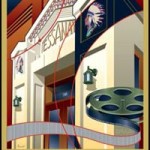
It was in this peaceful oak-shaded canyon that actor/director Gilbert M. Anderson arrived in 1912 with 52 technicians and actors from the Essanay Film Manufacturing Company of Chicago.  In much the same way as C. B. DeMille and actor Dustin Farnum would travel west to southern California two years later to make The Squaw Man, Anderson and his crew were looking for year-round sunshine and scenic western backgrounds with which to make movies.  They found exactly what they were looking for in Niles.

The Essanay Film Manufacturing Company derived its unusual name (pronounced S an’ A) from the first letters of the founding partners’ last names: S for George K. Spoor and A for Gilbert M. Anderson. In addition to being a partner in the firm, Anderson was also one of the studio’s leading stars, billed in Essanay’s popular western photoplays as “Broncho Billy.” In addition to western shoot-em-ups, the studio also produced a variety of dramatic and comedic films, including the popular Snakeville Comedies series.

George K. Spoor (left) was a showman and early motion picture distributor. Gilbert M. Anderson (right) was an actor/director who got his start in motion pictures with the Edison Film Company and Vitagraph. Together, Spoor and Anderson formed the Essanay Film Manufacturing Company in 1907. Photos courtesy of the Niles Essanay Silent Film Museum.George K. Spoor (left) was a showman and early motion picture distributor. Gilbert M. Anderson (right) was an actor/director who got his start in motion pictures with the Edison Film Company and Vitagraph. Together, Spoor and Anderson formed the Essanay Film Manufacturing Company in 1907. Photos courtesy of the Niles Essanay Silent Film Museum.

So, making a long story short, “Broncho Billy” got off the train in Niles, looked around, and decided he was in cowboy country.  After discussing matters with the Niles city fathers, who were quite agreeable to the idea of a studio that would bring new money into town, Anderson set up shop in an old barn and began making movies.  Later the same year George Spoor came out to Niles, where he and Anderson agreed on a plan. Essanay’s headquarters would remain in Chicago with Spoor running the business end of things from there while Anderson built a full-scale motion picture production facility in Niles.

Essanay's Niles facility: The main building measured 200-feet by 50-feet with a glass-roofed interior studio immediately behind it. The smaller white building on the right was the studio's stable (you can't make horse operas without horses) which also housed a blacksmith shop. The cottages across the back of the facility housed actors and technicians. In the foreground you can see the train tracks that brought "Broncho Billy" and his crew to Niles. Photo courtesy of the Niles Essanay Silent Film Museum.Essanay’s Niles facility: The main building measured 200-feet by 50-feet with a glass-roofed interior studio immediately behind it. The smaller white building on the right was the studio’s stable (you can’t make horse operas without horses) which also housed a blacksmith shop. The cottages across the back of the facility housed actors and technicians. In the foreground you can see the train tracks that brought “Broncho Billy” and his crew to Niles. Photo courtesy of the Niles Essanay Silent Film Museum.

Completed in June, 1913, Essanay’s $50,000 studio was immediately put into service, cranking out from two to five fifteen minute one-reelers a week. The studio’s roster of employees working in Niles grew to 80 with an annual payroll of $200,000. The flickers had arrived in northern California.

A Motion Picture Legend Grows to Stardom in Niles

In December of 1914 Charles Chaplin signed a one-year contract with Essanay. He left Mack Sennett’s Keystone Studios in Hollywood and traveled east to make a film at Essanay’s Chicago facility. Unhappy with that arrangement, Chaplin moved to the Niles studio and made the remainder of his 14 Essanay films there.

Charles Chaplin as his signature character, The Little Tramp. During a career that spanned about eight decades, Chaplin made a total of 82 films, at least ten of which featured him in the role of the beloved tramp. Photo believed to be in the public domain.Charles Chaplin as his signature character, The Little Tramp. During a career that spanned about eight decades, Chaplin made a total of 82 films, at least ten of which featured him in the role of the beloved tramp. Photo believed to be in the public domain.

Despite the fact that Chaplin left Essanay after only one year, that year turned out to be significant for both the actor and the studio. First, Essanay allowed Chaplin more creative control of his films which gave him the opportunity to fully develop his signature character, The Little Tramp. The first film featuring the tramp character (Kid Auto Races at Venice) was one of the last he made for Sennett, but Chaplin fleshed out the character and gave him the pathos element that made the tramp a legendary screen icon while at Essanay.

It was also during his year with Essanay that Chaplin began developing the stock company of players that would become so familiar to his fans during the coming years. This group included Leo White, Bud Jamison, and the woman who would star as his leading lady in 35 films during the next eight years, Edna Purviance. Edna played the love interest in Chaplin’s movies, as well as in his personal life.

Chaplin and Purviance in a production still from "The Cure" (1917). Photo believed to be in the public domain.Chaplin and Purviance in a production still from “The Cure” (1917). Photo believed to be in the public domain.

From Essanay’s point of view, 1915 was a significant year because the studio’s income hit an all-time high, largely due to the success of Chaplin’s films. It was for this reason that the popular actor made new salary demands when his Essanay contract came to an end in December, 1915. He wanted $10,000/week versus the $1,250/week he’d been making and a signing bonus of $150,000, a significant increase over the $10,000 bonus Essanay paid him the previous year.

For several reasons George Spoor rejected Chaplin’s demands and Essanay’s relationship with The Little Tramp came to an end. Having gained immense popularity with movie fans, however, Chaplin had no trouble finding a studio willing to meet his salary requirements. Chaplin returned to Hollywood and signed a contract with the Mutual Film Corporation that ultimately amounted to $670,000/year, making 26-year-old Charles Chaplin one the highest paid individuals in the world.

Motion Picture History in an Historic Theater

Before we enter the Niles Essanay Silent Film Museum, I should mention that the building housing the museum has an interesting history of its own. Back in 1913, this small storefront on the main street of Niles was one of a chain of motion picture theaters owned and operated by the Edison company. Silent films (mostly 15-minute one-reel shorts) were shown in the theater on Monday, Wednesday, Friday, and Saturday nights.

Back in 1913, the Edison Theater, which now houses the Niles Essanay Silent Film Museum, was the entertainment center of rural Niles, California. Photo: HPO collection.Back in 1913, the Edison Theater, which now houses the Niles Essanay Silent Film Museum, was the entertainment center of rural Niles, California. Photo: HPO collection.

Museum Gallery

As you walk through the front door, you’ll see a long hallway ahead of you. This is the museum gallery and it contains period photographs and memorabilia associated with Essanay’s history in Niles.

While visitors are certainly welcome to wander through the gallery on their own, I recommend going into the museum store (to your right from the entrance) and inquiring about hooking up with a docent for a free tour. Tours are handled on an informal basis, so a docent might be available right away, or you might need to kill a little time (the museum store is a great place to do this) until a docent finishes a tour that’s already started.

The reason for this suggestion is that signage is almost nonexistent in the museum and, unless you are already an expert on the silent film era and its equipment, much of what you see will have little meaning. The good news is the volunteer docents are among the most knowledgeable folks I know when it comes to silent films and Essanay. Trust me, taking a tour will prove fascinating and even downright amazing.

This is the view of the gallery that greets you when you enter the museum. The photos on the walls chronicle much of Essanay's history. Photo: HPO collection.This is the view of the gallery that greets you when you enter the museum. The photos on the walls chronicle much of Essanay’s history. Photo: HPO collection.
Displays like this show off memorabilia of the silent era, including reproductions of Essanay lobby posters. Photo: HPO collection.Displays like this show off memorabilia of the silent era, including reproductions of Essanay lobby posters. Photo: HPO collection.
Many citizens of Niles sat in these seats to watch motion pictures back in 1913. They are the only original furnishings left from the Edison Theater. The items displayed on the seats are props and artifacts representative of those used by Charlie Chaplin, Broncho Billy and other Essanay players. Photo: HPO collection.Many citizens of Niles sat in these seats to watch motion pictures back in 1913. They are the only original furnishings left from the Edison Theater. The items displayed on the seats are props and artifacts representative of those used by Charlie Chaplin, Broncho Billy and other Essanay players. Photo: HPO collection.

Museum Theater

You will probably find the theater empty unless you happen to visit the museum on a Saturday night, in which case the room will be filled with silent film fans enjoying some of the theater’s 8,000 films featuring the likes of Laurel & Hardy and Harold Lloyd cavorting on the screen to the accompaniment of a live pianist, just as they did in this same spot a century ago.

Once again the old Niles Edison Theater rings with laughter on Saturday nights. Photo: HPO collection.Once again the old Niles Edison Theater rings with laughter on Saturday nights. Photo: HPO collection.

Museum Equipment Room

The equipment room contains many fascinating items including several silent era cameras of the sort that captured moving pictures of Broncho Billy and Charlie Chaplin for their Essanay films. In those days the film in these cameras was hand-cranked by camera operators to whom a sense of rhythm was as valuable as a good eye. Even minor variances in the speed at which the camera was cranked could ruin an otherwise perfect take . . . and a lot of valuable film.

Tools of the trade: Hand-cranked cameras from the early days of motion pictures. Photo: HPO collection.Tools of the trade: Hand-cranked cameras from the early days of motion pictures. Photo: HPO collection.
In the days of silent film theaters, projectors occasionally malfunctioned and damaged the film prints being shown. When such incidents occurred, the projectionist would splice the film back together and go on with the show, discarding the damaged film. These bits and pieces of original silent film--apparently victims of projector malfunctions--were found by workers when the projection booth was restored. Photo: HPO collection.In the days of silent film theaters, projectors occasionally malfunctioned and damaged the film prints being shown. When such incidents occurred, the projectionist would splice the film back together and go on with the show, discarding the damaged film. These bits and pieces of original silent film–apparently victims of projector malfunctions–were found by workers when the projection booth was restored. Photo: HPO collection.
The legend on this silent era camera case explained what was going on to curious folks who happened upon a location shoot. Such encounters were quite common in and around Niles during Essanay's time there. Photo: HPO collection.The legend on this silent era camera case explained what was going on to curious folks who happened upon a location shoot. Such encounters were quite common in and around Niles during Essanay’s time there. Photo: HPO collection.

Museum Projection Booth

Climb the stairs for a look at the Edison Theater’s projection booth. It was restored along with other parts of the building to look and operate as it did in its heyday.  Here’s another spot where a tour docent will give you a lot of fascinating (and scary) information.

The first silent film projectors were hand-cranked in much the same way cameras of the era were operated. This is an example of such a projector. The large black box at the rear of the projector contained a carbon arc lamp, the projector's light source. The gold-colored lens to the right of the complex-looking film mechanism was used for projecting lantern slides. Lantern slides were used during intermissions to project announcements, local advertising, and the lyrics to songs for audience sing-alongs, a popular movie theater amusement of the day. Photo: HPO collection.The first silent film projectors were hand-cranked in much the same way cameras of the era were operated. This is an example of such a projector. The large black box at the rear of the projector contained a carbon arc lamp, the projector’s light source. The gold-colored lens to the right of the complex-looking film mechanism was used for projecting lantern slides. Lantern slides were used during intermissions to project announcements, local advertising, and the lyrics to songs for audience sing-alongs, a popular movie theater amusement of the day. Photo: HPO collection.
Slightly more modern projectors driven by electric motors have replaced the old hand-crank models originally used in the Edison Niles Theater. Note the tin shielding in this view of the projection booth's front wall. Motion picture film of the era consisted of an emulsion coating on a base of clear nitrate. Since nitrate is extremely flammable there was always a danger of the film catching fire. This was such a common occurrence that all interior surfaces of the projection booth were shielded with metal to protect the audience in the event of a film fire. In later years asbestos replaced metal shielding in most theaters. (NOTE: The silent films shown today in the museum theater are celluloid safety film duplicates of the originals.) Photo: HPO collection.Slightly more modern projectors driven by electric motors have replaced the old hand-crank models originally used in the Edison Niles Theater. Note the tin shielding in this view of the projection booth’s front wall. Motion picture film of the era consisted of an emulsion coating on a base of clear nitrate. Since nitrate is extremely flammable there was always a danger of the film catching fire. This was such a common occurrence that all interior surfaces of the projection booth were shielded with metal to protect the audience in the event of a film fire. In later years asbestos replaced metal shielding in most theaters. (NOTE: The silent films shown today in the museum theater are celluloid safety film duplicates of the originals.) Photo: HPO collection.

Museum Store

The Niles Essanay Silent Film museum store contains an excellent collection of books and other media pertaining to the silent film era, along with many books about the history of the San Francisco Bay Area. You’ll also find a wide variety of souvenirs to take home as remembrances of your visit to the museum.

Film history buffs will find treasures galore in the Niles Essanay Silent Film museum store.  While you're there, donate a few bucks to help this free museum to continue its good work. Photo: HPO collection.Film history buffs will find treasures galore in the Niles Essanay Silent Film museum store.  While you’re there, donate a few bucks to help this free museum to continue its good work. Photo: HPO collection.

Museum Research Library

I can personally vouch for the fact that the museum’s library contains a wonderful collection of rare film history books, documents, and other resources relating to Essanay and the silent film era in general. These materials are available to anyone needing them for research purposes. Contact the museum (see the information below) for an appointment.

Plan your Visit to the Niles Essanay Silent Film Museum

While the Niles Essanay Silent Film Museum is a little off the beaten path, vintage film enthusiasts will find that a visit to the museum is well worth the trip. Essanay’s unique history, an outstanding collection of artifacts, and knowledgeable docents guarantee you’ll come away from the museum with a good deal more than you came in with. There’s a lot of fascinating motion picture history packed into this old Edison theater!

Insider tip: while you’re in the museum store, pick up the two-buck pamphlet entitled Historic NILES California Walking Tour. Many of the homes and buildings in Niles a hundred years ago are still standing, including some of the Essanay crew cottages. This handy guide shows you how to find these historic sites. Also, with a little help from a museum docent, the pamphlet will guide you to the location where the memorable closing scene of The Tramp (1915) was filmed so you can top off your museum visit with a walk in Charlie Chaplin’s footsteps.

Museum Information

  • Location & Mail Address: 37417 Niles Boulevard, Fremont, California 94536
  • Telephone: 510.494.1411 or 510.796.1940 (9:00 AM-5:00 PM Pacific Time Mon – Sat)
  • Website: http://nilesfilmmuseum.org/#0931001
  • Museum Hours: Noon to 4:00 PM Saturday & Sunday
  • Museum Admission: Free (Donations are appreciated.)
  • Edison Theater Silent Film Showings Admission: $5.00 donation

…..

–H. P. Oliver for Classic Movie Hub

H. P. Oliver is an avid student of history, award-winning writer, and author of historical mysteries including “Winging IT” and “Silents!” both set during the glory days of Hollywood. Spinning whodunnits in the American pulp fiction tradition, Oliver takes fans back to bygone days with colorful imagery and period dialogue so convincing, readers will feel as if they are there! You can follow H.P. Oliver on twitter at @HP_Oliver

You can purchase H.P.’s books by clicking on the images below:


Posted in Books, Classic Movie Travels, Guest Posts, Silent Films | Tagged , , , , | Leave a comment

My Fair Ernest T. Bass


My Fair Ernest T. Bass

The woman at the book signing sounded more dismayed than angry. Why, she asked, hadn’t I devoted a single sentence of Andy & Don to Ernest T. Bass?

Ernest T. was the Tasmanian devil of Mayberry. Though he appeared in only five episodes of The Andy Griffith Show, Ernest T. rampaged through town with such memorable abandon that he left a deep impression on many viewers, particularly those of Opie’s generation. Billy Crystal, for one, was said to have been deeply moved by Ernest T. and his rock-hurling, scenery-shredding mayhem.

Howard Morris as Ernest T. Bass on The Andy Griffith Show

In Andy & Don, I tried to write a comprehensive account of the historic friendship between Andy Griffith and Don Knotts. Sadly, I could not be nearly so exhaustive in recounting the proud history of The Andy Griffith Show. So many talented actors, writers, directors and producers passed through Mayberry, and I simply could not fit all of them into my book. Ernest T. appears only briefly in Andy and Don, in an appendix.

Here, then, is a brief homage to Ernest T. and to my favorite of his Griffith episodes, “Mountain Wedding.”

Ernest T. Bass was Howard Morris, a Jewish comedian from the Bronx who had risen to fame as a regular on Sid Caesar’s legendary Your Show of Shows in the 1950s. Howard had worked with Aaron Ruben. Years later, as producer of the Griffith Show, Aaron approached Howard one day with the faintest sketch of a character, “kind of a big bumpkin,” as Aaron recalled later. The character was cast into the script of the season-three episode “Mountain Wedding.”

Howard crafted Ernest T. Bass into a force of chaos — a truly sinister hillbilly unleashed among Mayberry’s kinder, gentler hillbillies. Ernest T. was “the only truly broad, exaggerated character we had” in a company that always chose characters over caricatures, Aaron recalled in the 1990 television special Thirty Years of Andy.

Viewers might even have viewed Ernest T. as Andy Griffith’s “alter ego,” writes Griffith scholar Richard Kelly in his essential book The Andy Griffith Show: “a comic sort of Mr. Hyde set loose upon the peaceful, well-ordered, civilized town” that Andy is sworn to protect.

ernest t bass the andy griffith show

In “Mountain Wedding,” written by the legendary team of Jim Fritzell and Everett Greenbaum, Ernest T. scampers through brush, hurls rocks through windows and pops up from behind a hedge with a shotgun trained on Andy and Barney. (The rocks were ultra-light lava, the windows candy glass.) He is set on romancing Charlene Darling, a fellow rustic and sole daughter of the Darling clan, a hillbilly family assembled by the Griffith producers to exploit the musical talents of real-life bluegrass ensemble the Dillards.

Charlene Darling is already married, but Ernest T. is undeterred. He growls to the sheriff, “I oughta have a chance to sweet-talk and woo and charm her with my ways.”

Howard Morris’s performance in “Mountain Wedding” is manic, vaguely menacing and just a bit unhinged; at the close of the first act, viewers are left to wonder just what Ernest T. might do if his romantic intentions are thwarted.

“If you were to ask me,” Andy muses, “this Ernest T. Bass is a strange and weird character.”

“Just plain ornery is what he is,” replies Briscoe Darling, Charlene’s father.

Barney puts it more plainly: “I think he’s a nut!”

Ernest T. announces that he won’t honor Charlene’s vows because they were read by Andy, the justice of the peace, and not by a pastor. Andy and Barney resolve to stay the night at the Darling cabin and protect the family until a preacher can arrive and conduct a proper ceremony the next morning.

All this setup is partly an excuse for Andy to play music with the Dillards. Then, everyone goes to bed, and Andy and Barney find themselves unable to sleep for all the snoring around them. The chorus of snores was the idea of actor Denver Pyle, who played the Darling family patriarch, and it framed a memorable scene.

Denver Pyle “directed the Dillards like some sort of insane Leonard Bernstein,” recalled Mitch Jayne, the group’s bass player, in Neal Brower’s excellent book Mayberry 101. “It was so unbelievably colorful that it created an ambience more like a hog killing than anything else. . . . Neither Andy nor Don could handle it. Each time we would try a take, the two of them would slide out of their chairs onto the floor, helpless. Of course, that would free us to laugh, and I remember Rodney [Dillard] laughed so hard he fell out of bed. Director Bob Sweeney was too weak from laughing to do anything but just wave his hands like flippers. . . .To the best of my memory, we shot that scene for half an hour, trying to get it right. Don and Andy would do pretty good until they looked at each other. Andy’s eyes would start to squinch up, his mouth would get grim. Don would see that and just collapse.”

Ernest t bass barney fife mountain wedding

The next morning, Ernest T. marches into the wedding ceremony, shotgun in hand, and drags off the bride — who turns out to be Barney in drag.

“There was only one wedding dress,” Maggie Mancuso recalled when I interviewed her for Andy & Don. “And I had to wear it and Don had to wear it, and they didn’t have to do any alterations. He was a slim little guy.”

The ceremony is performed. Then, Barney comes crashing out of the woods, running from Ernest T., still wearing the wedding dress, fleeing unknown horrors and crying out for Andy, one of the odder scenes glimpsed on prime-time television in 1963.

Broadcast on April 29 of that year, “Mountain Wedding” was a late-season retread of well-worn Griffith themes that should have faded quickly into obscurity. But the Griffith gang elevated it into one of the finest performances of the series. I included it on my list of 20 great Griffith episodes at the close of Andy & Don.

Ernest T. emerged as a folk hero for the baseball-card set. Howard Morris worked steadily for three more decades, directing episodes of Andy Griffith, Hogan’s Heroes and The Dick Van Dyke Show, appearing in the Return to Mayberry reunion film and lending his voice to a great many animated programs; he also voiced the koala on Qantas Airlines commercials. Howard died in 2005.

…..

– Daniel de Visé for Classic Movie Hub

Daniel de Visé is Don Knotts’ brother-in-law and author of Andy and Don, a lively and revealing biography, and the definitive work on the legacy of The Andy Griffith Show and two of America’s most enduring stars. The book features extensive unpublished interviews with those closest to both men. De Visé shares a wealth of new information about what really went on behind the scenes, including personal struggles and quarrels. Click below to purchase the book on Amazon.
 

Posted in Posts by Daniel de Vise, TV Roles | Tagged , | Leave a comment

Debbie Reynolds “Make ‘Em Laugh” Book Giveaway (via Facebook January)

Debbie Reynolds “Make ‘Em Laugh” Book Giveaway!
Qualifying Entry Task for 
Facebook/Blog Contest

Okay, now it’s time for the Facebook/Blog version of our Make ‘Em Laugh: Short-Term Memories of Longtime Friends giveaway. This time we’ll be giving away TWO copies of the book courtesy of Harper Collins and authors Debbie Reynolds and Dorian Hannaway. And, remember, we’re also giving away EIGHT MORE copies via Twitter this month as well, so please feel free to enter that contest too…

In order to qualify to win one of these prizes via this Facebook/Blog contest giveaway, you must complete the below entry task by Saturday, January 30 at 10PM EST. We will pick two winners via a random drawing and announce them on Facebook and here on this Blog the day after the contest ends.

If you’re also on Twitter, please feel free to visit us at  @ClassicMovieHub for additional giveaways — because we’ll be giving away TEN MORE books there as well! (Click here for details.)

Make 'Em Laugh by Debbie Reynolds and Dorian Hannaway

…..

ENTRY TASK to be completed by Saturday, January 30, 10 PM EST — 

1) Answer the below question via the comment section at the bottom of this blog post

THE QUESTION:
What do you love most about Debbie Reynolds? 

…..

About the Book: From her acclaimed performances to her headline-making divorce from Eddie Fisher, raising a famous daughter to hitting the road with a successful one-woman show, Debbie Reynolds has been in the spotlight for decades. She’s met presidents, performed for the Queen of England, and partied with kings. A show business icon, she continues to sing and dance—and can drop more names than Andy Cohen. In this fabulous personal tour, she recalls wonderful moments with the greats of the entertainment world—Lucille Ball, Frank Sinatra, Bette Davis, Phyllis Diller, and many, many more—sharing stories that shed new light on her life and career and the glittering world of Hollywood then and now. Debbie has plenty to tell—and in Make ’Em Laugh, she dishes it in the warm, down-to-earth voice her fans adore.

…..

Click here for the full contest rules. 

Please note that only Continental United States (excluding Alaska, Hawaii, and the territory of Puerto Rico) entrants are eligible.

And — BlogHub members ARE eligible to win if they live within the Continental United States (as noted above).

And if you can’t wait to win the book, you can purchase it on amazon via the below link (click on image):

Good Luck!

…..

–Annmarie Gatti for Classic Movie Hub

Posted in Books, Contests & Giveaways, Posts by Annmarie Gatti | Tagged , | 15 Comments

The “Hollywood – Mystery in History” H.P. Oliver Book Giveaway (January Facebook and Blog Contest)

“Winging IT” and “Silents!” H. P. Oliver Book Giveaway
Qualifying Entry Task for Facebook/Blog Contest

Okay, now it’s time for the Facebook/Blog version of our H. P. Oliver Winging IT and Silents! Classic Movie Book Giveaway.  This time we’ll be giving away ONE COPY of EACH book courtesy of the author, H. P. Oliver! And, remember, we’re also giving away TWO More Copies of each book via Twitter this month as well, so please feel free to enter that contest too…

In order to qualify to win one of these prizes via this Facebook/Blog contest giveaway, you must complete the below entry task by Saturday, January 30 at 9PM EST. We will pick two winners via a random drawing and announce them on Facebook and here on this Blog the day after the contest ends (Sunday January 31).

If you’re also on Twitter, please feel free to visit us at  @ClassicMovieHub for additional giveaways — because we’ll be giving away TWO MORE copies of each book there as well! (Click here for details.)

Winging It and Slients, books by H. P. Oliver

…..

ENTRY TASK to be completed by Saturday, January 30, 9 PM EST —  1) Answer the below question via the comment section at the bottom of this blog post

THE QUESTION: What is one of your favorite Silent Films and why? 

…..

Please note that only Continental United States residents (excluding Alaska, Hawaii, and the territory of Puerto Rico) are eligible to enter this giveaway contest. (see contest rules for further information)

BlogHub members ARE also eligible to win if they live within the Continental United States (as noted above).

And if you can’t wait to win the books, you can purchase them on amazon via the below link (click on  images):


…..

–Annmarie Gatti for Classic Movie Hub

Posted in Books, Contests & Giveaways, Posts by Annmarie Gatti | Tagged | 5 Comments

Top Ten Songs You Didn’t Know Came From Ziegfeld Shows

Top Ten Songs You Didn’t Know Came From Ziegfeld Shows

You’ve probably heard certain songs a million times without knowing they are a lot older than you think! A large portion of American standards originated in one producer’s shows: Florenz Ziegfeld. Below is a list of just ten songs from Ziegfeld’s productions that have become standards. To read more about music of the golden era as found in Ziegfeld’s shows, see our book,  Ziegfeld and His Follies: A Biography of Broadway’s Greatest Producer.

1) Shine On Harvest Moon

Nora Bayes and Jack Norworth, Ruth Etting, Doris Day, Shine on Harvest MoonNora Bayes and Jack Norworth, Ruth Etting, Doris Day

This standard from the great American songbook, written by Ziegfeld star Nora Bayes and her husband Jack Norworth (Norworth won fame by penning ‘Take Me Out to the Ballgame’) originated in the Ziegfeld Follies of 1908. Ziegfeld’s mistress, Lillian Lorraine, also sang the song in his first wife, Anna Held’s, show, Miss Innocence, which Ziegfeld also produced (Anna was naturally a bit peeved that the show’s hit song was sung not by her but her husband’s lover!). Ruth Etting, who Doris Day immortalized in the biopic “Love Me or Leave Me,” reprised the song in the nostalgic Ziegfeld Follies of 1931. Dozens of artists including Rosemary Clooney have recorded “Harvest Moon” over the decades.

…..

2) By the Light of the Silvery Moon

Lillian Lorraine and Doris Day and Gordon MacRae, By the Light of the Silvery Moon

Lillian Lorraine and Doris Day and Gordon MacRae

Another song about the moon became a hit after “Shine On Harvest Moon.” “By the Light of the Silvery Moon” was written by Gus Edwards and Edward Madden and debuted in the Ziegfeld Follies of 1909, sung by Nora Bayes. Lillian Lorraine, Ziegfeld’s mistress, sang it next. The song was such a hit that Ziegfeld inserted it in Miss Innocence to replace “Shine On Harvest Moon.” The song enjoyed newfound fame in the 1953 Doris Day film, By the Light of the Silvery Moon.

…..

3) Mandy

Eddie Cantor and Rosemary Clooney, Bing Crosby, and Danny Kaye

Eddie Cantor and Rosemary Clooney, Bing Crosby, and Danny Kaye

This classic by Irving Berlin debuted in the Ziegfeld Follies of 1919. Eddie Cantor sang it in a minstrel number. The song is best remembered today because of its colorful rendition in White Christmas (1954) by Rosemary Clooney and Bing Crosby.

…..

4) Look For the Silver Lining

Marilyn Miller and Judy Garland, Look for the Silver Lining

Marilyn Miller and Judy Garland

This song, written by Jerome Kern and B.G. DeSylva, premiered in Ziegfeld’s Sally (1920). The tune, sung by Ziegfeld’s greatest female star, Marilyn Miller, brought tears to audience’s eyes because it resonated with their hope for better during the difficult years following World War I. Judy Garland sealed the tune’s fame in Till the Clouds Roll By (1946), a biopic of Jerome Kern in which she portrayed Marilyn Miller.

…..

5) Blue Skies

oster for the Fred Astaire/Bing Crosby film and Bing Crosby and Danny Kaye in “White Christmas.", Blue Skies

Poster for the Fred Astaire/Bing Crosby film and Bing Crosby and Danny Kaye in “White Christmas.”

This zippy tune has made its way into countless musicals including White Christmas and the Fred Astaire film Blue Skies (1946). It was written by Irving Berlin, Ziegfeld’s favorite songwriter. The song debuted in Betsy, a lesser known Ziegfeld production that premiered in 1926. The show was scored primarily by Rodgers and Hart, but Berlin’s tune stopped the show, much to the chagrin of the songwriting duo.

…..

6) Old Man River

Paul Robeson and Frank Sinatra

Paul Robeson and Frank Sinatra

“Old Man River” is perhaps the most famous and enduring tune to emerge from a Ziegfeld show. Written by Jerome Kern and Oscar Hammerstein, it was first heard in Ziegfeld’s Show Boat (1927). Jules Bledsoe originally sang it, but the legendary singer Paul Robeson sang it in the show’s 1931 revival as well as the 1936 film adaptation. William Warfield sang it again in the 1951 lush Technicolor film version of Show Boat and Frank Sinatra sang it in Till the Clouds Roll By. It remains one of the most profound songs to come from a Broadway musical.

…..

7) Can’t Help Loving That Man of Mine

Helen Morgan in the 1927 show and Ava Gardner and Kathryn Grayson in thr 1951 “Show Boat.”Helen Morgan in the 1927 show and Ava Gardner and Kathryn Grayson in the 1951 “Show Boat.”

Another song that came from Show Boat, this one has enjoyed numerous renditions by famous artists including Lena Horne in Till the Clouds Roll By and Helen Morgan in the original show as well as the 1936 film remake. Contrary to popular belief, Ava Gardner did not sing the tune in the 1951 film of Show Boat; she was dubbed by Annette Warren.

…..

8) Makin’ Whoopee

Eddie Cantor and Cyndi LauperEddie Cantor and Cyndi Lauper

This tune by Gus Kahn and Walter Donaldson made its way into the American lexicon in the 1920s after debuting in Ziegfeld’s show Whoopee in 1928, starring Eddie Cantor. The show was made into a film in 1930, which was produced by Ziegfeld himself with musical numbers directed by a young Busby Berkeley. “Makin; Whoopee,” risqué for its time, substituted the word “whoopee” for sex. Apparently Winston Churchill loved the song and recited every verse verbatim to Eddie Cantor upon meeting him at London’s Savoy Hotel! The song has been recorded by dozens of artists including Bing Crosby, Nat King Cole, Elton John, and Cyndi Lauper!

…..

9) The American in Paris Ballet

Harriet Hoctor and ballerinas; Gene Kelly, Leslie Caron, and dancers in 1951 film, An American in ParisHarriet Hoctor and ballerinas; Gene Kelly, Leslie Caron, and dancers in 1951 film.

This classic George Gershwin composition did not originate in Gene Kelly’s legendary 1951 film. Rather, it debuted in Ziegfeld’s Show Girl in 1929. Ballerina Harriet Hoctor danced to its strains, though the biggest star if the show was Ruby Keeler, who later became ubiquitous in Busby Berkeley films of the 1930s including 42nd Street. Sadly, in 1929, critics deemed Gershwin’s now revered composition as “subpar”!

…..

10) Liza

Ruby Keeler in “Show Girl”; Judy Garland Liza MinnelliRuby Keeler in “Show Girl”; Judy Garland Liza Minnelli

The tune that is now known as the song that inspired Judy Garland to name her daughter Liza began, like “An American in Paris,” in Ziegfeld’s Show Girl. The tune was a showstopper when, for the first few weeks of performances, Al Jolson stood from his place in the audience and began singing the song to his wife, Ruby Keeler, as she danced onstage.

…..

We hope this blog has left you humming a few tunes that bring back pleasant memories or, if you’ve never heard one of the songs, has filled you with the desire to hear them!

…..

–Sara and Cynthia Brideson for Classic Movie Hub

Sara and Cynthia Brideson are avid classic movie fans, and twin authors of Ziegfeld and His Follies: A Biography of Broadway’s Greatest Producer and Also Starring: Forty Biographical Essays on the Greatest Character Actors of Hollywood’s Golden Era, 1930-1965. They also are currently working on comprehensive biographies of Gene Kelly and Margaret Sullavan. You can follow them on twitter at @saraandcynthia or like them on Facebook at Cynthia and Sara Brideson.

If you’re interested in learning more about Cynthia’s and Sara’s books, please click through to amazon via the below links:


Posted in Posts by Sara and Cynthia Brideson | Tagged , | 4 Comments

The “Hollywood – Mystery in History” H.P. Oliver Book Giveaway (January Twitter Contest)

“Winging IT” and “Silents!” H. P. Oliver Book Giveaway
Qualifying Entry Task for Twitter Contest

Well, it’s time for our next contest! This time we’ll be giving away TWO COPIES EACH of H. P. Olivers’s Winging IT and Silents! via Twitter — courtesy of the author himself, H. P. Oliver! (plus ONE more of each book via Facebook, details to follow on Wednesday).

In order to qualify for to win one of these books via this Twitter contest giveaway, you must complete the following task by Saturday, January 30 at 9PM EST. However, the sooner you enter, the better chance you have of winning, because we will pick a winner on four different days within the contest period, via random drawings, as listed below… So if you don’t win the first week that you enter, you will still be eligible to win during the following weeks until the contest is over.

  • Saturday, January 9: “Winging IT” One Winner
  • Saturday, January 16: “Silents!” One Winner
  • Saturday, January 23: “Winging IT” One Winner
  • Saturday, January 30: “Silents!” One Winner

We will announce the winner(s) on Twitter, the day after each winner is picked at 9PM EST (for example, we will announce the first winner on Sunday January 10 at 9PM EST on Twitter). If you’re also on Facebook and want more chances to win, visit us at Classic Movie Hub on Facebook for additional giveaways — because we’ll be giving away ONE MORE copy of each book there as well!

Winging It and Slients, books by H. P. Oliver

…..

ENTRY TASK (2-parts) to be completed by Saturday, January 30 at 9PM EST — BUT remember, the sooner you enter, the more chances you have to win…

1) Answer the below question via the comment section at the bottom of this blog post

THE QUESTION:
Who is one of your favorite Silent Stars and why? 

2) Then TWEET (not DM) the following message:
Just entered to win the H.P. Oliver Classic Movie #BookGiveaway courtesy of @ClassicMovieHub and author @HP_Oliver 

…..

Please note that only Continental United States residents (excluding Alaska, Hawaii, and the territory of Puerto Rico) are eligible to enter this giveaway contest. (see contest rules for further information)

BlogHub members ARE also eligible to win if they live within the Continental United States (as noted above).

And if you can’t wait to win the books, you can purchase them on amazon via the below link (click on images):


…..

–Annmarie Gatti for Classic Movie Hub

Posted in Books, Contests & Giveaways, Posts by Annmarie Gatti | Tagged | 14 Comments

Happy National Spaghetti Day!

Just for Fun…

Yes the incredibly gorgeous Sophia Loren is a great believer in the power of pasta… So, to celebrate today, National Spaghetti Day, (as they say in Italian) ‘mangia’…

national spaghetti day, sophia loren, everything you see I owe to spaghetti…..

–Annmarie Gatti for Classic Movie Hub


Posted in Holiday Tributes, Posts by Annmarie Gatti | Tagged , | Leave a comment