Darla Jean Hood was born on November 8, 1931, in Leedey,
Oklahoma. She was born to James and Elizabeth Hood. James worked as a bank
teller, while Elizabeth was a housewife. Elizabeth was instrumental in
introducing Hood to song and dance, regularly taking her to music lessons in
Oklahoma City, Oklahoma. By her third birthday, Hood was scouted by Hal Roach
Studios casting director Joe Rivkin. After a successful screen test, she and
her family traveled to Culver City, California, so that she could appear in the
Our Gang shorts.
Initially, she appeared in Our Gang as a character named Cookie. For all her other Our Gang appearances, she carried out the role of Darla. Her character was well-known for being the love interest of Alfalfa, as well as other characters on occasion. Among many screen appearances, she could be seen in Our Gang Follies of 1936(1935) and The Bohemian Girl (1936) with Laurel and Hardy. Her final Our Gang appearance was in Wedding Worries (1941).
a young Darla
As she grew, she pursued more mature roles while attending
Fairfax High School. Continuing to exhibit her vocal abilities, she organized a
vocal group at Fairfax called the Enchanters, which featured her vocals and the
back-up vocals provided by four male students. Upon graduation, the group was
booked to partake in a variety show, remaining with Ken Murray’s Blackouts
variety show throughout its run in New York City and Hollywood.
Hood married singer and insurance salesman Robert W. Decker
in 1949. They divorced in 1957.
Later, Hood appeared solo in nightclubs and as a guest on television shows. She worked with ventriloquist Edgar Bergen as a leading actress in his sketches and performed regularly on The Merv Griffin Show. She also recorded several singles for Ray Note and Acama labels. Rivkin, who discovered her, saw the cover to one of her albums and eventually cast her in what would be her final film role and first adult role in a film—portraying a secretary in The Bat (1959) with Vincent Price.
Darla Hood as Judy Hollander in The Bat (1959)
Hood continued to appear as a guest on many television
shows, including You Bet Your Life, The Jack Benny Show, and The
Little Rascals Christmas Special. She sang and offered voiceovers on
commercials for Campbell’s Soup and Chicken of the Sea tuna. Additionally, she
carried out a nightclub act at the Coconut Grove in Los Angeles, California;
Copacabana in New York, New York; as well as the Sahara Hotel and Casino in Las
Vegas, Nevada.
Hood married for the second time to record company executive
Jose Granson in 1957, with whom she had three children and remained married
until her passing.
Hood was working on organizing a 1989 Little Rascals reunion
when she needed to undergo an appendectomy at Canoga Park Hospital. She passed
away from heart failure on June 13, 1979. She was 47 years old. Hood is
interred at Hollywood Forever Cemetery in Hollywood, California.
There are some locations of relevance to Hood that remain
today. In 1940, Hood and her parents lived at 911 N. Alfred St., Los Angeles,
California. This location no longer stands.
In 1956, she lived at 13802 Runnymede St., Van Nuys,
California. The home still stands today.
Darla’s 1956 residence at 13802 Runnymede St., Van Nuys, California
Hollywood Forever Cemetery is located at 6000 Santa Monica Blvd., Los Angeles, California.
Annette Bochenek, Ph.D., is a film historian, professor, and avid scholar of Hollywood’s Golden Age. She manages the “Hometowns to Hollywood” blog, in which she profiles her trips to the hometowns of classic Hollywood stars. She has also been featured on the popular classic film-oriented television network, Turner Classic Movies. A regular columnist for Classic Movie Hub, her articles have appeared in TCM Backlot, Silent Film Quarterly, Nostalgia Digest, The Dark Pages Film Noir Newsletter, and Chicago Art Deco Society Magazine.
A century later, Chaney’s ‘Hunchback’ still amazes
If you were a moviegoer 100 years ago in 1923, you would have been treated to laughs courtesy of comedy greats Charlie Chaplin and Buster Keaton. You might have held your breath as Harold Lloyd hung dangerously from a clock high above a city street in Safety Last!
You would have been awed by the impressive parting of the Red Sea in Cecil B. DeMille’s big-screen spectacle The Ten Commandments, the biggest hit of 1923.
If you were looking to be frightened, your entertainment choices dwindled dramatically. The number of horror films released in 1923 could nearly be counted on one hand. But among the very few was something very special: Lon Chaney in The Hunchback of Notre Dame.
Esmeralda (Patsy Ruth Miller) shows kindness to the mistreated Quasimodo (the superb Lon Chaney) in the 1923 silent film The Hunchback of Notre Dame.
We can pause to acknowledge that not everyone considers Hunchback a horror film. If you don’t either, you’re in good company since the esteemed Christopher Lee didn’t think it was a horror film either. Nor did author Carlos Clarens who called the film a “historical spectacle rather than a horror film” in his Illustrated History of the Horror Film. More recently, an article in Paste magazine said it wasn’t hard to make the case that it was “more adventure or romantic drama than it is a horror film, save for one key characteristic: The iconic, unavoidably grotesque appearance of its title character.” (I would add it’s a beauty and the beast story of the most tragic kind.)
But there is horror in Hunchback that is found in its deep cruelty, brutality and malice that caused Variety to call the film a “two-hour nightmare” upon its release.
Chaney had long wanted to make a film of Victor Hugo’s 1831 novel about the mistreated Quasimodo, a deaf, half-blind and deformed man who is the bell ringer at the Cathedral of Notre Dame in 1482. As men of power, greed and lust use and abuse him, he falls in love with and protects lovely young Gypsy dancer Esmeralda. The story’s moral was to teach us not to judge people by how they look.
There were at least three film versions already made when Chaney started to explore his options. Alice Guy-Blanche and Victorin-Hippolyte Jasset co-directed a 10-minute French short called Esmeralda in 1905; a British short of the same name was released in 1922. Both, as expected from the title, focused on Esmeralda. A 26-minute version of the novel under the full title of Hunchback of Notre Dame was released in 1911.
In 1921, Chaney acquired the film rights and was willing to go the extra mile to get it done – even if it meant making it overseas. He had an early deal with the German studio, Chelsea Pictures Company which fell through. But the success of the Chaney films The Miracle Man (1919) and The Penalty(1920) helped Irving Thalberg convince Universal co-founder Carl Laemmle to make Hunchback, as the studio announced it would in August of 1922.
A page from Universal Weekly, a publication of Universal Studios, touts the announcement of Lon Chaney as The Hunchback of Notre Dame.
It wouldn’t be just any film either – it would be a movie of a scale so grand it had never been attempted by Universal before. It took six months to build a 19-acre set with a re-creation the Notre Dame Cathedral including its “Gallery of Kings” – the statues of each king of France that line the western façade – along with surrounding streets. So many extras were used for the film – hundreds were needed for the “Court of Miracles” scene alone – that 3,000 costumes had to be made.
Hunchback was filmed from Dec. 16, 1922 to June 8, 1923 and released on Sept. 6, 1923. The director was Wallace Worsley, an unusual choice at first glance, but he had worked with Chaney to great success on four other films.
At a final budget of about $1,250,000, it was the most expensive film Chaney ever made but it easily made back its budget by pulling in $3.5 million – a fortune in 1923. That box office figure is greater than even Chaney’s most famous film, The Phantom of the Opera (1925).
Becoming Quasimodo
By this time, Chaney had earned the title of “The Man of a
Thousand Faces” for his innovative makeup and incredible physical ability to
contort his body in ways we continue to marvel at today.
After playing cripples – or pretend cripples – in such films as TheMiracle Man, The Penalty, The Shock and Flesh and Blood, Chaney proclaimed that Hunchback would be his final “cripple” role. (Of course, that didn’t last long. In 1927, Chaney was outstanding as a convict pretending to be a cripple in a circus in The Unknown.)
For Hunchback, Chaney kept his makeup faithful to
Hugo’s description that Quasimodo’s “whole person was a grimace.”
He had a horseshoe mouth, broken teeth, a little left eye
and a right eye that disappeared beneath an enormous wart. His head was huge,
topped by bristly hair. His feet were large, hands were monstrous and there was
an enormous hump between his shoulders.
“One would have pronounced him a giant who had been broken
and badly put together again,” Hugo wrote and that’s what Chaney created.
Despite all the hideous prosthetics, Lon Chaney is able to show the humanity behind Quasimodo in The Hunchback of Notre Dame.
To play the deformed bell ringer, Chaney wore a breast plate, shoulder pads and a 70-pound rubber hump that was harnessed to him under a skin-colored rubber suit that was affixed with animal hair. It was incredibly heavy, weighing him down so much that he couldn’t stand erect for the three months of filming, causing him pain. The rubber suit made him unbearably hot, drenching him in sweat daily. He couldn’t even close his mouth because of a device used for his face makeup.
It’s difficult not to focus on that intense makeup when
watching Hunchback, yet Chaney had the unique ability to make the
audience look beyond the grotesque makeup to really see Quasimodo and feel his
pain.
The reviewer for Motion Picture World in 1923 certainly understood: “Here then is a picture that will live forever. Chaney’s portrayal of Quasimodo the hunchback is… a marvel of sympathetic acting. Chaney, in some miraculous way, awakens within us a profound feeling of sympathy and admiration for this most unfortunate and physically revolting human being.”
The Nov. 29, 1923 issue of Bioscope echoed a similar sentiment. “His extraordinary make-up as a veritable living gargoyle reaches the limit of grotesquery (and at moments seems to go a shade beyond it) but his sprawling movements and frantic gestures are brilliantly conceived …”
A review from the trade journal Harrison’s Reports seems
prophetic reading it today as it states that “Mr. Chaney’s work will live in
the memory when all else will have faded away.”
A century later, those words ring true on Chaney’s Quasimodo – a cinematic work of art.
Also from 1923
“The Unknown Purple” is a 1923 lost film about an inventor who can turn himself invisible.
A search of films made in 1923 revealed only a few possible horror movies. The Wolf Man, starring John Gilbert and Norma Shearer(!), sadly wasn’t what its title suggests. Others are lost like TheUnknown Purple with its very intriguing spin on The Invisible Man: A poor inventor uses ultra-violet rays to turn invisible as he seeks revenge against his unfaithful wife and business partner who framed him for a crime. Unfortunately, the rays leave a purple glow causing a problem for this invisible man. I truly wish I could see this film.
The year also brought the third silent film version of The Monkey’s Paw, an adaptation of the 1902 short story by W.W. Jacobs about a monkey’s paw that grants its holder three wishes with terrifying results. If you can get to Britain, you can see an incomplete version of the film.
The Mystery of Fu-Manchu is a 15-part film serial with some dark, but fun, themes.
You can find some episodes of The Mystery of Dr.
Fu-Manchu to watch online. Based on the first of the Fu-Manchu novels
that Sax Rohmer wrote in 1913, this 1923 film serial had 15 self-contained
short episodes that each came with a gimmick such as a haunted house, a
snake-head cane with a live killer snake hidden inside, a cat with poisoned
claws and a torture cage with rats. Now that’s dark.
Guests at a dinner party are initially mesmerized by the “shadow puppets” created by a strange visitor – until he turns his skills on their shadows in the 1923 German film Shadows: A Nocturnal Hallucination.
One exciting discovery was the German filmSchatten – Eine nächtliche Halluzination(also known as Shadows – a Nocturnal Hallucination and Warning Shadows). A flirtatious young wife, a jealous husband, four suitors and a mysterious shadow puppeteer are the ingredients of this psychological horror story filled with shadows, reflections, lust and jealousy. That alternate title of Warning Shadows is a hint about the movie.
A husband’s dinner party for his wife is interrupted by an uninvited visitor with a bag of magic. As the husband’s jealousy grows with each flirtatious glance between his young wife and guests, the puppeteer plays with shadows releasing desires, possessiveness and even violence.
The full-length film was originally made without intertitles, to allow the strong visuals to tell the story. But without them, it is difficult to fully understand what’s happening. Yet it is mesmerizing to watch as the shadows grow and change, projecting things that are real – and not. In one scene, the husband watches shadows from behind a curtain that seem to show his wife being undressed by a man – but that isn’t the case.
A jealous husband lurking behind a curtain is fooled by what he sees in Shadows: A Nocturnal Hallucination.
Director Arthur Robison also plays with mirrors and reflections in the way he does with shadows. As the husband waits outside his wife’s bedroom for a young man to leave, we can see the husband’s horror mount as he hides by the door and sees the reflection of the two in a mirror. When the young man backs out of the bedroom, we see him and the husband in both the mirror and hallway. Perhaps there are two sides to every story?
A reason this film is interesting in theory and visuals and that it features the work of some cast and crew of the 1922 German masterpiece Nosferatu: cinematographer Fritz Amo Wagner, designer Albin Grau, who also came up with concept; and actors Alexander Granach as the puppeteer and Gustav von Wangenheim as a young suitor.
I’ll be watching Shadows: A Nocturnal Hallucination/Warning Shadows again.
Toni Ruberto, born and raised in Buffalo, N.Y., is an editor and writer at
The Buffalo News. She shares her love for classic movies in her blog, Watching Forever and is a
member of the Classic
Movie Blog Association. Toni was the president of the former Buffalo
chapter of TCM Backlot and now leads the offshoot group, Buffalo Classic Movie
Buffs. She is proud to have put Buffalo and its glorious old movie palaces in
the spotlight as the inaugural winner of the TCM in Your Hometown contest. You
can find Toni on Twitter at @toniruberto.
A couple of years ago at the Noir Nook, I remedied my penchant for focusing on the distaff side of noir by shining the spotlight on some of my favorite noir actors. Now that 2023 is upon us, I thought it was about time to show a little more love to the gents; this time, I’m not looking at the main characters, but a couple of fellas in support of the main, who deserve just as much attention.
Chickamaw Mobley (Howard da Silva) in They Live By Night
(1948)
Howard Da Silva, Jay C. Flippen, Farley Granger, and William Phipps in They Live by Night (1948)
One of my (many) favorite noirs, and one of the few that has made me tear up at the end, They Live By Night stars Farley Granger as Arthur “Bowie” Bowers, who escapes from prison with two other inmates and falls in love with Keechie Mobley (Cathy O’Donnell), the niece of one of his fellow escapees. Like many a noir, this one involves a scheme for “one last job” – and like the best laid plans of mice and men, things don’t turn out as intended.
Howard da Silva plays one of the escaped men, Chickamaw Mobley, who we see in the first scene driving the getaway car, which has been commandeered from the hapless farmer sitting beside him. When the car blows a tire and Chickamaw drives off the road into a nearby field, we get our first glimpse of this guy’s personality. The owner of the car makes one simple remark (“I knew that tire had to go”) and Chickamaw (who, incidentally, is blind in one eye) is off to the races. He tells the man he talks too much, snatches him from the car, and is prepared to shotgun him on the spot – if he hadn’t been stopped by the third convict comrade, T-Dub (Jay C. Flippen), the car owner would surely have met his maker that day. As it is, Chickamaw shoves the man to the ground and wallops him into unconsciousness.
Chickamaw is a mass of contradictions. He appears, at times,
to be easy-going and amused by the goings-on around him, but he’s scary, too,
and quick to fly off the handle. He’s cold-blooded, as we see with the farmer,
and later in the film when a cop tries to detain him after a car accident, but
he’s hypersensitive about references to his blind eye. He stresses that the
three former inmates have to “look and act like other people,” but he hankers
for fame and he’s chafed because the local newspaper “didn’t print a very big
piece” about their prison break. Of the three men, it’s Chickamaw who’s the most
menacing – the one that you’d least want to be left alone in a room with. But one
thing’s sure – you won’t soon forget him.
Marty Waterman (Elisha Cook, Jr.) in Born to Kill (1947)
Elisha Cook, Jr. and Esther Howard in Born to Kill (1947)
Born to Kill is yet another personal favorite. In it, Lawrence Tierney is the aptly named Sam Wild, who commits a double murder in the first 10 minutes of the film, jumps into an affair with Helen Trent (Claire Trevor), the (engaged) woman who finds the bodies – and then attempts to leap into a higher social stratum by marrying Helen’s wealthy foster sister, Georgia (Audrey Long). Meanwhile, his crimes are on the verge of exposure because Mrs. Kraft (Esther Howard), a friend of one of Sam’s victims, is determined to find the man responsible.
Elisha Cook’s Marty is Sam’s bosom buddy and lifelong pal. We don’t know exactly what kind of relationship they have, or how long they’ve had it, but we do know that they were roommates in Reno, and that Marty looks after Sam like a mother bear to her favorite cub. When Sam flees to San Francisco, Marty’s not far behind. When Sam marries Georgia, Marty’s the best man. When Marty learns about the ongoing relationship between Sam and his sister-in-law, he has a few choice words of warning for Helen. And when Mrs. Kraft comes to town and hires a private eye… well, Marty has something to say about that, too.
Marty is the kind of friend we all wish we had. He doesn’t
encourage Sam’s misdeeds, but he’s not judgmental, either. He’s supportive and
understanding, soothing and empathetic. When Sam tells him about the murders,
Marty doesn’t scold, but he does offer his friend some practical advice: “Honest,
Sam, you go nuts about nothin’. Nothin’ at all. You gotta watch that,” Marty
warns. “You can’t just go around killin’ people whenever the notion strikes
you. It’s not feasible.” No matter what Sam does, he can count on Marty to have
his back – and not only have his back, but to do whatever he has to do to
secure Sam’s safety. It’s Marty’s tough luck that Sam doesn’t realize just how
good a friend he has.
–
Stay tuned for future Noir Nooks, where I’ll explore more
first-rate supporting gents. Meanwhile, you can catch both They Live By
Night and Born to Kill for free on YouTube and check out these
characters for yourself!
You won’t be sorry.
…
– Karen Burroughs Hannsberry for Classic Movie Hub
Karen Burroughs Hannsberry is the author of the Shadows and Satin blog, which focuses on movies and performers from the film noir and pre-Code eras, and the editor-in-chief of The Dark Pages, a bimonthly newsletter devoted to all things film noir. Karen is also the author of two books on film noir – Femme Noir: The Bad Girls of Film and Bad Boys: The Actors of Film Noir. You can follow Karen on Twitter at @TheDarkPages. If you’re interested in learning more about Karen’s books, you can read more about them on amazon here:
Although it’s not as widely celebrated today as Bringing Up Baby (1938), director Howard Hawks’ Twentieth Century (1934) is another go-for-broke screwball comedy with protagonists who are all bonkers. This earlier picture stars John Barrymore and Carole Lombard as dueling divas whose egos are too big for their own good, and each of them is so over the top with hammy histrionics that you can’t take anything they do seriously. For some people that might be too much of a good thing, but I love the fast-paced wackiness of this ridiculous story and the hilarious performances of its stars. If you enjoy the rapid patter of Hawks’ other screwball classics, like His Girl Friday (1940) and Ball of Fire(1941), you’ll delight in the romantic and verbal antics of Barrymore and Lombard in Twentieth Century.
Oscar (John Barrymore) and his star Lily (Carole Lombard) share a rare tender moment in their tempestuous relationship.
Barrymore plays Broadway director Oscar Jaffe, who takes eager young actress Mildred Plotka (Lombard) and transforms her into stage star Lily Garland. Oscar gets more than he bargained for, however, as Lily’s ego and need for attention fully match his own, which dooms their partnership both on stage and at home. Lily abandons Broadway for Hollywood, leaving Oscar’s subsequent productions to flop, until the pair meet up again while traveling on the 20th Century Limited. Oscar hatches a plan to get Lily back with help from his two chief assistants, Oliver (Walter Connolly) and Owen (Roscoe Karns).
Lily, Owen (Roscoe Karns), and Oliver (Walter Connolly) all endure Oscar’s temper tantrums and machinations.
The movie is adapted from a stage play, which shows somewhat in its limited settings, but most of the action takes place on a train where we don’t notice that confined space as much. It’s the train that gives the movie its name; the 20th Century Limited ran between New York and Chicago from 1902 to 1967. You might, however, justly infer that the title refers to the modernity of the story in its focus on dual careers, rapid change, and the way Hollywood was then luring away stage stars with more money and greater fame. The train speeds along just like the dialogue, carrying its cargo of eccentric characters from one city to another. A moving train is a liminal space where transformation happens and shifts occur; our characters are by no means on solid ground. Oscar, Lily, Oliver, and Owen all vacillate accordingly, between moods, resolutions, states of inebriation, and feelings toward each other, but they’re not the only mutable passengers aboard. Adding to the confusion is Etienne Girardot as Matthew J. Clark, an elderly, milquetoast fellow who is sometimes sane and sometimes mad as a hatter. In his latter state he runs around the train covering everything in sight with “Repent” stickers and leading train employees on a frantic chase. We come to suspect that nobody in or on the 20th Century is likely to be sane.
Lily gives Oscar a swift kick in the rear as they clash in one of their constant battles.
While many screwball comedies, including Hawks’ Bringing Up Baby and Ball of Fire, feature a chaotic woman who disrupts an orderly man’s life, Twentieth Century more closely resembles His Girl Friday (1940) with its chaotic man who schemes to regain control of the woman who has gotten away from him. The difference here is that Lombard’s Lily is every bit as unscrupulous and uncontrollable as Oscar; she kicks, screams, throws tantrums, and make scenes with equal enthusiasm. The result is a battle of the hams between Barrymore and Lombard, which is a riot onscreen but would make for an unbearably toxic relationship in real life. Narcissists usually seek out less self-obsessed partners for good reason; there’s not enough room in the relationship for two of them. Oscar and Lily are a perfect match for each other because they’re exactly alike, but they inevitably clash because they both have such enormous egos. Neither of them learns anything from this experience or improves in any discernible way because they’re more like caricatures than human beings, a fact that Lily recognizes and even highlights. “We’re not people, we’re lithographs,” she tells Oscar. “We don’t know anything about love unless it’s written and rehearsed. We’re only real in between curtains.” That truth undermines any hope for a happy ending, and indeed we don’t really get one, but we do get the sense that Oscar and Lily will forever be rushing back and forth between New York and Chicago, love and loathing, getting together and breaking up, like perpetual passengers on modernity’s crazy train.
Lily and Oscar spend more time fighting than making up during their train trip, which doesn’t bode well for Oscar’s attempts to win Lily back as both star and lover.
Twentieth Century did bring real change to Carole Lombard’s career, as it launched her into a string of great screwball comedy roles, including My Man Godfrey (1936), Nothing Sacred (1937), and To Be or Not to Be (1942). Barrymore, already a legend of stage and the silent screen, was waning thanks to age and alcoholism and would die at the age of 60 in 1942, just a few months after Lombard perished in a tragic plane crash. See him in the screwball classic Midnight (1939) for a late comedic role, but don’t miss earlier films like The Beloved Rogue (1927), Svengali (1931), Grand Hotel (1932), and Dinner at Eight (1933). Roscoe Karns and Walter Connolly both have memorable roles in It Happened One Night (1934), with Karns also turning up in His Girl Friday and Connolly appearing with Lombard again in Nothing Sacred. For even more screwball delights, see fan favorites like The Awful Truth (1937), The Philadelphia Story (1940), The Lady Eve (1941), and The Miracle of Morgan’s Creek (1943). Twentieth Century can be hard to get on DVD or Blu-ray, but it’s available on a handful of streaming services, including The Criterion Channel.
This month my Western RoundUp column takes a look at The Furies (1950), an Anthony Mann Western with Barbara Stanwyck heading a top cast.
When I wrote about Forty Guns (1957) here last May, I wasn’t planning to do a series on Stanwyck’s ’50s Westerns over the course of the year, but here we are! Forty Guns led me to watch The Violent Men (1955), and those films combined to spark my interest in The Furies. The three films range from good to great; taken both individually and as a group they make fascinating viewing.
In terms of quality I’d class The Furies in
the middle of the three; Forty Guns was my favorite for
several reasons, including Stanwyck’s chemistry with her leading man (Barry
Sullivan). It’s interesting that of the trio, Stanwyck’s role was also the most
sympathetic in Forty Guns, though that character was no less
ambitious than the women she played in the other two films.
Walter Huston, Barbara Stanwyck, Wendell Corey
The Furies is the name of the Southwestern ranch
owned by T.C. Jeffords (Walter Huston). T.C. is something of a wild man who has
carved out his ranch territory by any means possible, including theft and
murder.
The widowed T.C. has a curiously…close…relationship
with his headstrong daughter Vance (Stanwyck) which is threatened when he
brings home a widow, Flo (Judith Anderson), he’s thinking of marrying. The
clever Flo schemes to pack Vance off to Europe and assume control of T.C. and
his money.
Wendell Corey, Barbara Stanwyck
There are flaws with Flo’s plan, however,
including the fact that for years T.C. has been paying creditors with fake
notes called “T.C.’s.” When Flo threatens Vance’s control of the
ranch, Vance schemes with banker Rip Darrow (Wendell Corey), whose father’s
land was stolen by T.C., to buy up the notes and take over the Furies.
There are subplots aplenty, with Vance being attracted to Rip, while in turn she’s loved by an old friend, Juan (Gilbert Roland). The fact Juan is an Hispanic “squatter” on the ranch is a strike against their relationship being anything permanent, and it also seems that Juan’s love isn’t exciting enough for Vance.
Gilbert Roland, Barbara Stanwyck
On that note, in addition to her oddly
possessive, physical relationship with her father, Vance has a masochistic
streak and seems to enjoy being abused by Rip. A scene where she invites Rip to
hit her is an eye-popper. Indeed, Vance’s relationships with both her father
and Rip are such that I’m frankly amazed it all was passed by the censors in
1950.
Charles Schnee’s screenplay for this 109-minute
film was based on a novel by Niven Busch, who himself wrote the dark, florid
screenplays for Duel in the Sun (1946) and Pursued (1947).
Touches of those films, including an unusual familial relationship and deadly
love, are apparent in The Furies — which, like Pursued,
deserves to be called “Western film noir.”
The Furies has very stylized dialogue and staging every bit as over the
top as Duel in the Sun, though the film it reminded me of most
closely was the later Johnny Guitar (1954). My first viewing
of both The Furies and Johnny Guitar left me thinking
“This movie is very strange…but I think I like
it.”
Barbara Stanwyck, Wendell Corey
The Furies was one of three Westerns directed by Mann which were released in 1950; the first was the classic Winchester ’73 (1950) with James Stewart, and the other was the well-regarded Devil’s Doorway (1950) starring Robert Taylor as a Native American dealing with racism in the post Civil War West.
Having seen many Mann films, including all of
his Westerns with Stewart, the rather different, over-the-top style of The
Furies was surprising to me, though no less enjoyable. The story comes
off as a cross between Shakespearean tragedy and high melodrama.
Stanwyck is excellent as the restless, unhappy
Vance, who wants three things: Her father, the ranch, and Rip, and she has no
intention of sharing. Her physical reaction when she realizes the extent of
Flo’s plotting is a stunner; even more stunning is there’s never any mention of
involving the sheriff, even when the characters are away from T.C.’s ranching
kingdom.
Gilbert Roland, Barbara Stanwyck
Corey is good as the edgy Rip, who’s seemingly
unmoved by Vance’s love and does quite a bit of plotting of his own. Corey’s
restrained, rather withdrawn style here works for their relationship, though at
times I wished the role were played by someone who struck more sparks with
Stanwyck.
The sprawling story doesn’t make quite enough
room for the wonderful Roland, and my only real criticism of the film is the
disturbing way his storyline came to an end. No more will be said on that point
to avoid spoilers, but I’ll be fast-forwarding past that sequence next time I
see the film.
Anderson — who also appeared in the previously
mentioned Pursued — couldn’t be better as Flo, who freely
admits she’s in her relationship with T.C. not just for love, but for the
money, which makes life much more pleasant. She’s calculating, certainly, yet
not really mean about it; she seems to genuinely like T.C., and the consolation
prize she offers Vance for taking over her role at the ranch is a “grand
tour” of Europe. Flo, like others, doesn’t count on just how far a
Jeffords will go to have what they want, with tragic consequences.
Huston is annoying as the cantankerous T.C., but
then I suppose he’s meant to be. The fine cast is rounded out by Thomas Gomez,
Wallace Ford, John Bromfield, Albert Dekker, Blanche Yurka, Louis Jean Heydt,
Frank Ferguson, Myrna Dell, Movita, and Beulah Bondi in a small but wonderful role
as a banker’s wife.
The black and white photography was by Victor
Milner, along with the uncredited uncredited Lee Garmes. The score was by Franz
Waxman, with costumes by Edith Head. Hal B. Wallis produced for Paramount
Pictures.
Stanwyck is greatly loved for her roles in crime
films, dramas, and comedies alike, but as these three films illustrate, she
also had a wonderful run in Westerns. I recommend all three Stanwyck films I’ve
reviewed this year for excellent viewing.
Laura can be found at her blog, Laura’s Miscellaneous Musings, where she’s been writing about movies since 2005, and on Twitter at @LaurasMiscMovie. A lifelong film fan, Laura loves the classics including Disney, Film Noir, Musicals, and Westerns. She regularly covers Southern California classic film festivals. Laura will scribe on all things western at the ‘Western RoundUp’ for CMH.
Dixie Kay Nelson was born on August 15, 1933, in Santa Fe,
New Mexico. She was the daughter of the superintendent of the American Metal
Mine Company and the great-grandniece of John J. Pershing.
Nelson’s time in the entertainment industry began when she
was two years old and appearing in local theatrical productions, receiving the
nickname “Santa Fe’s Shirley Temple.” By the time she turned four, her family had
relocated to Encino, California. Soon after, she would win the title “Little
Miss America,” touring veterans’ hospitals, participating in additional
theatrical performances, and modeling for local photographers.
Sadly, Nelson contracted a severe rheumatic fever at age
seven, leading her to be bedridden for four years. Once she recovered, she
returned to appearing in pageants once again and won the “Miss Encino” title at
17.
Nelson graduated from Canoga Park High School and pursued a modeling career. After an unsuccessful test for a role in Warner Brothers’ Kings Row (1942), Nelson worked with agent Milo O. Frank, Jr., to try and work in films. She trained with the studio dramatic coach at Universal-International and reenacted a scene for the front office. In 1950, she signed a seven-year contract with Universal-International. There, she took on the stage name Lori Nelson.
Lori Nelson and Tom Hennesy in Revenge of the Creature (1955)
Nelson also worked in television on numerous occasions, including a co-starring role in The Pied Piper of Hamelin (1957). She worked in the sitcom How to Marry a Millionaire alongside Barbara Eden and Merry Anders, which was based on the 1953 film of the same name. She also made many television guest appearances, including roles on The Tab Hunter Show, Wagon Train, and Bachelor Father.
Barbara Eden, Lori Nelson and Merry Anders in the TV show How to Marry a Millionaire (1957-1959)
In 1960, Nelson married composer Johnny Mann. The couple had
two daughters named Susan and Jennifer before divorcing in 1973. Nelson later
married Joseph J. Reiner, who worked as a police officer. Nelson’s final film
role was as Dr. Helen Dobson in The Naked
Monster (2005).
Nelson passed away on August 23, 2020, at her Porter Ranch
home after battling Alzheimer’s disease. She was 87 years old.
Today, there are few tributes to Nelson but some of her
former residences remain. In 1940, Nelson resided at 4611 Van Nuys Blvd.,
Sherman Oaks, California. In 1950, the family lived at 14544 Haynes St., Los
Angeles, California. These residences no longer stand.
Nelson’s alma mater, Canoga Park High School continues to
exist as a high school but not in the same building that Nelson would have
attended. The building was damaged in the 1971 Sylmar earthquake and demolished
in 1975. The new building stands at 6850 Topanga Canyon Blvd., Canoga Park,
California.
Nelson’s High School, Canoga Park High School located in Canoga Park, California
In 1960, Nelson lived at 5044 Bellaire Ave., North
Hollywood, California. The home stands to this day.
Nelson’s 1960 residence at 5044 Bellaire Ave., North Hollywood, California
In the 1970s, she lived at 19764 Corbin Dr., Chatsworth,
California. Her husband, Johnny Mann, registered this location in 1970 as
Johnny Mann Productions, Inc., later registering Great American Choral
Festival, Inc., at this address. The home no longer stands.
In 1973, Nelson relocated to 19558 Pine Valley Ave., Porter
Ranch, California. She lived here with her second husband, Joseph J. Reiner.
The home remains today.
Nelson’s 1973 residence at 19558 Pine Valley Ave., Porter Ranch, California
Annette Bochenek, Ph.D., is a film historian, professor, and avid scholar of Hollywood’s Golden Age. She manages the “Hometowns to Hollywood” blog, in which she profiles her trips to the hometowns of classic Hollywood stars. She has also been featured on the popular classic film-oriented television network, Turner Classic Movies. A regular columnist for Classic Movie Hub, her articles have appeared in TCM Backlot, Silent Film Quarterly, Nostalgia Digest, The Dark Pages Film Noir Newsletter, and Chicago Art Deco Society Magazine.
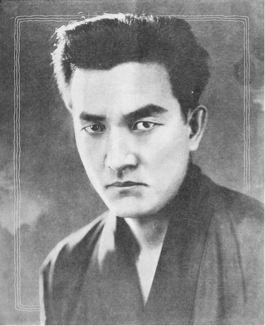
Silents are Golden: Silent Superstars – The Early Heartthrob Sessue Hayakawa
The typical handsome leading man of silent films was a strong, dependable, clean-cut type, with names like Harold Lockwood or Earle Williams. Rudolph Valentino’s popularity in the ‘20s also initiated a craze for “exotic” Latin lovers. But modern movie fans might be surprised to learn that there was another beloved matinee idol, earlier than Valentino, who also seemed exciting and “exotic” to white audiences: the Japanese actor Sessue Hayakawa, a star of the 1910s.
Sessue Hayakawa
Hayakawa’s early life was tinged by drama. He
was born Kintaro Hayakawa on June 10, 1886 in the city of Minamiboso in Japan.
He came from a wealthy family, his father being the provincial governor and his
mother having aristocratic roots. At age eighteen Hayakawa attempted to join
the Japanese navel academy in Etajima, planning on becoming an officer as his
parents desired. When he was rejected due to problems with his hearing (he had
ruptured an eardrum while diving), he attempted to commit ritual suicide by
stabbing himself in the abdomen. Fortunately he was discovered and managed to
make a recovery.
He later recalled that his family then sent
him to the University of Chicago to study political economics, with the new
goal of becoming a banker. But apparently there’s no record of Hayakawa being
at the university, and he may have spent his time in the U.S. doing odd jobs
instead. At any rate, while spending some time in Los Angeles he ducked into
the Japanese Theatre in the Little Tokyo district. Enamored with what he saw,
he decided to try to become an actor and took the name “Sessue” (meaning “snowy
continent”) as a stage name.
A young Hayakawa
He quickly made an impression on his fellow actors, including actress Tsuru Aoki, who would later become his wife (they would adopt three children). Aoki convinced film producer Thomas Ince to attend a performance of The Typhoon, and Ince decided to turn it into a film starring Hayakawa. The 1914 film was a hit and was followed by The Wrath of the Gods and The Sacrifice (both 1914). Since Hayakawa was clearly a star on the rise, he was signed by Famous Players-Lasky (now known as Paramount).
Hayakawa would prove himself in Cecil B. DeMille’s sensational drama The Cheat(1915), where he played a wealthy ivory merchant. When a married high-society woman comes to him for a loan, hoping to replace a large sum of Red Cross money that she lost in a bad investment, he agrees in return for sexual favors. When she tries to back out of the deal, he brands her on the shoulder–a shockingly lurid scene for the time. It was a critical and box office hit, and established Hayakawa as one of Hollywood’s top stars and an idol to many female filmgoers.
Fannie Ward and Sessue Hayakawa in The Cheat (1915)
While his charisma and brooding, elegant good
looks certainly explain his popularity, some of his appeal was also bolstered
by the strong interest in Asia at the time. People were drawn to the exoticism
of the “Far East,” and it had a strong influence on fashion and interior
decorating trends. Still, concerns about miscegenation often limited Hayakawa
to villainous roles, keeping him from being a regular romantic lead or hero.
But even this didn’t exactly hurt his popularity, since these roles made his
characters seem like forbidden fruit to countless enraptured women.
Sessue Hayakawa in His Birthright (1918)
Soon getting tired of typecasting, in 1918 Hayakawa decided to establish his own studio, Haworth Pictures Corporation. It was the first Asian-owned studio in Hollywood, and in the next three years it would make twenty films, lauded for their subtle Zen-inspired acting. While most of them are lost today, the most famous one that survives is The Dragon Painter(1919). Co-starring Hayakawa’s wife Tsuru, it was highly praised for its authenticity and poetic story.
Hayakawa in The Dragon Painter (1919)
By the late 1910s Hayakawa was commanding
$3,500 a week and was happy to spend his money almost as fast as it came in. He
drove a gold-plated Rolls Royce and hosted large parties in his custom-built
mansion–said to have been the wildest parties in Hollywoodland. But by 1922 his
career was starting to slump, helped along by anti-Asian sentiment in the
aftermath of WWI. Other issues included suffering a burst appendix during the
shoot of The Swamp (1921), and
prosaic troubles involving insurance.
Deciding to leave Hollywood, he returned to
Japan for a time and then started making films in France and Britain. Not one
to waste his time, he would also have a starring role on Broadway, write a
novel called The Bandit Prince, adapt
The Bandit Prince into a play, and
produce a Japanese language stage version of The Three Musketeers, and open a Zen temple in New York City.
Bramwell Fletcher, Sessue Hayakawa, Harold Minjir, and Nella Walker in Daughter of the Dragon (1931)
By the early ‘30s he had also found time to return to Hollywood, making his talkie debut in Daughter of the Dragon(1931) starring Chinese-American actress Anna May Wong. Unfortunately his heavy accent wasn’t well received, and he returned to making films in Japan and France. He would even star in a remake of The Cheat in 1937, also called The Cheat.
Following WWII, Hayakawa was contacted by Humphrey Bogart’s production company for a role in the film Tokyo Joe (1949). This began the last leg of his acting career, where he often played “honorable villain” types of roles. The highlight was his famous role as Colonel Saito in The Bridge on the River Kwai(1957), which earned him an Oscar nomination for Best Supporting Actor and a Golden Globe nomination. Following this, he began to wind down his acting career, appearing in films and on television only occasionally. He would also lose his wife Tsuru to peritonitis in 1961. His last film was the stop-motion The Daydreamer(1966).
Hayakawa in Bride on the River Kwai (1957)
A practicing Zen Buddhist, Hayakawa decided to
devote himself to becoming a Zen priest. He would also give acting lessons and
write his autobiography Zen Showed Me the
Way…To Peace, Happiness and Tranquility.
He passed away in 1973 from a cerebral blood clot, leaving behind a
proud legacy of being cinema’s first international Asian film star.
Lea Stans is a born-and-raised Minnesotan with a degree in English and an obsessive interest in the silent film era (which she largely blames on Buster Keaton). In addition to blogging about her passion at her site Silent-ology, she is a columnist for the Silent Film Quarterly and has also written for The Keaton Chronicle.
In previous posts here at the Noir Nook, I’ve mentioned the classic movie Zoom meetup group that I’ve participated in since spring 2020. One of our recent films was 20th Century Fox’s Cry of the City (1948), starring Victor Mature and Richard Conte. I’ve seen this movie many times, but in watching it again, I was stuck by how good it is, and how underrated!
But that’s not
the point of this month’s column.
If you know me
at all, you’ll know that I’m a huge (ginormous, even) fan of Richard Conte, and
in Cry of the City, as always, he did not disappoint. Sadly, like this
film, Conte doesn’t receive the accolades these days that he so richly
deserves. So, as a holiday gift from me to you, this month’s Noir Nook is
taking a look at three noirs starring this talented actor that you simply must
see – even the characters’ names are awesome!
Richard Conte and Shelley Winters in Cry of the City (1948)
Cry of
the City (1948) – Martin Rome
In this Robert Siodmak-directed feature, Conte plays a character from a close-knit, loving family who’s fairly oozing with charm and intelligence. Sadly, he uses his powers for villainy rather than virtue – when we first encounter him, he’s facing surgery after killing a cop during a shootout. The film follows Martin’s path from the prison’s hospital ward and tracks the people he uses in his effort to flee the country with his angelic lady love, Tina (Debra Paget). It’s amazing the number of people who sacrifice their own safety for Martin’s sake – there’s the prison trusty (Walter Baldwin) who helps him escape, the ex-girlfriend (Shelley Winters) who finds an unlicensed doctor to treat Martin’s wound, and the middle-aged nurse (Betty Garde) who spirits Tina from her home and hides her away from the police. Martin’s final showdown with his boyhood friend-now-nemesis Lt. Vittorio Candella (Victor Mature) is a tension-thick standoff that will have you on the edge of your seat.
Richard Conte, Luther Adler, Paul Valentine and Efrem Zimbalist Jr. in House of Strangers (1949)
House of
Strangers (1949) – Max Monetti
In House of Strangers, Conte is an attorney, the favorite son of bank proprietor Gino Monetti (Edward G. Robinson), who is characterized by his questionable methods. When Gino is arrested for breaching the statutes of banking, it is only Max who comes to his defense; his three brothers, after enduring years of criticism and ridicule from their father, are only too happy to see him wind up behind bars. Betrayed by his oldest brother (Luther Adler) for bribing a juror, Max is sent to prison for seven years, and emerges bent on revenge. In this feature, Conte plays one of his most multifaceted characters; his Max is at once charismatic, bitter, compassionate, bitter, loyal, and unforgiving.
Richard Conte and Anne Bancroft in New York Confidential (1955)
If Max Monetti is one of Conte’s most complicated personas, then Nick Magellan is one of his most chilling. A hitman with a heart of steel, Nick is hired by New York syndicate head Charlie Lupo (Broderick Crawford) to rub out a rogue member of his organization. Before long, Nick becomes Lupo’s right-hand man, but he is beset by Lupo’s troubled daughter (Anne Bancroft), his duplicitous mistress (Marilyn Maxwell), and the stress of upholding the syndicate’s stringent set of rules. Nick is not your typical hitman; he’s refined and intelligent, and highly proficient – and cooler than the other side of the pillow.
If you’ve never
seen these Richard Conte noirs, do yourself a favor and add them to your
watchlist. And if you’re already familiar with them, treat yourself to a
rewatch.
You’ll be glad you did.
…
– Karen Burroughs Hannsberry for Classic Movie Hub
Karen Burroughs Hannsberry is the author of the Shadows and Satin blog, which focuses on movies and performers from the film noir and pre-Code eras, and the editor-in-chief of The Dark Pages, a bimonthly newsletter devoted to all things film noir. Karen is also the author of two books on film noir – Femme Noir: The Bad Girls of Film and Bad Boys: The Actors of Film Noir. You can follow Karen on Twitter at @TheDarkPages. If you’re interested in learning more about Karen’s books, you can read more about them on amazon here:
Pat Boone shares memories of ‘Journey to the Center of the Earth’ at TCM Cruise
The importance of horror and sci-fi movies from the classic film era tends to be overshadowed when compared to today’s big-budget CGI-films.
So when you learn a 1959 sci-fi flick helped save the day when a big-budget epic was sucking a major movie studio dry, classic film fans want to share the tale – especially when the storyteller is Pat Boone.
Pat Boone, left, and James Mason find one fantastic discovery after another during their Journey to the Center of the Earth.
The entertainment legend was discussing his lengthy career on the 2022 TCM Cruise and often brought upJourney to the Center of the Earth, one of his earliest films and the one that propelled him to movie stardom.
The movie was the first of multiple adaptations of the imaginative 1864 novel by Jules Verne about adventurers on a quest to find the center of the earth, as the title so succinctly sums up. It also was one of the factors that helped 20th Century-Fox stave off bankruptcy from the much-delayed and well over budget Elizabeth Taylor–Richard Burton epic Cleopatra.
The long road to the big screen for Cleopatra started in 1958 when Walter Wagner’s production company partnered with the studio. It was another two years before principal photography started on Cleopatra and another three years before it would be released. Time is money and the prolonged production resulted in ongoing problems for the studio including a budget that ballooned from $2 million to $44 million (about $364 million today). While the success of Journey to theCenter of the Earth wasn’t the only thing that helped Fox – the studio sold off land and The Sound of Music was later released –it certainly played a starring role.
Pat Boone during one of his talks on the TCM Cruise.
That’s a pretty cool fact and one that Boone shared with pride. “This film saved the studio. We were told they were about to shut down 20th Century-Fox and then the film came out.”
The novel was written at a time when the idea that the earth was hollow at its center was a popular theory. And there was still much to learn about the planet so people could imagine anything and everything: lost worlds, unexplored regions, magnificent creatures and unexplained phenomenon.
For the movie, the setting was moved from Germany to 1880 Edinburgh, Scotland. Geologist and Professor Oliver Lindenbrook (the esteemed James Mason) is being celebrated for his new title of “Sir.” Boone plays Alec McEwan, a student who clearly has a special bond with his professor (the two actors also have a great screen chemistry), and gifts Lindenbrook with a volcanic rock he found in a curiosity window.
Geology student Alec (played by Pat Boone) gifts his professor (James Mason) with a volcanic rock that sends them on a great adventure in Journey to the Center of the Earth.
“It’s a scholaris choice,” a happy Lindenbrook tells him. But the rock is much heavier than it should be and that demands attention.
When the professor misses dinner, young Alec and Lindenbrook’s niece Jenny (Diane Baker), who are sweet on each other, find him in his laboratory. A small explosion – the type we have in these movies as a shortcut to learning important information – breaks open the rock exposing a man-made object. It’s signed by Arne Saknussemm who disappeared 300 years earlier on his journey to the center of the Earth through Iceland.
Excitement is in the air!
Lindenbrook reaches out to the world authority on volcanoes, Professor Göteborg. His delayed response raises red flags that send Lindenbrook and Alec to Iceland.
What Lindenbrook feared is happening as Göteborg is preparing for his own expedition. To slow them down, Göteborg has Lindenbrook and Alec kidnapped so they will miss the brief moment when the sun illuminates the mountain opening toward the center of the Earth. (Sound familiar? It’s the first time we see how Journey inspired the 1981 blockbuster Raiders of the Lost Ark.)
Gertrude the duck, left, and Arlene Dahl share a special bond in Journey to the Center of the Earth.
Our kidnapped explorers get a soft landing when they’re dumped in a bin of goose feathers and are rescued by the non-English speaking Hans (Peter Ronson) and his duck Gertrude (played by herself). This film not also has a sense of awe, but a light sense of humor, too.
Sadly it doesn’t end well for Göteborg who is murdered. His widow, Carla (Arlene Dahl), offers our guys a deal: They can have all her husband’s expensive equipment and food, plus she will translate for Hans – if she can go on the expedition, too. Carla drives a hard bargain that they can’t refuse.
But the Fab 5 – Lindenbook, Alec, Carla, Hans and Gertrude – won’t be alone. Tracking them is Count Saknussemm who we know isn’t a good guy because ominous music is heard when he comes on screen, and he’s played by the naturally creepy Thayer David (Dark Shadows). Saknussemm feels he’s entitled to the discovery and all that money and acclaim that comes with it.
This looks like a fun set as the gang finds giant mushrooms they can use for sustenance and more in Journey to the Center of the Earth.
The adventure is on and each cavern and passageway brings wonder or danger: winds, a whirlpool, luminescent algae, lava, a magnificent “ocean of the underworld” and giant creatures – the stars of so many 1950’s films.
The explorers will walk on thin ledges where someone is bound to slip, outrun a giant boulder (again, a scene duplicated in Raiders of the Lost Ark) and scale stalactites to evade flooding waters. There are giant mushrooms – think person-sized and taller – that our hungry crew will use for food, shoe bottoms and a raft. And they’ll find the holy grail: the lost city of Atlantis.
It’s all such great fun, but in his review of the film at the time of its release, grumpy New York Times critic Bosley Crowther wrote “The earth’s interior is somewhat on the order of an elaborate amusement-park tunnel of love.” That sounds like he thought it was a bad thing, forgetting that the journey in the movie, like in life, is the best thing.
Arlene Dahl hangs on a stalactite as waters rise in an underground cavern in Journey to the Center of the Earth.
Boone recalled how these adventurous scenes, done with practical – not computer-generated – stunts, brought uncomfortable and even dangerous moments to the actors.
His character Alec is
separated from his traveling companions and stumbles into a salt cavern where
the extreme heat leads him to start cutting off his clothes. He falls into a sinkhole
of salt, then another and another.
“I’m trying not to breath. I knew it would fill up my lungs,” he said, which is evident as Boone’s face and body are covered in thick white stuff.
Pat Boone is overcome by heat and large amounts of salt that cover everything.
Then there was the exciting scene when their raft gets pulled into a whirlpool.
“It was violent.
We’re in a raft, it’s in a whirlpool and it’s going to suck us down. They were
pouring thousands of gallons of water on us from above,” Boone said. “We had to
hold on. We are 8 feet in the air and spinning.”
And that’s when
actress Arlene Dahl began screaming at director Henry Levin to “get me down,”
Boone said.
Our explorers get trapped in a whirlpool in Journey to the Center of the Earth.
She was freaked out to the extent that she passed out.
But perhaps the scariest moment of shooting for Boone, a deeply religious man, was when he lands “naked” in a tree by a nunnery.
“All I had on in
the scene was a skin-colored speedo,” he laughed along with the TCM audience.
* * * *
In addition to introducing the film on the TCM Cruise, Boone also did a book signing and two lengthy “conversations” where he talked in-depth about his career and co-stars. Here are a few highlights.
On becoming a film actor: “I was stunned. I had studied some acting … but I didn’t think of myself as an actor.”
On a role model: “If I was gonna be in a movie, my role model was Bing Crosby. I just wanted to be a teenage Bing Crosby.”
On James Mason: “He had a surprising sense of humor. He kept to himself but was companionable.” Boone said he also “hummed a lot” and thought it could have been to keep his voice mellow.
On the film’s
premise: “If you’re really gonna go to the center of the earth, you’re not
coming back, but in this movie you could,” Boone laughed.
Pat Boone, left, likes to court Diane Baker in song during Journey to the Center of the Earth.
On how he finally agreed to do Journey to the Center of the Earth. “I didn’t want to do sci-fi. I wanted to do musicals. They kept after me and finally my manager said they’re offering you a piece of the film.”
But he wanted something else even more. “I said I wanted to sing,” Boone said. And he did, performing The Faithful Heart and My Life is Like a Red, Red Rose (based off the poem by Robert Burns) to his on-screen love interest, Diane Baker.
“I would like to be remembered for those two songs,” he said.
Toni Ruberto, born and raised in Buffalo, N.Y., is an editor and writer at
The Buffalo News. She shares her love for classic movies in her blog, Watching Forever and is a
member of the Classic
Movie Blog Association. Toni was the president of the former Buffalo
chapter of TCM Backlot and now leads the offshoot group, Buffalo Classic Movie
Buffs. She is proud to have put Buffalo and its glorious old movie palaces in
the spotlight as the inaugural winner of the TCM in Your Hometown contest. You
can find Toni on Twitter at @toniruberto.
Silver Screen Standards: I Know Where I’m Going! (1945)
Like Joan, the heroine of Michael Powell and Emeric Pressburger’s 1945 gem, I Know Where I’m Going!, I thought I knew where I was going as a young woman, but fate altered the course of my journey. My empathy with Wendy Hiller as the ambitious, pragmatic Joan only partly accounts for my deep affection for this charming wartime romance. It’s not a tame fairy tale, with its rough weather and hardscrabble Hebridean islanders, but it exists in the mythic atmosphere of cursed castles, legendary whirlpools, and sublime Romantic scenery. Against this backdrop, the writer/director team unfolds a story of two people whom destiny seems determined to throw together, despite the heroine’s best efforts to stick with her original plan.
When we first meet Joan (Wendy Hiller), her marital plans are as determined as the angle of her hat.
Hiller plays Joan Webster, a middle-class English woman who aspires to better things and has the chance to get them by marrying the much older owner of a large company. Her groom wants to have their wedding on the remote Scottish island of Kiloran, which he rents from its laird, so Joan sets off from England to the rugged Hebrides with her wedding dress and a detailed itinerary. The infamous Scottish weather stops her progress at Mull, where she can see the island over the water but can’t cross due to the dangerous winds. Conditions on the shore also grow dangerous as Joan develops a friendship with Torquil MacNeil (Roger Livesey), the poor but handsome laird of Kiloran currently home on a week’s leave from the Navy.
Like most romantic comedy protagonists, Joan and Torquil (Roger Livesey) frequently clash, especially about Joan’s risky plan to get to Kiloran in spite of the storm.
The movie is packed with wonderful characters and performances all the way down the line. Hiller and Livesey – both rather mature for the characters they play – have marvelous chemistry in spite of their grown-up, sober manners. Livesey exudes a particular romantic appeal as the modest but competent Torquil; the more storm-tossed he gets the handsomer he looks, which makes the climactic scene in the boat all the more thrilling, and he cuts quite a figure in his kilt. The determined heroine who gets tripped up by unexpected love is a staple of romantic comedy, but the narration and framing of the story treat Joan with a wry humor that laughs at her while still making us sympathize with her. The two leads enjoy ample support from C.W.R. Knight as Colonel Barnstaple, Finlay Currie as the local boatman, and Margot Fitzsimons (sister of Maureen O’Hara) as young Bridie, but the scene-stealer of the lot is Pamela Brown as the magnificent Catriona Potts. Every time she enters a scene I am absolutely bewitched by her wind-blown locks and stalwart nature, and if she weren’t already conveniently married I’d have trouble rooting for Joan to hook Torquil. Even the smallest roles are memorably played, especially the female characters; veteran stage star Nancy Price makes a brief but powerful appearance as Mrs. Crozier, and young Petula Clark leaves me wishing she had more scenes as the bookish but observant Cheril.
The heroic Catriona (Pamela Brown), one of Torquil’s closest friends, provides Torquil and Joan with shelter after their boat to Kiloran is delayed.
A good romantic story would be enough for a lot of
movies, but this picture is also a great film. It makes the most of
every tool at its disposal to create a rich narrative of sights, sounds, and
symbols. Erwin Hillier (credited as “Hiller”) provides breathtaking
cinematography that might inspire you to take off for Scotland yourself, and
the lively music will stay in your mind long after the last scene ends. Powell
and Pressburger weave mythic imagery through the rather mundane tale of two
people drawn into romance. The whirlpool itself is an apt metaphor for the
experience of being pulled in by the force of passion, but the legend of the
whirlpool and that of the cursed castle also provide pointed commentary on the
perils of love. The rewards, however, can be seen at the 60th
anniversary party of the elderly Campbells, whose long and happy union the community
joins to celebrate with song and dance. Ending as it does, the movie leaves us
wondering which outcome Joan and Torquil will face; we understand that the war
beckons back in the modern world, and the laird must soon return to the fray,
but the uncertainty of that conclusion perfectly fits the moment in which the
film was made.
Torquil joins Joan on the dangerous crossing to Kiloran, which proves to be much more difficult than Joan imagined.
Most classic movie fans already know and admire the work of Powell and Pressburger, and I Know Where I’m Going! is one of their best-known collaborations along with Black Narcissus (1947) and The Red Shoes (1948). Roger Livesey also stars in Powell and Pressburger’s 1943 film, The Life and Death of Colonel Blimp, while Wendy Hiller is best remembered for her Oscar-nominated role as Eliza Doolittle in Pygmalion (1938). For those who yearn to see the wilds of Scotland but can’t manage the trip in person, this movie makes a fine starting point for a cinematic celebration of the region. I’d pair it with other classics like The 39 Steps (1935) or Brigadoon (1954) and make a Burns Night party of it on a cold January evening.