Monsters and Matinees: In search of the Yeti

Monsters and Matinees: In search of the Yeti

Horror movies of the 1950s fed off real-world fears in a way – it feels so wrong to say – many of us have enjoyed. Paranoia about nuclear war and Communism, among other threats, were turned into a horror movie industry of big bugs (Them!), radioactive horrors (Day the World Ended) and alien attacks (Invasion of the Body Snatchers).

But something else captured the public’s imagination in the 1950s and, while it didn’t create panic or was a danger like nuclear annihilation, it was a much talked about curiosity that remains with us today: the search for the Abominable Snowman of the Himalayas.

Reports of the Yeti and similar creatures can be traced back for centuries, but there was a renewed interest in the creature during the 1950s after climber Eric Shipton took photos of an enlarged footprint while climbing Mount Everest in 1951. Two years later, Sir Edmund Hillary and Tenzing Norgay, who were the first to reach the top of Everest, also reported seeing large, unexplained tracks.

Peter Cushing in a publicity still from The Abominable Snowman.

Talk of the Yeti grew, as did interest in proving its existence. A London newspaper even mounted an expedition to find it. There were so many expeditions that rules were set, and the American Embassy in Kathmandu even issued the memo Regulations Governing Mountain Climbing Expeditions in Nepal – Relating to Yeti from regional guidelines.

There were three rules: Expedition permits had to be purchased through the Nepalese government; a Yeti could be photographed or captured but not killed and all photographs or captured Yeti must be surrendered to the government; finally, any information “throwing light” on the creature’s existence had to be submitted to the government before being made public.

Though not one expedition has yet to produce a Yeti, we do have movies to enjoy.

The Snow Creature (1954), the Japanese film Half Human (1955), Man Beast (1956) and The Abominable Snowman (1957) are four movies from that decade alone, with others following in subsequent years that took on such variations as Big Foot in the U.S. and Sasquatch in Canada.

In the 1950s films, moviegoers often only saw glimpses of the Yeti, like a giant hand, to build suspense about the creature as in Hammer’s The Abominable Snowman.

You’ll notice much documentary-style footage of snowy regions and climbers. There will be footprints (many footprints) and well-meaning researchers spouting things like “This is not a hunting party” to adventurers looking to make a buck. Violence is implied mostly by off-camera screams. The Yeti is shown in pieces, like a hairy arm, or in shadows to build suspense to the big reveal which isn’t very big or scary.

Even with the rich folkloric material and a ready-made beast, the movies generally plod along before dwindling out to the end credits.

Hammer takes on the Yeti

The most intriguing story belongs to the best-known Yeti film of the 1950s, The Abominable Snowman. It was based on the 1955 BBC TV play The Creature by Nigel Kneale, who was inspired to write it after learning that the London newspaper’s expedition for the Yeti did find mysterious tracks but had no explanation for them. Kneale said at the time that he wrote The Creature as his guess to explain the footprints, but he doesn’t give himself enough credit for his thoughtful exploration of the legend. (The TV play was broadcast live twice but was not recorded so it is considered lost.)

Dr. John Rollason (played by Peter Cushing in both the TV and film versions) is studying plant specimens in a Tibetan monastery where he joins adventurer Tom Friend on an expedition to find the Yeti. (Also appearing in both versions is Arnold Marle as the mysterious Lhama.)

Peter Cushing and Forrest Tucker, center, take part in an expedition up the Himalayans for different reasons in The Abominable Snowman.

Before watching the film, put aside your expectations of what you are used to seeing in a Hammer film starring Peter Cushing (it was his second movie for the studio) because that’s not what you get here. It is certainly a tense thriller with horror elements, but Kneale’s considerate script gets the audience in sync with Dr. Rollason who questions what defines a monster and posits the idea of the Yeti being “parallel evolution” to humanity.

The good doctor goes on the expedition much to the chagrin of his wife Helen (Maureen Connell), also a researcher (a part added to the film). She doesn’t trust Tom Friend (played by Forrest Tucker) or the Sherpa guide Kusang (Wolfe Morris) who will take her husband up the Himalayas to learn the truth behind the Yeti.

Rounding out the small party are trapper Ed Shelley (Robert Brown) and Scottish photographer Andrew McNee (Michael Brill), who once glimpsed a Yeti. All play an important role.

It’s clear that Dr. Rollason and Friend have different motivations for the expedition – one is there for science, the other for money and glory. The tension between the two men is palpable and grows through the film.

As they climb higher, the men become strangely affected, especially McNee who hears things others don’t and often gazes into the distance like he’s in a trance. They blame it on the thin air, but you get the feeling they don’t believe it.

Strange things start to happen to men on an expedition in The Abominable Snowman. Forrest Tucker, left, and Peter Cushing help their photographer (Michael Brill) after he falls into another trance.

They do find proof of the Yeti in 13-inch-long footprints that show the stride of something that can stand up to 8-feet tall. The explorers set little bear-like traps that catch one of their own but are easily torn apart by “something” else.

When they finally have proof a Yeti, it sets other things in motion as sad howls and cries are carried on the wind, again affecting the men.

Peter Cushing comes face to face with The Abominable Snowman in the 1957 Hammer Films production.

Dr. Rollason’s empathy for the Yeti grows as he believes they are trapped in the evolutionary process and are hiding in misery of the harsh Himalayan environment to die. (Yes, it’s depressing.) Not only do those compassionate words for the Yeti take this film up a notch, but so does the mystical turn that makes us wonder if they have powers we can’t understand. (And what role does the Lhama play, if any?)

Trivia: The Abominable Snowman was directed by Val Guest, whose work with writer Kneale and Hammer Films also included The Quatermass Xperiment (1955) and Quartermass 2 (1957).

The film was originally going to be titled The Snow Creature, until they learned that title was already taken.

Other films

The Snow Creature (1954) was directed by W. Lee Wilder, brother of Billy Wilder, and written by his son Myles Wilder in the vein of King Kong. Don’t expect that same clever Billy Wilder touch, though.

Botanist Frank Parrish (played by Paul Langton) and photographer Leslie Denison (Peter Wells) are on a Himalayan expedition to study plant life.

But when their Sherpa guide Subra (Teru Shimada) learns his wife has been taken by a Yeti, he forces the group to change course and look for her.

They do find a Yeti and somehow build a cage to transport it down the mountain, then concoct a large, refrigerated box that looks like a telephone booth to get it to California. We know it won’t hold the Yeti, so we bide our time (just a few minutes) until it gets loose and mysteriously makes its way around the city without being seen. (This part of the film recalls a similar setting from one of the best 1950s horror movies.) Good for the Yeti, by the way, who discovers a meat packing freezer where it can eat, be cold and hide for a while.

Though the creature doesn’t do much damage and there’s barely a body count, the cops are out to get it on a boring city-wide creature hunt that slows the film to a crawl.

Half Human (AKA Half Human: The Abominable Snowman) was a Japanese film directed by Ishiro Honda in 1955. It was dubbed and re-edited for its U.S. release in 1958, adding footage of John Carradine explaining the story to his colleagues. (The Japanese version, as expected, is considered superior to the reworked U.S. film.)

A poster for the U.S. release of Half Human.

A reporter meets with two mountaineering students who share a strange tale about their ski trip in the Japanese Alps. They were part of a group that split in two with some going to a friend’s cabin and the others to a lodge. A blizzard strikes and the next day a search party finds the cabin destroyed with a dead body and giant footprints. Rescue efforts can’t resume until the spring thaw, the same time another group led by an animal broker is out searching for the Abominable Snowman.

It gets muddled as the good-guy searchers are targeted by both the bad-guy animal broker and the villagers who honor a “Mountain Lord.” All the while, that Mountain Lord is around and may not be alone.

Trivia: Actors Momoko Ōkōchi and Akira Takarada are well-known for their roles in multiple Godzilla films.

Man Beast (1956) clearly had such a low budget that they couldn’t afford to rent proper winter gear for the characters seen tracking through the Himalayas without scarves or gloves. (They blow into their hands a lot to “warm them up.”)

The title comes from the question most often asked when discussing the Yeti: Is it man or beast? Man Beast has an interesting answer that would make a sold movie. But with such poor acting and low production values, this is not that film.

These hearty explorers climb the Himalayas without gloves or winter gear in Man Beast.

Connie Hayward (Virginia Maynor) is a concerned sister who gets her annoying boyfriend Trevor Hudson (Lloyd Nelson, AKA Lloyd Cameron) to travel with her to the Himalayas in search of her brother. They meet Steve (Tom Maruzzi) who reluctantly agrees to take them to find her brother’s camp, where they learn he is missing. They continue their search with the help of Dr. Erickson (George Wells Lewis) and the strange-looking climber and guide Varga (George Skaff), who has made more expeditions to find the Yeti than anyone else, but also tends to lose at least one member of his team each time.

By the end, the film has traveled into that intriguing territory that it fails to deliver on, with things quickly explained and then wrapped up.

Trivia: Billed as Virginia Maynor, actress Asa Maynor will be familiar to “Twilight Zone” fans as the stewardess in the famous episode Nightmare at 20,000 Feet.

Asa Maynor and William Shatner in Nightmare at 20,000 Feet.

 Toni Ruberto for Classic Movie Hub

You can read all of Toni’s Monsters and Matinees articles here.

Toni Ruberto, born and raised in Buffalo, N.Y., is an editor and writer at The Buffalo News. She shares her love for classic movies in her blog, Watching Forever and is a member of the Classic Movie Blog Association. Toni was the president of the former Buffalo chapter of TCM Backlot and now leads the offshoot group, Buffalo Classic Movie Buffs. She is proud to have put Buffalo and its glorious old movie palaces in the spotlight as the inaugural winner of the TCM in Your Hometown contest. You can find Toni on Twitter at @toniruberto.

Posted in Horror, Monsters and Matinees, Posts by Toni Ruberto | Tagged , , , , , , , , , , | Leave a comment

Classic Movie Travels: Betty White

Classic Movie Travels: Betty White

Betty White Headshot
Betty White

Betty White was an American actress and comedian who has worked across many different mediums and is a beloved icon today. He career has spanned over nine decades within the entertainment industry, with her having the distinction of being one of the first women to produce a sitcom and executing creative control both in front of the camera and behind it. White was to turn 100 on January 17, 2022; sadly, she passed away on December 31, 2021. While her wit and joyful presence will sorely be missed, there is still much to celebrate regarding White’s career.

Betty Marion White was born in Oak Park, Illinois, on January 17, 1922, to homemaker Christine Tess and salesman Horace Logan White. When she was one year old, her family moved to Alhambra, California, followed by Los Angeles, California. White graduated from Beverly Hills High School in 1939 and dreamed of becoming a forest ranger, though women were not allowed to serve in that profession. Instead, she realized an interest in performing, idolizing Jeanette MacDonald and Nelson Eddy. As a result, she turned to acting.

Betty White young
A young Betty

Prior to this realization, White had already had some experience with performance. In the early 1930s, she appeared on a radio program. Following her graduation, she and a classmate sang songs from The Merry Widow on a television program. She also found work in modeling, though she put her career on hold with the start of World War II, serving with the American Women’s Voluntary Services.

White struggled to find film roles, so she instead appeared in radio programs to execute bit parts or participate in commercials. Eventually, she was offered her own radio show, The Betty White Show, soon followed by co-hosting Hollywood on Television with Al Jarvis on television. When Jarvis left, she hosted the show on her own, receiving a nomination for the Best Actress Emmy Award. In the same year, she co-founded the production company Bandy Productions. White and co-founders George Tibbles and Don Fedderson developed Life with Elizabeth, a sitcom with White portraying the title role. As a result, White became one of the first few women of television.

Betty White early career NBC
Betty White, early in her long career

As the years went on, White became a staple in game shows as well as continued work in television shows. She appeared on The Mary Tyler Moore Show, The Carol Burnett Show, Mama’s Family, and played the signature role of Rose Nylund in the hit show The Golden Girls. White won the Emmy Award for Outstanding Actress in a Comedy Series for the first season of The Golden Girls and was nominated in that category for each subsequent year of the show’s run. Once the show ended, White also appeared in The Golden Palace, The Bold and the Beautiful, and more.

White also carried out various supporting roles in films, including The Proposal (2009) and voiceover work in Toy Story 4 (2019), and hosted an episode of Saturday Night Live in 2010.

In 2012, White won a Grammy Award in the spoken word category for her recording of her best-selling book, If You Ask Me. She was also awarded the UCLA Jack Benny Award for Comedy. Her career was explored in the PBS documentary Betty White: First Lady of Television.

White’s 100th birthday is slated to be celebrated across theaters throughout the United States, with the showing of a documentary-style film celebrating White’s life and career. The film is titled Betty White: 100 Years Young—A Birthday Celebration. The event will still go on in her honor.

Betty White 100th birthday celebration
Betty’s 100th Birthday Celebration will go on in her honor

White was a devoted animal health advocate and humanitarian. She worked with the Los Angeles Zoo Commission (having been a board member), Morris Animal Foundation (as president emerita), African Wildlife Foundation, and more. She regularly donated as well as raised funds for various organizations.

Throughout her career, White was lauded with a vast array of performing and humanitarian awards. White is the only woman to have won an Emmy in all of the performing comedic categories. She was inducted into the Television Hall of Fame in 1995. Moreover, White’s lifelong dream of becoming a forest ranger was fulfilled; she was made an honorary forest ranger in 2010 by the USDA Forest Service.

Presently, there are various points of interest to White’s life and career that remain.

In 1930, White’s family resided at 454 N. Harper Ave., Los Angeles, California. The home remains today.

Betty White home 454 N. Harper Ave., Los Angeles, California
454 N. Harper Ave., Los Angeles, California

By 1940, they resided at 11444 Ayrshire Rd., Los Angeles, California. This home also stands.

Betty White home 11444 Ayrshire Rd., Los Angeles, California
11444 Ayrshire Rd., Los Angeles, California

White’s alma mater, Beverly Hills High School, is located at 241 S. Moreno Dr., Beverly Hills, California.

Betty White Beverly Hills Highschool
Beverly Hills High School

Additionally, White is celebrated at the Los Angeles Zoo with an honorary plaque near the gorilla exhibit. The zoo is located at 5333 Zoo Dr., Los Angeles, California.

Betty White's plaque at the Los Angeles Zoo
Betty’s plaque at the Los Angeles Zoo

White’s handprints are also featured in the Disney Legends Plaza in Disney’s Burbank, California, studios.

Betty White Disney Legends Handprints
White’s handprints at the Disney Legends Plaza

White also has a star on the Hollywood Walk of Fame on the Northside of the 6700 block on Hollywood Blvd., Los Angeles, California.

Betty White Hollwood Walk of Fame star
Her Star on The Walk of Fame

White’s work in radio, television, and films continues to be enjoyed by fans across multiple generations all over the world.

–Annette Bochenek for Classic Movie Hub

Annette Bochenek pens our monthly Classic Movie Travels column. You can read all of Annette’s Classic Movie Travel articles here.

Annette Bochenek, Ph.D., is a film historian, professor, and avid scholar of Hollywood’s Golden Age. She manages the “Hometowns to Hollywood” blog, in which she profiles her trips to the hometowns of classic Hollywood stars. She has also been featured on the popular classic film-oriented television network, Turner Classic Movies. A regular columnist for Classic Movie Hub, her articles have appeared in TCM Backlot, Silent Film Quarterly, Nostalgia Digest, The Dark Pages Film Noir Newsletter, and Chicago Art Deco Society Magazine.

Posted in Classic Movie Travels, Posts by Annette Bochenek | Tagged , , , , , , , , , , , , , , , | 1 Comment

What Ever Happened to Orson Welles – Book Giveaway (Jan)

“What Ever Happened to Orson Welles?: A Portrait of an Independent Career”
We have Four Books to Giveaway this Month!

CMH is happy to announce our first 2022 Classic Movie Book Giveaway as part of our partnership with University Press of Kentucky! This time, we’ll be giving away FOUR COPIES of What Ever Happened to Orson Welles?: A Portrait of an Independent Career by Joseph McBride.

In order to qualify to win this book via this contest giveaway, you must complete the below entry task by Saturday, Jan 29, 2022 at 6PM EST. Winners will be chosen via random drawings.

…..

We will announce our four lucky winners on Twitter @ClassicMovieHub on Sunday, Jan 30, around 9PM EST. And, please note that you don’t have to have a Twitter account to enter; just see below for the details.

To recap, there will be FOUR WINNERS, chosen by random, all to be announced on Jan 30.

…..

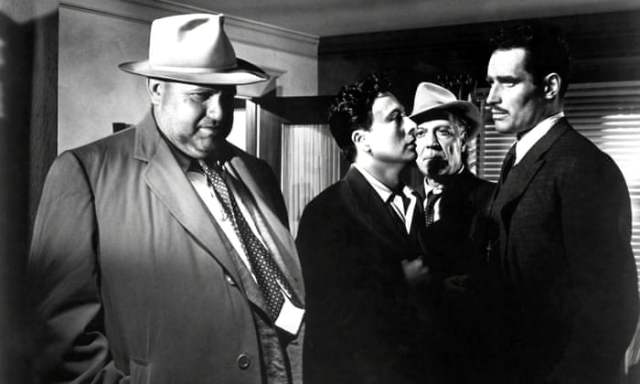
Orson Welles, Victor Millan, Joseph Calleia and Charlton Heston in Touch of Evil (1958)

And now on to the contest!

ENTRY TASK (2-parts) to be completed by Saturday, January 29, 2022 at 6PM EST

1) Answer the below question via the comment section at the bottom of this blog post

2) Then TWEET (not DM) the following message*:
Just entered to win the “What Ever Happened to Orson Welles?: A Portrait of an Independent Career” #BookGiveaway courtesy of @KentuckyPress & @ClassicMovieHub – #EnterToWin here http://www.classicmoviehub.com/blog/what-ever-happened-to-orson-welles-book-giveaway-jan/

THE QUESTION:
What is your favorite Orson Welles film and why? And, if you’re not familiar with his work, why do you want to win this book?

*If you do not have a Twitter account, you can still enter the contest by simply answering the above question via the comment section at the bottom of this blog — BUT PLEASE ENSURE THAT YOU ADD THIS VERBIAGE TO YOUR ANSWER: I do not have a Twitter account, so I am posting here to enter but cannot tweet the message.

NOTE: if for any reason you encounter a problem commenting here on this blog, please feel free to tweet or DM us, or send an email to clas@gmail.com and we will be happy to create the entry for you.

ALSO: Please allow us 48 hours to approve your comments. Sorry about that, but we are being overwhelmed with spam, and must sort through 100s of comments…

…..

Don’t forget to check our chats in our Screen Classics Discussion Series with University Press of Kentucky and @CitizenScreen. You can catch them on Facebook and YouTube:

Jayne Mansfield: The Girl Couldn’t Help It — with Author Eve Golden

…..

Vitagraph: America’s First Great Motion Picture Studio – with Author Andrew Erish:

…..

Jane Russell and the Marketing of a Hollywood Legend – with Author Christina Rice:

…..

Growing Up Hollywood with Victoria Riskin and William Wellman Jr:

…..

About the Book: In this intimate and often surprising personal portrait, Joseph McBride challenges the conventional wisdom that Welles’s career after CitizenKane, widely regarded as the greatest film ever made, fell into a long decline. The author shows instead how Welles never stopped directing radical, adventurous films and was always breaking new artistic ground as a filmmaker. McBride is the first author to provide a comprehensive examination of the films of Welles’s artistically rich yet widely misunderstood later period in the United States (1970–1985), when McBride knew the director and worked with him as an actor on The Other Side of the Wind, Welles’s personal testament on filmmaking. To put Welles’s later years into context, the author reexamines the filmmaker’s entire life and career. This newly updated edition rounds out the story with a final chapter analyzing The Other Side of the Wind, finally completed in 2018, and his rediscovered 1938 film, Too Much Johnson.McBride offers many fresh insights into the collapse of Welles’s Hollywood career in the 1940s, his subsequent political blacklisting, and his long period of European exile. What Ever Happened to Orson Welles? serves as a major reinterpretation of Welles’s life and work. McBride’s revealing portrait changes the framework for how Orson Welles is understood as a man, an actor, a political figure, and a filmmaker.

Click here for the full contest rules. 

Please note that only United States (excluding the territory of Puerto Rico) and Canada entrants are eligible.

Good Luck!

And if you can’t wait to win the book, you can purchase it on amazon by clicking below:

 …..

–Annmarie Gatti for Classic Movie Hub

Posted in Books, Contests & Giveaways, Posts by Annmarie Gatti | Tagged , , | 46 Comments

Western RoundUp: Hidden Gems, Vol. 4

Western RoundUp: Hidden Gems, Vol. 4

This month I’ll be sharing another round of what I like to call “Hidden Gems,” Westerns which are lesser-known yet entertaining films worth seeking out.

Below are brief sketches of a trio of worthwhile movies from the latter half of the ’50s. Happily, all are available on DVD and/or Blu-ray.

I’d love comments from others who have enjoyed any of these films, and I hope viewers who are unfamiliar with them might seek them out in the New Year.

…..

Stranger at My Door (William Witney, 1956)

Stranger At My Door Poster

Stranger at My Door, a personal favorite of director William Witney, is a “psychological Western” with some powerful moments. The story concerns a bank robber, Clay (Skip Homeier), who takes refuge at the home of a minister (Macdonald Carey) after his horse goes lame. The minister quickly realizes Clay’s true identity but — despite the danger to his little boy (Stephen Wootton) and his new wife Peg (Patricia Medina) — attempts to break through to Clay with Christian kindness. Things go awry when the sheriff (Louis Jean Heydt) arrives at the farm and realizes Clay’s identity.

Stranger A tMy Door Macdonald Carey Patricia Medina
Macdonald Carey and Patricia Medina, Stranger at My Door

The screenplay by Barry Shipman goes much deeper than this bare bones description sounds, raising interesting questions along the way. There’s a memorable set piece in which a wild horse tears up the farm; the horse is clearly a metaphorical reference to Clay. Peg attempts to shoot the horse but can’t bring herself to do it, symbolizing her own conflicted feelings regarding the stranger in their midst. Like many good movies, Stranger at My Door leaves viewers pondering its themes long after “The End” comes on the screen, though my one quibble about the film is I would have liked to have a few more of my questions answered!

Stranger At My Door Skip Homeier Stephen Wootton
Skip Homeier and Stephen Wootton

Stranger at My Door is compellingly directed by Witney, who specialized in Westerns over the course of his decades-long career in films and television. For those wondering about the horse sequence, the animal was very extensively trained by one of the great stuntmen in the business, Joe Yrigoyen. The movie was filmed in black and white by Bud Thackery.

Stranger at My Door is available on DVD and Blu-ray from Olive Films.

…..

The Quiet Gun (William F. Claxton, 1957)

Quiet Gun Poster

The Quiet Gun is a strong film directed by William F. Claxton, best known for his longtime work on TV Westerns such as The High Chaparral and Bonanza. It was written by Eric Norden, adapted by Norden and Earle Lyon from the novel Law Man by Lauran Paine.

In a film which has echoes of High Noon (1952), Forrest Tucker is superb as Sheriff Carl Brandon, a world-weary yet honorable man who won’t ever back down from doing the right thing. Trouble arrives in town in the form of nasty troublemaker Sadler (Lee Van Cleef); more problems arrive on the stagecoach with Teresa (Kathleen Crowley), whose estranged husband (Jim Davis) has stirred up local outrage keeping company with an Indian girl (Mara Corday). The Sheriff’s unspoken feelings for Teresa further complicate matters.

Quiet Gun Forrest Tucker Lee Van Cleef
Forrest Tucker and Lee Van Cleef, The Quiet Gun

Tucker gives a nuanced performance, much of which is communicated nonverbally; there’s a great moment I love where he goes in a saloon and stares down Van Cleef. Tucker has excellent support from a fine cast which also includes Hank Worden, Vince Barnett, and Tom Brown.

Quiet Gun Van Cleef Forrest Tucker
Van Cleef and Tucker

The movie was beautifully filmed in widescreen black and white Regalscope by John Mescall. The film’s Southern California locations included Corriganville, which I wrote about here at Classic Movie Hub earlier this year.

The Quiet Gun is a special movie which I recommend.

The Quiet Gun is available on DVD and Blu-ray from Olive Films.

…..

Gunsmoke in Tucson (Thomas Carr, 1958)

Gunsmoke in Tucson Poster

Mark Stevens might not readily come to mind as a Western star, but he was a compelling presence in a handful of ’50s Westerns, including Jack Slade (1953) and Gunsight Ridge (1957).

My favorite of Stevens’ Westerns might be Gunsmoke in Tucson, in which he plays one-time outlaw Chip Coburn, who’s spent eight years in jail thanks to his brother, Marshal John Brazos (Forrest Tucker). Upon his release Chip intends to turn over a new leaf and ranch, and he patiently avoids numerous confrontations arranged by Bodeen (Vaughn Taylor), who’d like to see him back in jail, or worse. But when an innocent farmer (Kevin Hagen) is targeted by one of Bodeen’s men, Chip finally goes into action, backed by his friend Slick (John Ward).

Gunsmoke in Tucson Mark Stevens
Mark Stevens, Gunsmoke in Tucson

Stevens wasn’t conventionally handsome by this point in his career, yet his performance demands viewer attention. What he lacks in size and good looks he makes up for with attitude and charisma. Ward, an actor who was previously unfamiliar to me, is also terrific as Slick. It’s a great deal of fun watching them deal with the bad guys while Chip also resolves his conflicted relationship with his brother.

Gunsmoke in Tucson Mark Stevens Forrest Tucker
Mark Stevens and Forrest Tucker

Gunsmoke in Tucson was nicely filmed in Deluxe color and CinemaScope by William P. Whitley; the film’s locations included Old Tucson. The screenplay was by Robert Joseph and Paul Leslie Peil, based on Peil’s story.

Gunsmoke in Tucson is available on DVD-R from the Warner Archive Collection.

For previous “Hidden Gems” recommendations, please visit Volume 1 (January 2020), Volume 2 (November 2020), and Volume 3 (May 2021).

Best wishes to all my readers for a very happy 2022!

…..

– Laura Grieve for Classic Movie Hub

You can read all of Laura’s Western RoundUp columns here.

Laura can be found at her blog, Laura’s Miscellaneous Musings, where she’s been writing about movies since 2005, and on Twitter at @LaurasMiscMovie. A lifelong film fan, Laura loves the classics including Disney, Film Noir, Musicals, and Westerns.  She regularly covers Southern California classic film festivals.  Laura will scribe on all things western at the ‘Western RoundUp’ for CMH.

Posted in Films, Posts by Laura Grieve, Western RoundUp | Tagged , , , , , , , , , | 5 Comments

Film Noir Review: Touch of Evil (1958)

“Your future’s all used up.”

Orson Welles was an architect of film noir before the style had even been identified. His debut release, Citizen Kane (1941), was revolutionary for the artform as a whole, but the film’s shadowy visuals and elaborate flashbacks had the biggest impact on the burgeoning postwar movement. Welles recognized how well his storytelling instincts melded with noir, making it no coincidence that his most notable bids for commercial success, The Stranger (1946) and The Lady from Shanghai (1948), were made explicitly in this style (the former was a mild success, the latter a notorious dud).

Touch of Evil (1958) is a different story altogether. Welles had already spent a decade as Hollywood’s persona non grata by the time the film came along, and the only reliable jobs he was able to book at the time were grandiose supporting parts. He was originally brought onto Touch of Evil as an actor and only an actor, and it took the suggestion of the film’s star, Charlton Heston, for Universal Studios to take him on as writer/director (they had previously struggled to find a suitable fit). Here he was, working with the biggest name in Hollywood, armed with an adaptation of a popular crime novel (Badge of Evil), and free to do whatever he wanted as long as he stayed on schedule. If ever a film looked to be a surefire hit.

The film’s striking half sheet poster.

The fable about the scorpion and the frog comes to mind when discussing Welles’ filmmaking approach. In the fable, the scorpion promises not to sting the frog so long as he allows him to cross the river on his back. The frog agrees, but the scorpion cannot help itself. It stings the frog, resulting in both of their deaths. Welles was a force of nature, and no matter how hard he tried to make a conventional film, he could never fully rein in his idiosyncrasies. Touch of Evil died a miserable death at the box office, much like the Scorpion, but its artistry is absolutely undeniable.

The opening shot of the film has become the stuff of legend. In a single, unbroken crane shot, the viewer is left to grip their armchairs and watch as a car bomb passes through a crowded bordertown street. It’s a technical tour de force, marrying tension, diegetic noise, exposition, and exquisite camera placement to establish the tone and rhythm of Welles’ scuzzy bordertown. If one had to pick a scene to encapsulate the filmmaker’s uncanny command of sight and sound, it would be this. You can practically smell the nighttime air as it passes.

The film’s bravura single take opening.

Mexican special prosecutor Mike Vargas (Heston) and his newlywed wife Susie (Janet Leigh) are among the nearby denizens, and their witnessing of the explosion sets off a chain of events that ripple through the rest of the story. Vargas is forced to cut his honeymoon short to investigate the cause of the explosion, and Susie is left to fend off advances/threats from the notorious Grandi family. 

Vargas’ investigation is complicated by the arrival of local police captain Hank Quinlan (Welles). The man is known for getting results, but his methodology has a reputation for being unethical and/or outright illegal. On the border, nobody looks too closely at the evidence, or whether it may have been planted. Quinlan chews up the scenery from the moment he enters, like so many bowls of chili at the gypsy tent. His grotesqueness is a manifestation of both his physical and moral decay, and the passing moments of clarity we glimpse only come about when he’s forced to reckon with what he’s become. He can’t even remember what decency feels like.

Welles relished playing the oafish Quinlan.

Welles is at his best when he’s tasked with playing boisterous men, and Quinlan certainly fits the bill. There are hints of the titular tycoon in Citizen Kane or the doomed Falstaff in Chimes at Midnight (1965), but what makes the Quinlan performance so exceptional is the way it’s tailored to fit the aesthetic of the rest of the film. Touch of Evil is a noir overflowing with discomforting camera angles and surreal, borderline nightmarish imagery. It’s akin to watching a funhouse mirror come to life, and Quinlan, with his blustering outbursts and uncouth monologues, reads like a corrupted soul that’s been reflected back through the same mirror.

Most audiences single out Heston playing a Mexican as the film’s lone weak point. The actor makes little effort to alter his star persona, save for the mustache and the slightly tanned skin (the term “brown face” had yet to be coined in Hollywood), but I’d actually say that he manages to hold his own against the napalm-like charisma of Welles. It was a wise decision not to have the actor attempt broken English, or tack on “senor” to each of his lines, and perhaps unintentionally, it adds a layer of subtext to the Vargas character.

Quinlan’s corruption clashes violently with Vargas’ virtue.

By presenting Vargas as a Mexican man who speaks English without an accent, the film furthers his disconnect from the Spanish speakers around him. Vargas spends the entire investigation torn between his fellow countrymen and the American lawmen; partially belonging to both without fully belonging to either. There’s not an overt payoff to the character’s identity crisis, but it adds immeasurably to the irony of Quinlan being more experienced when it comes to border crime.

From a visual standpoint, one would have to go frame-by-frame to pick out all of the film’s highlights. It’s one of the most inventive noir releases of all time, as it constantly finds new and different ways to present discomforting exchanges. The scene where Quinlan strangles Joe Grandi (Akim Tamiroff) takes the visual motif of the flashing neon sign to a horrific extreme, with the light only providing glimpses of Grandi’s bulging eyes.

“You’re gonna die here.”

The film’s conclusion alternates between extreme close-ups of Vargas and Quinlan that are so disjointed in presentation that they start to mirror the dulled senses of the latter. Kane may have been Welles at his most revolutionary, but Touch of Evil is Welles at his most flamboyant, and the results are unparalleled in their execution.

It may have died a horrible death upon release, but Touch of Evil has undergone a resurrection thanks to its lasting influence. Alfred Hitchcock borrowed generously from the film when it came time to make Psycho (right down to the use of Janet Leigh in a motel), and its hard to imagine the neo-noir works of David Lynch being the same were it not for slowly unraveling sanity of Welles’ yarn. It’s a film that provides something new each time out, and given how it pushes every trope and trick to the limit, it’s a worthy curtain closer for the classic noir period.

TRIVIA: Because of the studio’s lack of interference (at least, during production), Welles said that Touch of Evil was the most fun he ever had on a Hollywood set.

…..

-Danilo Castro for Classic Movie Hub

Danilo Castro is a film noir aficionado and Contributing Writer for Classic Movie Hub. You can read more of Danilo’s articles and reviews at the Film Noir Archive, or you can follow Danilo on Twitter @DaniloSCastro.

Posted in Film Noir Review, Posts by Danilo Castro | Tagged , , , , | 1 Comment

Natalie Wood, Olivia de Havilland and Alla Nazimova – Happy Holiday Three-Book Giveaway (Happy Holidays)

“Natalie Wood: A Life”
“Olivia de Havilland: Lady Triumphant” &
“Nazimova: A Biography”
Three Books for Two Lucky Winners!

CMH is happy to announce our next Classic Movie Book Giveaway as part of our partnership with University Press of Kentucky! This time, we’ll be celebrating the Holidays with a three-book giveaway about iconic actresses!

That said, we’ll be giving away THREE books to TWO lucky winners— Natalie Wood: A Life by Gavin Lambert, Olivia de Havilland: Lady Triumphant by Victoria Amador, and Nazimova: A Biography by Gavin Lambert. And, yes, each winner will win all three books!

Natalie Wood, Olivia de Havilland and All Nazimova biographies

…..

In order to qualify to win this Prize Package via this contest giveaway, you must complete the below entry task by Saturday, January 1 at 6PM EST.

We will announce our two lucky winners on Twitter @ClassicMovieHub on Sunday, January 2, around 9PM EST. And, please note that you don’t have to have a Twitter account to enter; just see below for the details.

So, to recap, there will be TWO WINNERS, chosen by random, and each winner will win all THREE of these books:

…..

And now on to the contest!

ENTRY TASK (2-parts) to be completed by Saturday, January 1, 2022 at 6PM EST

1) Answer the below question via the comment section at the bottom of this blog post.

2) Then TWEET (not DM) the following message*:
Just entered to win the “Natalie Wood: A Life,” “Olivia de Havilland: Lady Triumphant” & “Alla Nazimova: A Biograpny” #BookGiveaway courtesy of @KentuckyPress & @ClassicMovieHub – Two lucky winners will win all three books  #EnterToWin here: http://www.classicmoviehub.com/blog/natalie-wood-olivia-de-havilland-and-alla-nazimova-happy-holiday-three-book-giveaway-happy-holidays/

THE QUESTION:
What are some of your favorite movies by these actresses? And, if you’re not familiar with their work, why do you want to win these books?

*If you do not have a Twitter account, you can still enter the contest by simply answering the above question via the comment section at the bottom of this blog — BUT PLEASE ENSURE THAT YOU ADD THIS VERBIAGE TO YOUR ANSWER: I do not have a Twitter account, so I am posting here to enter but cannot tweet the message.

NOTE: if for any reason you encounter a problem commenting here on this blog, please feel free to tweet or DM us, or send an email to clas@gmail.com and we will be happy to create the entry for you.

ALSO: Please allow us 48 hours to approve your comments. Sorry about that, but we are being overwhelmed with spam, and must sort through 100s of comments…

…..

Don’t forget to check our chats in our Screen Classics Discussion Series with University Press of Kentucky and @CitizenScreen. You can catch them on Facebook and YouTube:

The Crane Legacy — with Author Robert Crane

…..

Jayne Mansfield: The Girl Couldn’t Help It — with Author Eve Golden

…..

Vitagraph: America’s First Great Motion Picture Studio – with Author Andrew Erish:

…..

Jane Russell and the Marketing of a Hollywood Legend – with Author Christina Rice:

…..

Growing Up Hollywood with Victoria Riskin and William Wellman Jr:

…..

About the Books:

Natalie Wood: A Life: America watched Natalie Wood grow up on the silver screen. You can still see her childhood in Miracle on 34th Street and her adolescence in Rebel Without a Cause. Her coming of age? Still playing in Splendor in the Grass and West Side Story and countless other timeless movies. From the moment Natalie Wood made her cinematic debut in 1946 in Tomorrow Is Forever to her shocking, untimely death in 1981, the decades of her life are punctuated by movies that even today, reside in the hearts and imagination of the American people. Acclaimed novelist, biographer, critic, and screenwriter Gavin Lambert, whose twenty-year friendship with Natalie Wood began when she starred in the movie adaptation of his novel Inside Daisy Clover, recounts her extraordinary story. He relays to us details about her personal life, from her love affairs to her suicide attempt at twenty-six, the birth of her children to her friendships, her struggles as an actress to her tragic and mysterious death at the age of forty-three. For the first time, everyone who was close to Natalie Wood speaks freely―including her husbands, Robert Wagner and Richard Gregson, famously private people like Warren Beatty, intimate friends such as playwright Mart Crowley, directors Robert Mulligan and Paul Mazursky, and Leslie Caron, each of whom told the author stories about this remarkable woman who was so full of life but always on the brink of despair.

Olivia de Havilland: Lady Triumphant: Legendary actress and two-time Academy Award winner Olivia de Havilland (1916–2020) is best known for her role as Melanie Wilkes in Gone with the Wind (1939). She often inhabited characters who were delicate, elegant, and refined. At the same time, she was a survivor with a fierce desire to direct her own destiny on and off the screen. She won a lawsuit against Warner Bros. over a contract dispute that changed the studio contract system forever, and is also noted for her long feud with her sister, actress Joan Fontaine. Victoria Amador utilizes extensive interviews and forty years of personal correspondence with de Havilland to present an in-depth look at the life and career of this celebrated actress, from her theatrical ambitions at a young age to becoming one of the most well-known starlets in Tinseltown. Readers are given an inside look at her love affairs with iconic cinema figures such as James Stewart and John Huston, as well as her onscreen partnership with Errol Flynn. Amador also details how de Havilland became the first woman to serve as the president of the Cannes Film Festival in 1965, and showcases how, even in her later years, she remained active but selective in film and television until 1988. A new chapter covers de Havilland’s death at the age of 104 in July 2020.Olivia de HavillandLady Triumphant is a tribute to one of Hollywood’s greatest legends―a lady who evolved from a gentle heroine to a strong-willed, respected, and admired artist.

Nazimova: A Biography: A forgotten legend, Alla Nazimova (1879–1945) was an electrifying Russian-born actress who brought Stanislavsky and Chekhov to American theater, who was applauded, praised, adored―an icon of the stage and screen for forty years, before fading into the shadows of time. Gavin Lambert unearthed Nazimova’s unpublished memoirs, letters, and notes, writing an evocative account of her extraordinary life. Nazimova began her career on the stage. Her shockingly natural approach to acting transformed the theater of her day―she thrilled Laurette Taylor, and the first time Tennessee Williams saw her he knew he wanted to be a playwright (“She was so shatteringly powerful that I couldn’t stay in my seat”). She later ventured into film, signing a contract with Metro Pictures before it was MGM and becoming the highest-paid actress in silent pictures, ultimately writing, directing, and producing her own movies and forming her own film company. She was the only actress, other than Mae West, to become a movie star at forty, and was the first to cultivate the image of the foreign sophisticate.

Click here for the full contest rules. 

Please note that only United States (excluding the territory of Puerto Rico) and Canada entrants are eligible.

Good Luck!

And if you can’t wait to win the book, you can purchase them on amazon by clicking below:

 …..

–Annmarie Gatti for Classic Movie Hub

Posted in Books, Contests & Giveaways | Tagged , , , , | 28 Comments

Happy Holidays – Free Streaming at Best Classics Ever

12 Classic Movies Streaming at Best Classics Ever!

CMH is happy to say that our friends over at Best Classics Ever have made 12 classic movies available for free streaming as a Happy Holidays gift to us classic movie fans! And, of course, they included a couple of my favorites 🙂

penny serenade
meet john doe

…..

So, visit Best Classics Ever here to start watching these fun titles!

  • Penny Serenade
  • Meet John Doe
  • Scarlet Street
  • Father’s Little Dividend
  • The Kid
  • Royal Wedding
  • His Girl Friday
  • Angel and the Badman
  • A Star is Born
  • My Man Godfrey
  • Life with Father
  • Little Lord Fauntleroy
his girl friday
little lord fauntleroy

…..

You can read more about Best Classics Ever and our partnership here.

Hope you enjoy!

…..

–Annmarie Gatti for Classic Movie Hub

Posted in Best Classics Ever BCE, Posts by Annmarie Gatti, Streaming Movies & TV Shows | Leave a comment

Silents are Golden: Eidoloscopes, Praxinoscopes, And Other (Very) Early Cinematic Inventions

Silents are Golden: Eidoloscopes, Praxinoscopes, And Other (Very) Early Cinematic Inventions

The invention of cinema was very much a fast-paced race. Starting in the late 19th century, dozens of inventors worked on machines to create moving images, everything from optical illusion toys to cameras to projectors. Some of these machines, like Edison’s Kinetoscope, were essentially wood-and-brass versions of familiar modern-day projectors. But many other of these Victorian machines were, shall we say, different.

Whirling discs, moving slides, multiple lenses – there seemed to be no end of ways to create and project moving images, some inventions being more cumbersome than others. In the 1870s Eadweard Muybridge got the ball rolling with his series of sequential photographs showing the movements of a running horse. This led to an interest in other optical illusion novelties and by the 1890s there were dozens of patents for photographic equipment, everyone hoping to create the next big thing. The bulk of these unusual-looking inventions cropped up in the 1890s, but some were around even earlier. Here are a few of these eccentric machines (note: all images are from victorian-cinema.net, a fabulous and extremely detailed resource for information on very early cinema).

Zoopraxiscope

Eadweard Muybridge's Zoopraxiscope
Eadweard Muybridge’s Zoopraxiscope

The aforementioned Muybridge created this special 1880 projector for public demonstrations of his sequential photographs. It had the same basic idea as the phenakistoscope and zoetrope, the early 19th c. whirling discs that created animations: silhouetted images were painted on a glass disc, and the spinning disc projected moving images on a screen. Muybridge’s photos demonstrating motion were massively influential and some consider him the true father of cinema.

Praxinoscope

Émile Reynaud's Praxinoscope
Émile Reynaud’s Praxinoscope

The son of a watchmaker, Émile Reynaud grew up well acquainted with unusual, fascinating inventions. Studies in engineering and photography led to an interest in magic lantern slides and projectors. He decided to try his hand at designing an optical illusion toy and the result was the praxinoscope, featuring images on the inside of a circular band that reflected in mirrors covering a central drum. Spinning the band caused an animated image to appear in the mirrors. The success of his praxinoscope led Reynaud to create the…

Théâtre Optique

Émile Reynaud's Théâtre Optique
Émile Reynaud’s Théâtre Optique

This was a large-scale praxinoscope that included a projector and two spools that fed long strips of images around the circular band, so the animation wasn’t limited to what Reynaud could fit in a single circle. Each spool was cranked by hand simultaneously to make the animations. The images were printed on gelatin and fastened together with fabric or leather, and it’s thought that Reynaud was the first to come up with sprocket holes to help move the images along. Reynaud started demonstrating his invention in 1892, giving close to 13,000 shows in less than ten years.

Electrotachyscope

Ottomar Anschütz's Electrotachyscope
Ottomar Anschütz’s Electrotachyscope

This tall machine from 1886 was created by photographer Ottomar Anschütz, who would become the photographic advisor to the family of Kaiser Wilhelm II. It featured a large wheel of glass images, turned with a hand crank. The animation was viewed on a milk glass screen in a darkened room, just big enough to hold a handful of people. Anschütz’s invention was a popular one and smaller peephole versions started showing up in fashionable cities like Paris and Berlin, just before the similar (and slowly developed) Kinetoscope.

Tachyscope

Ottomar Anschütz's Tachyscope
Ottomar Anschütz’s Tachyscope

Created by Anschütz in 1890, this was a longer version of a tachyscope he had created in 1887 (distinct from the electric version in the last entry). It featured 4-6 bands of images around an enclosed cylinder. A tiny spark illuminated each image, and the resulting moving pictures could be viewed through several small windows.

Cinéorama  

Raoul Grimoin-Sanson's Cinéorama
Raoul Grimoin-Sanson’s Cinéorama

After inventing several unwieldy combination cameras and projectors, in 1897 French inventor Raoul Grimoin-Sanson decided to top himself and create a panoramic experience. He fashioned ten cameras and projectors in a circle so the footage would create a single panoramic image and made several films, including an ambitious aerial view taken from the basket of a balloon. While his invention was supposed to be exhibited at the 1900 Universal Exposition in Paris, heat from all those projector lamps kept it from working properly, and Grimoin-Sanson has fallen into obscurity ever since (despite his attempts to claim that his cinéorama worked just fine).

Eidoloscope

Woodville Latham's Eidoloscope
Woodville Latham’s Eidoloscope

In the mid-1890s brothers Grey and Otway Latham, along with their father Woodville and mechanic Eugene Lauste, patented what is probably the first cinematic machine that created a widescreen image (originally known as the Panoptikon). The brothers had been in the business of exhibiting films of prize fights and became determined to find a way of getting life-size images. They made films on the top of Madison Square Garden in New York City and used film that was two inches wide. While people were impressed by the magnified images, the Lathams soon became embroiled in legal and technical issues and eventually lost their patent. Their lasting legacy, however, is the “Latham loop” – a slack loop of film that reduced tension on the film and allowed for the projection of much longer moving pictures. Lauste is given credit for much of its development, as is Edison employee William K.-L. Dickson, who was a secret advisor.

Kammatograph

Leo Kamm's Kammatograph
Leo Kamm’s Kammatograph

Surprisingly, not all motion picture equipment inventors made the switch to spools of film when it became available – some still tinkered with other methods of making movies. In 1898 Englishman Leonard Ulrich Kamm created a thin, 12-inch wide glass disc with the images printed in a continuous spiral. Images could be recorded by simply rotating the disc by hand in front of the lens. Advertised as a “filmless cinematograph,” guaranteed not to be flammable like film, it was on the market for a few years but didn’t last – recordings were less than a minute long and there was no way to edit them.

Many of these early cinematic inventions exist in museums and private collections today, relics of a period of intense creativity and competition. While some once-popular inventions have become obscure and others only existed for a short time, they all helped create the movies as we know them today.

Georges Demenÿ's Biographe
Georges Demenÿ’s Biographe

–Lea Stans for Classic Movie Hub

You can read all of Lea’s Silents are Golden articles here.

Lea Stans is a born-and-raised Minnesotan with a degree in English and an obsessive interest in the silent film era (which she largely blames on Buster Keaton). In addition to blogging about her passion at her site Silent-ology, she is a columnist for the Silent Film Quarterly and has also written for The Keaton Chronicle.

Posted in Posts by Lea Stans, Silents are Golden | Tagged , , , , , , , , , , , , , , , , , , , | 1 Comment

Lives Behind the Legends: Clark Gable – From Country Boy to Hollywood Star

Lives Behind the Legends: Clark Gable – From Country Boy to Hollywood Star

Clark Gable Headshot
Clark Gable

Clark Gable was known as ‘The King of Hollywood’. He was charming, masculine, talented, and popular. Men wanted to be him and women wanted to be with him. Luckily for the latter, Clark thoroughly enjoyed their company. Surprisingly, he started out as a completely different person than Hollywood came to know. Clark Gable was an awkward, gangly, shy young man with a high-pitched voice and self-described ‘elephant-ears’. It took quite a transformation to turn this unassuming country boy into the King of Hollywood.

Clark Gable was born to a sickly mother who passed away when he was only ten months old. His father William was a tall, handsome man who was a struggling oil prospector. William was also a known womanizer who liked to drink. As an oil prospector, he spent his weekdays at the oilfield, so it made sense to leave little Clark in the care of his wife’s family after her death. As the only baby of the family, Clark was spoiled and pampered. He was used to being the center of attention and getting his way, but he was still a sweet little boy. After a few years, Clark’s father came to reclaim him. William had re-married and was building his own house. Clark’s family was so crazy about him that they refused to give the sweet-tempered boy back. Eventually, William had to promise that Clark would return to them every summer and the family gave Clark back to his father.

This was when the shy little boy met the woman who would become the most important person in his life: his stepmother Jennie Dunlap. Clark later stated that meeting her was the best day of his life. Jennie was hoping to have children of her own, but never did, so she lavished Clark with motherly affection. She saw and appreciated Clark’s creative and sensitive side. Jennie taught him how to sing and play the piano. He started taking music lessons and played the French horn in a band. Jennie’s affection for Clark was the complete opposite of the way his father treated him. William, who would only refer to Clark as ‘(The) Kid’, was aloof and stern. William never accepted Clark for who he was and felt that his son was too effeminate. It was made clear to Clark that he was expected to follow in his father’s footsteps and do heavy manual labor to make a living in the future, so he’d better toughen up. To appease his father, Clark played pretty much every sport available once he entered high school. But he never stopped his creative endeavors, thanks to Jennie’s unrelenting support. 

Despite his athleticism and tall stature, Clark was quiet and shy. The charmer we would come to know wasn’t there yet. So when they moved to another town and he entered a new school, Clark had trouble fitting in. He dropped out at age sixteen and found a job carrying water bottles in a mine. His father tried to persuade him that this was the time to work alongside him on the oilfields, but Jennie encouraged him to find his own path. For this, Clark would be forever grateful. He left for a job in a rubber factory in Akron, Ohio. The move would change his life.

In Akron, young Clark was introduced to the theatre and cinema. So far, he had only lived in small towns where they didn’t have these forms of entertainment yet. The first play he ever saw was Birds of Paradise. Clark was mesmerized and would later say that it was the most exciting night in his life thus far. Still creative at heart, he decided then and there that he wanted to be an actor. He started hanging out after the shows, running errands for the crew, and was even allowed to fill in a few times when an actor was sick. Unfortunately, he had zero training or experience and was awkward and clumsy on stage. 

At the end of 1919, Clark traveled back to Jennie because she was terminally ill. Once there, his father made fun of his theatrical aspirations and the atmosphere between them was frosty. Still, Clark was thankful that he was able to be by Jennie’s bedside when she passed away in January 1920. Since the theatre company had moved on from Ohio and he needed money, Clark took his father’s advice for once and joined him on the oilfields. The living there was rough, having to share a six-bed tent with twelve other men. Clark had to chop wood and clean all day. It was a very tough, back-to-basics lifestyle, that Clark had trouble getting accustomed to. The lack of hygiene in the camp left him with a lifelong germ phobia. If Clark or his father had hoped that working together would strengthen their bond, they were sorely mistaken. They got into a big fight, which reportedly became physical. Clark left the camp and the two wouldn’t speak face-to-face again for a decade.

Clark Gable before his Hollywood make-over

Clark drifted from town to town, before eventually joining a small stock company in Portland. He was still insecure, especially about his height and clumsiness. He worked hard to learn and even took dancing lessons to move more naturally on stage. He kept his eyes open for opportunities and one came his way that would change the course of his career around 1922.

Actress-turned-teacher Josephine Dillon was starting acting lessons in Portland. Josephine, who was 17 years older than Clark, liked the ambitious young man and took him under her wing. She saw his raw star potential and devoted all of her time to Clark and his career. It wasn’t long before Josephine suggested a move to Hollywood. Money was tight and the only way for them to move in together in those days was to get married. The pair became official on December 14, 1924, though both maintained that the marriage was never consummated. Josephine gave Clark a much-needed make-over: she paid for a new wardrobe and to have his rotten front teeth fixed.

More importantly: she honed his acting skills, taught him body control and posture, and gave him exercises to lower his naturally high-pitched voice. One of these exercises was to scream and yell to damage his vocal cords, leaving him with his famous drawl. From the money that was left, they went to the movies so Clark could study the actors. Their relationship appeared to be completely professional since the more and more confident Clark was openly dating other women.

Though Hollywood wasn’t interested in Clark just yet, he started to receive some theatre roles. Josephine sat in the front row at every performance and would go backstage to give him her notes afterward. This annoyed the cast and crew and embarrassed Clark. He felt that she was possessive and asked her not to come to any more shows. This was the beginning of the end for them. Josephine now barely saw him anymore. He was frequently seen out and about with wealthy socialite Ria Langham, who was also 17 years older than Clark. Clark soon asked Josephine for a divorce. The divorce was finalized in April 1930 and Clark and Ria married that August. Josephine would never see Clark again and later complained to the press that she was the one who had created him. This was certainly partly true. Clark took every bit of help he could get on his road to stardom and slowly created ‘The King of Hollywood’ we came to know. As for Josephine: though Clark never responded to her pleas for money over the years, he did buy the house they had lived in for her. Which was probably his way of “paying her back” for all that she had done for him.

Clark Gable and his second wife Ria Langham

His second marriage got off to a great start. Ria Langham was an elegant and worldly woman, which Clark greatly admired. Like Josephine, she was somewhat of a mentor to him. She taught him etiquette, how to fit in with the upper class, and dressed him in the finest clothes – a far cry from the oilfields or scraping up money to go to the movies with Josephine. Unlike his marriage to Josephine, he did have a romantic relationship with Ria. She was very supportive of his career and Clark was a decent stepfather to her two children.

His performances on stage were finally getting noticed and he was able to get a top-notch agent. After a few small film roles, his agent was able to get Clark a contract at leading Hollywood studio MGM. Still, the studio wasn’t sure about their new asset. Despite Josephine and Ria’s best efforts, Clark was a bit too rough around the edges. They sent him to a gym to work out with weights, plucked his shaggy eyebrows, and gave him a new haircut. Cameramen were told to never film him head-on because of his ears. Clark wasn’t deterred and set out to prove himself.

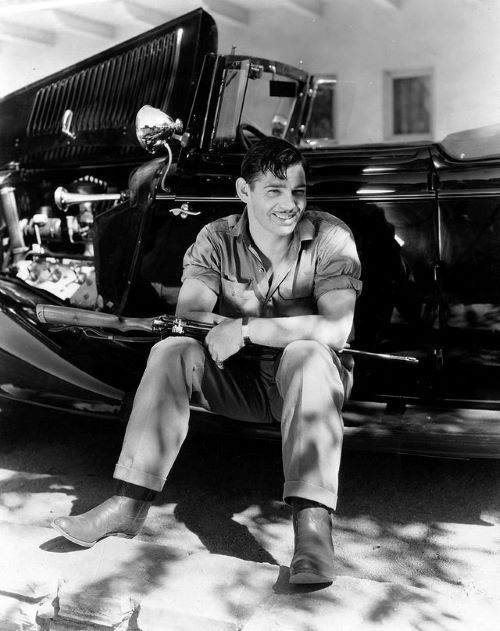
In 1931, his first year at MGM, Clark made twelve films. Most of them were bit parts, but he had finally shown that he was a great asset to the studio. Now the most important part of his public persona began – his PR package. When a studio has faith in their new actors and actresses, they introduce them to the media. To do this, they create a biography that fits the image they have in mind for their new star. Clark was assigned to top publicist Howard Strickland. Howard decided to create a stereotypical ‘he-man’ image for him. Clark’s hobbies in real life were work and women, but this would not look good in his official biography. He was presented as an outdoorsy type, who enjoyed hunting, fishing, and shooting. Ironically, this was a better description of Clark’s father than of him. Clark had to take pictures in the outdoors and pose beside cars to emphasize his manliness. These, along with his new biography, were handed to the media. The press and the public responded well, so he was given bigger roles by the studio.

Clark Gable in a promotional shot car
Clark Gable in a promotional shot

The studio soon found that women loved to see Clark on-screen. His collaborations with Joan Crawford were a big hit and his roles changed from ‘bad guy’ to ‘heartthrob’. Nobody was more surprised than Clark, who went into boss Louis B. Mayer’s office and complained that he was ‘too elephant-eared and unattractive’ for these roles. Fortunately for him, he was wrong and the move to desirable leading man made him a star. It was around this time that he completed his make-over. His front teeth may have been fixed, but the rest were so rotten, that his gums became severely infected. Clark had to get dentures, which gave him a Hollywood smile and raised his cheekbones. This is also the time when he reportedly got his ears fixed, though he would claim that they simply seemed smaller because he had gotten bulkier. The star transformation was completed when he divorced Ria, became a power couple with Carole Lombard, and got the part of Rhett Butler in Gone With The Wind. So when Ed Sullivan asked his audience in 1938: ‘Who is the King of Hollywood?’, Clark won the vote by a landslide. It would be his nickname for the rest of his life.

Clark had come a long way from being a shy, awkward country boy. That day in Ohio, when he was so mesmerized by the first play he ever saw, lit a fire in him. From that moment on, he would take every opportunity to grow, learn and move forward for the sake of his career. Through this process, he changed as a person as well: Clark became more confident, charming, and comfortable in his own skin. Although the image that the studio created for him wasn’t truthful at the time, Clark even embraced that. Devote of hobbies before, he started spending more time in the outdoors – fishing and shooting with Hollywood buddies and Carole. He was proud of his “tough guy” image and embodied it more and more. The country boy in him never completely went away though. Instead of living in the middle of the action in Hollywood, Clark and Carole bought a quiet farm. He would live there until the day he died.

Ultimately, Clark wanted more than a carbon copy of his father’s life. After he found his passion, Clark gave his all to become the person he wanted to be: the King of Hollywood.

The sources for this article are Clark Gable: Tormented Star by David Bret, Clark Gable by Warren G. Harris, Clark Gable by Chrystopher J. Spicer, and articles Verdugo Views: Clark Gable’s first wife helped launch his career – LATimes.com, and Josephine Dillon Is Dead; Gable’s First Wife Was 87 – The New York Times, andDearMrGable.com (The Wife Clark Gable Forgot, Josephine Dillon).

— Arancha van der Veen for Classic Movie Hub

You can read all of Arancha’s Lives Behind the Legends Articles Here.

Arancha has been fascinated with Classic Hollywood and its stars for years. Her main area of expertise is the behind-the-scenes stories, though she’s pretty sure she could beat you at movie trivia night too. Her website, Classic Hollywood Central, is about everything Classic Hollywood, from actors’ life stories and movie facts to Classic Hollywood myths. You can follow her on Twitter at @ClassicHC.

Posted in Lives Behind the Legends, Posts by Arancha van der Veen | Tagged , , , , , , , | 1 Comment

Enter to Win ‘Best Classics Ever’ Streaming Subscriptions and More!

A Season of Free Holiday Movies and Giveaways, courtesy of Best Classics Ever

CMH is happy to announce that Best Classics Ever is giving away lots of BCE Streaming Subscriptions to celebrate the Holiday Season! Plus a few amazon fire TV sticks as well!

There are a bunch of different (and very easy) ways to enter, and no purchase is necessary 🙂 The link(s) to enter are listed below.

Here’s what BCE will be giving away throughout the month:

  • Week ending Dec 17: a 60-day subscription to BCE (10 winners) — click here to enter
  • Week ending Dec 23): an Amazon Fire TV Stick 4K (5 winners) — check back next week for the link to enter
  • Week ending Dec. 30: a yearlong subscription (3 winners) and a lifetime subscription (1 winner) — check back in 2 weeks for the link to enter

In addition to the prize giveaway, Best Classics Ever will be featuring a collection of classic cartoons, holiday TV episodes and free movies this month on their channel as well– so if you have a chance, please feel free to check it out.

You can read more about Best Classics Ever and our partnership here.

…..

–Annmarie Gatti for Classic Movie Hub

Posted in Contests & Giveaways, Posts by Annmarie Gatti | Tagged , , | Leave a comment