Dixie Kay Nelson was born on August 15, 1933, in Santa Fe,
New Mexico. She was the daughter of the superintendent of the American Metal
Mine Company and the great-grandniece of John J. Pershing.
Nelson’s time in the entertainment industry began when she
was two years old and appearing in local theatrical productions, receiving the
nickname “Santa Fe’s Shirley Temple.” By the time she turned four, her family had
relocated to Encino, California. Soon after, she would win the title “Little
Miss America,” touring veterans’ hospitals, participating in additional
theatrical performances, and modeling for local photographers.
Sadly, Nelson contracted a severe rheumatic fever at age
seven, leading her to be bedridden for four years. Once she recovered, she
returned to appearing in pageants once again and won the “Miss Encino” title at
17.
Nelson graduated from Canoga Park High School and pursued a modeling career. After an unsuccessful test for a role in Warner Brothers’ Kings Row (1942), Nelson worked with agent Milo O. Frank, Jr., to try and work in films. She trained with the studio dramatic coach at Universal-International and reenacted a scene for the front office. In 1950, she signed a seven-year contract with Universal-International. There, she took on the stage name Lori Nelson.
Lori Nelson and Tom Hennesy in Revenge of the Creature (1955)
Nelson also worked in television on numerous occasions, including a co-starring role in The Pied Piper of Hamelin (1957). She worked in the sitcom How to Marry a Millionaire alongside Barbara Eden and Merry Anders, which was based on the 1953 film of the same name. She also made many television guest appearances, including roles on The Tab Hunter Show, Wagon Train, and Bachelor Father.
Barbara Eden, Lori Nelson and Merry Anders in the TV show How to Marry a Millionaire (1957-1959)
In 1960, Nelson married composer Johnny Mann. The couple had
two daughters named Susan and Jennifer before divorcing in 1973. Nelson later
married Joseph J. Reiner, who worked as a police officer. Nelson’s final film
role was as Dr. Helen Dobson in The Naked
Monster (2005).
Nelson passed away on August 23, 2020, at her Porter Ranch
home after battling Alzheimer’s disease. She was 87 years old.
Today, there are few tributes to Nelson but some of her
former residences remain. In 1940, Nelson resided at 4611 Van Nuys Blvd.,
Sherman Oaks, California. In 1950, the family lived at 14544 Haynes St., Los
Angeles, California. These residences no longer stand.
Nelson’s alma mater, Canoga Park High School continues to
exist as a high school but not in the same building that Nelson would have
attended. The building was damaged in the 1971 Sylmar earthquake and demolished
in 1975. The new building stands at 6850 Topanga Canyon Blvd., Canoga Park,
California.
Nelson’s High School, Canoga Park High School located in Canoga Park, California
In 1960, Nelson lived at 5044 Bellaire Ave., North
Hollywood, California. The home stands to this day.
Nelson’s 1960 residence at 5044 Bellaire Ave., North Hollywood, California
In the 1970s, she lived at 19764 Corbin Dr., Chatsworth,
California. Her husband, Johnny Mann, registered this location in 1970 as
Johnny Mann Productions, Inc., later registering Great American Choral
Festival, Inc., at this address. The home no longer stands.
In 1973, Nelson relocated to 19558 Pine Valley Ave., Porter
Ranch, California. She lived here with her second husband, Joseph J. Reiner.
The home remains today.
Nelson’s 1973 residence at 19558 Pine Valley Ave., Porter Ranch, California
Annette Bochenek, Ph.D., is a film historian, professor, and avid scholar of Hollywood’s Golden Age. She manages the “Hometowns to Hollywood” blog, in which she profiles her trips to the hometowns of classic Hollywood stars. She has also been featured on the popular classic film-oriented television network, Turner Classic Movies. A regular columnist for Classic Movie Hub, her articles have appeared in TCM Backlot, Silent Film Quarterly, Nostalgia Digest, The Dark Pages Film Noir Newsletter, and Chicago Art Deco Society Magazine.
Silents are Golden: Silent Superstars – The Early Heartthrob Sessue Hayakawa
The typical handsome leading man of silent films was a strong, dependable, clean-cut type, with names like Harold Lockwood or Earle Williams. Rudolph Valentino’s popularity in the ‘20s also initiated a craze for “exotic” Latin lovers. But modern movie fans might be surprised to learn that there was another beloved matinee idol, earlier than Valentino, who also seemed exciting and “exotic” to white audiences: the Japanese actor Sessue Hayakawa, a star of the 1910s.
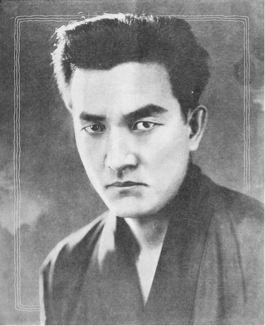
Sessue Hayakawa
Hayakawa’s early life was tinged by drama. He
was born Kintaro Hayakawa on June 10, 1886 in the city of Minamiboso in Japan.
He came from a wealthy family, his father being the provincial governor and his
mother having aristocratic roots. At age eighteen Hayakawa attempted to join
the Japanese navel academy in Etajima, planning on becoming an officer as his
parents desired. When he was rejected due to problems with his hearing (he had
ruptured an eardrum while diving), he attempted to commit ritual suicide by
stabbing himself in the abdomen. Fortunately he was discovered and managed to
make a recovery.
He later recalled that his family then sent
him to the University of Chicago to study political economics, with the new
goal of becoming a banker. But apparently there’s no record of Hayakawa being
at the university, and he may have spent his time in the U.S. doing odd jobs
instead. At any rate, while spending some time in Los Angeles he ducked into
the Japanese Theatre in the Little Tokyo district. Enamored with what he saw,
he decided to try to become an actor and took the name “Sessue” (meaning “snowy
continent”) as a stage name.
A young Hayakawa
He quickly made an impression on his fellow actors, including actress Tsuru Aoki, who would later become his wife (they would adopt three children). Aoki convinced film producer Thomas Ince to attend a performance of The Typhoon, and Ince decided to turn it into a film starring Hayakawa. The 1914 film was a hit and was followed by The Wrath of the Gods and The Sacrifice (both 1914). Since Hayakawa was clearly a star on the rise, he was signed by Famous Players-Lasky (now known as Paramount).
Hayakawa would prove himself in Cecil B. DeMille’s sensational drama The Cheat(1915), where he played a wealthy ivory merchant. When a married high-society woman comes to him for a loan, hoping to replace a large sum of Red Cross money that she lost in a bad investment, he agrees in return for sexual favors. When she tries to back out of the deal, he brands her on the shoulder–a shockingly lurid scene for the time. It was a critical and box office hit, and established Hayakawa as one of Hollywood’s top stars and an idol to many female filmgoers.
Fannie Ward and Sessue Hayakawa in The Cheat (1915)
While his charisma and brooding, elegant good
looks certainly explain his popularity, some of his appeal was also bolstered
by the strong interest in Asia at the time. People were drawn to the exoticism
of the “Far East,” and it had a strong influence on fashion and interior
decorating trends. Still, concerns about miscegenation often limited Hayakawa
to villainous roles, keeping him from being a regular romantic lead or hero.
But even this didn’t exactly hurt his popularity, since these roles made his
characters seem like forbidden fruit to countless enraptured women.
Sessue Hayakawa in His Birthright (1918)
Soon getting tired of typecasting, in 1918 Hayakawa decided to establish his own studio, Haworth Pictures Corporation. It was the first Asian-owned studio in Hollywood, and in the next three years it would make twenty films, lauded for their subtle Zen-inspired acting. While most of them are lost today, the most famous one that survives is The Dragon Painter(1919). Co-starring Hayakawa’s wife Tsuru, it was highly praised for its authenticity and poetic story.
Hayakawa in The Dragon Painter (1919)
By the late 1910s Hayakawa was commanding
$3,500 a week and was happy to spend his money almost as fast as it came in. He
drove a gold-plated Rolls Royce and hosted large parties in his custom-built
mansion–said to have been the wildest parties in Hollywoodland. But by 1922 his
career was starting to slump, helped along by anti-Asian sentiment in the
aftermath of WWI. Other issues included suffering a burst appendix during the
shoot of The Swamp (1921), and
prosaic troubles involving insurance.
Deciding to leave Hollywood, he returned to
Japan for a time and then started making films in France and Britain. Not one
to waste his time, he would also have a starring role on Broadway, write a
novel called The Bandit Prince, adapt
The Bandit Prince into a play, and
produce a Japanese language stage version of The Three Musketeers, and open a Zen temple in New York City.
Bramwell Fletcher, Sessue Hayakawa, Harold Minjir, and Nella Walker in Daughter of the Dragon (1931)
By the early ‘30s he had also found time to return to Hollywood, making his talkie debut in Daughter of the Dragon(1931) starring Chinese-American actress Anna May Wong. Unfortunately his heavy accent wasn’t well received, and he returned to making films in Japan and France. He would even star in a remake of The Cheat in 1937, also called The Cheat.
Following WWII, Hayakawa was contacted by Humphrey Bogart’s production company for a role in the film Tokyo Joe (1949). This began the last leg of his acting career, where he often played “honorable villain” types of roles. The highlight was his famous role as Colonel Saito in The Bridge on the River Kwai(1957), which earned him an Oscar nomination for Best Supporting Actor and a Golden Globe nomination. Following this, he began to wind down his acting career, appearing in films and on television only occasionally. He would also lose his wife Tsuru to peritonitis in 1961. His last film was the stop-motion The Daydreamer(1966).
Hayakawa in Bride on the River Kwai (1957)
A practicing Zen Buddhist, Hayakawa decided to
devote himself to becoming a Zen priest. He would also give acting lessons and
write his autobiography Zen Showed Me the
Way…To Peace, Happiness and Tranquility.
He passed away in 1973 from a cerebral blood clot, leaving behind a
proud legacy of being cinema’s first international Asian film star.
Lea Stans is a born-and-raised Minnesotan with a degree in English and an obsessive interest in the silent film era (which she largely blames on Buster Keaton). In addition to blogging about her passion at her site Silent-ology, she is a columnist for the Silent Film Quarterly and has also written for The Keaton Chronicle.
In previous posts here at the Noir Nook, I’ve mentioned the classic movie Zoom meetup group that I’ve participated in since spring 2020. One of our recent films was 20th Century Fox’s Cry of the City (1948), starring Victor Mature and Richard Conte. I’ve seen this movie many times, but in watching it again, I was stuck by how good it is, and how underrated!
But that’s not
the point of this month’s column.
If you know me
at all, you’ll know that I’m a huge (ginormous, even) fan of Richard Conte, and
in Cry of the City, as always, he did not disappoint. Sadly, like this
film, Conte doesn’t receive the accolades these days that he so richly
deserves. So, as a holiday gift from me to you, this month’s Noir Nook is
taking a look at three noirs starring this talented actor that you simply must
see – even the characters’ names are awesome!
Richard Conte and Shelley Winters in Cry of the City (1948)
Cry of
the City (1948) – Martin Rome
In this Robert Siodmak-directed feature, Conte plays a character from a close-knit, loving family who’s fairly oozing with charm and intelligence. Sadly, he uses his powers for villainy rather than virtue – when we first encounter him, he’s facing surgery after killing a cop during a shootout. The film follows Martin’s path from the prison’s hospital ward and tracks the people he uses in his effort to flee the country with his angelic lady love, Tina (Debra Paget). It’s amazing the number of people who sacrifice their own safety for Martin’s sake – there’s the prison trusty (Walter Baldwin) who helps him escape, the ex-girlfriend (Shelley Winters) who finds an unlicensed doctor to treat Martin’s wound, and the middle-aged nurse (Betty Garde) who spirits Tina from her home and hides her away from the police. Martin’s final showdown with his boyhood friend-now-nemesis Lt. Vittorio Candella (Victor Mature) is a tension-thick standoff that will have you on the edge of your seat.
Richard Conte, Luther Adler, Paul Valentine and Efrem Zimbalist Jr. in House of Strangers (1949)
House of
Strangers (1949) – Max Monetti
In House of Strangers, Conte is an attorney, the favorite son of bank proprietor Gino Monetti (Edward G. Robinson), who is characterized by his questionable methods. When Gino is arrested for breaching the statutes of banking, it is only Max who comes to his defense; his three brothers, after enduring years of criticism and ridicule from their father, are only too happy to see him wind up behind bars. Betrayed by his oldest brother (Luther Adler) for bribing a juror, Max is sent to prison for seven years, and emerges bent on revenge. In this feature, Conte plays one of his most multifaceted characters; his Max is at once charismatic, bitter, compassionate, bitter, loyal, and unforgiving.
Richard Conte and Anne Bancroft in New York Confidential (1955)
If Max Monetti is one of Conte’s most complicated personas, then Nick Magellan is one of his most chilling. A hitman with a heart of steel, Nick is hired by New York syndicate head Charlie Lupo (Broderick Crawford) to rub out a rogue member of his organization. Before long, Nick becomes Lupo’s right-hand man, but he is beset by Lupo’s troubled daughter (Anne Bancroft), his duplicitous mistress (Marilyn Maxwell), and the stress of upholding the syndicate’s stringent set of rules. Nick is not your typical hitman; he’s refined and intelligent, and highly proficient – and cooler than the other side of the pillow.
If you’ve never
seen these Richard Conte noirs, do yourself a favor and add them to your
watchlist. And if you’re already familiar with them, treat yourself to a
rewatch.
You’ll be glad you did.
…
– Karen Burroughs Hannsberry for Classic Movie Hub
Karen Burroughs Hannsberry is the author of the Shadows and Satin blog, which focuses on movies and performers from the film noir and pre-Code eras, and the editor-in-chief of The Dark Pages, a bimonthly newsletter devoted to all things film noir. Karen is also the author of two books on film noir – Femme Noir: The Bad Girls of Film and Bad Boys: The Actors of Film Noir. You can follow Karen on Twitter at @TheDarkPages. If you’re interested in learning more about Karen’s books, you can read more about them on amazon here:
Pat Boone shares memories of ‘Journey to the Center of the Earth’ at TCM Cruise
The importance of horror and sci-fi movies from the classic film era tends to be overshadowed when compared to today’s big-budget CGI-films.
So when you learn a 1959 sci-fi flick helped save the day when a big-budget epic was sucking a major movie studio dry, classic film fans want to share the tale – especially when the storyteller is Pat Boone.
Pat Boone, left, and James Mason find one fantastic discovery after another during their Journey to the Center of the Earth.
The entertainment legend was discussing his lengthy career on the 2022 TCM Cruise and often brought upJourney to the Center of the Earth, one of his earliest films and the one that propelled him to movie stardom.
The movie was the first of multiple adaptations of the imaginative 1864 novel by Jules Verne about adventurers on a quest to find the center of the earth, as the title so succinctly sums up. It also was one of the factors that helped 20th Century-Fox stave off bankruptcy from the much-delayed and well over budget Elizabeth Taylor–Richard Burton epic Cleopatra.
The long road to the big screen for Cleopatra started in 1958 when Walter Wagner’s production company partnered with the studio. It was another two years before principal photography started on Cleopatra and another three years before it would be released. Time is money and the prolonged production resulted in ongoing problems for the studio including a budget that ballooned from $2 million to $44 million (about $364 million today). While the success of Journey to theCenter of the Earth wasn’t the only thing that helped Fox – the studio sold off land and The Sound of Music was later released –it certainly played a starring role.
Pat Boone during one of his talks on the TCM Cruise.
That’s a pretty cool fact and one that Boone shared with pride. “This film saved the studio. We were told they were about to shut down 20th Century-Fox and then the film came out.”
The novel was written at a time when the idea that the earth was hollow at its center was a popular theory. And there was still much to learn about the planet so people could imagine anything and everything: lost worlds, unexplored regions, magnificent creatures and unexplained phenomenon.
For the movie, the setting was moved from Germany to 1880 Edinburgh, Scotland. Geologist and Professor Oliver Lindenbrook (the esteemed James Mason) is being celebrated for his new title of “Sir.” Boone plays Alec McEwan, a student who clearly has a special bond with his professor (the two actors also have a great screen chemistry), and gifts Lindenbrook with a volcanic rock he found in a curiosity window.
Geology student Alec (played by Pat Boone) gifts his professor (James Mason) with a volcanic rock that sends them on a great adventure in Journey to the Center of the Earth.
“It’s a scholaris choice,” a happy Lindenbrook tells him. But the rock is much heavier than it should be and that demands attention.
When the professor misses dinner, young Alec and Lindenbrook’s niece Jenny (Diane Baker), who are sweet on each other, find him in his laboratory. A small explosion – the type we have in these movies as a shortcut to learning important information – breaks open the rock exposing a man-made object. It’s signed by Arne Saknussemm who disappeared 300 years earlier on his journey to the center of the Earth through Iceland.
Excitement is in the air!
Lindenbrook reaches out to the world authority on volcanoes, Professor Göteborg. His delayed response raises red flags that send Lindenbrook and Alec to Iceland.
What Lindenbrook feared is happening as Göteborg is preparing for his own expedition. To slow them down, Göteborg has Lindenbrook and Alec kidnapped so they will miss the brief moment when the sun illuminates the mountain opening toward the center of the Earth. (Sound familiar? It’s the first time we see how Journey inspired the 1981 blockbuster Raiders of the Lost Ark.)
Gertrude the duck, left, and Arlene Dahl share a special bond in Journey to the Center of the Earth.
Our kidnapped explorers get a soft landing when they’re dumped in a bin of goose feathers and are rescued by the non-English speaking Hans (Peter Ronson) and his duck Gertrude (played by herself). This film not also has a sense of awe, but a light sense of humor, too.
Sadly it doesn’t end well for Göteborg who is murdered. His widow, Carla (Arlene Dahl), offers our guys a deal: They can have all her husband’s expensive equipment and food, plus she will translate for Hans – if she can go on the expedition, too. Carla drives a hard bargain that they can’t refuse.
But the Fab 5 – Lindenbook, Alec, Carla, Hans and Gertrude – won’t be alone. Tracking them is Count Saknussemm who we know isn’t a good guy because ominous music is heard when he comes on screen, and he’s played by the naturally creepy Thayer David (Dark Shadows). Saknussemm feels he’s entitled to the discovery and all that money and acclaim that comes with it.
This looks like a fun set as the gang finds giant mushrooms they can use for sustenance and more in Journey to the Center of the Earth.
The adventure is on and each cavern and passageway brings wonder or danger: winds, a whirlpool, luminescent algae, lava, a magnificent “ocean of the underworld” and giant creatures – the stars of so many 1950’s films.
The explorers will walk on thin ledges where someone is bound to slip, outrun a giant boulder (again, a scene duplicated in Raiders of the Lost Ark) and scale stalactites to evade flooding waters. There are giant mushrooms – think person-sized and taller – that our hungry crew will use for food, shoe bottoms and a raft. And they’ll find the holy grail: the lost city of Atlantis.
It’s all such great fun, but in his review of the film at the time of its release, grumpy New York Times critic Bosley Crowther wrote “The earth’s interior is somewhat on the order of an elaborate amusement-park tunnel of love.” That sounds like he thought it was a bad thing, forgetting that the journey in the movie, like in life, is the best thing.
Arlene Dahl hangs on a stalactite as waters rise in an underground cavern in Journey to the Center of the Earth.
Boone recalled how these adventurous scenes, done with practical – not computer-generated – stunts, brought uncomfortable and even dangerous moments to the actors.
His character Alec is
separated from his traveling companions and stumbles into a salt cavern where
the extreme heat leads him to start cutting off his clothes. He falls into a sinkhole
of salt, then another and another.
“I’m trying not to breath. I knew it would fill up my lungs,” he said, which is evident as Boone’s face and body are covered in thick white stuff.
Pat Boone is overcome by heat and large amounts of salt that cover everything.
Then there was the exciting scene when their raft gets pulled into a whirlpool.
“It was violent.
We’re in a raft, it’s in a whirlpool and it’s going to suck us down. They were
pouring thousands of gallons of water on us from above,” Boone said. “We had to
hold on. We are 8 feet in the air and spinning.”
And that’s when
actress Arlene Dahl began screaming at director Henry Levin to “get me down,”
Boone said.
Our explorers get trapped in a whirlpool in Journey to the Center of the Earth.
She was freaked out to the extent that she passed out.
But perhaps the scariest moment of shooting for Boone, a deeply religious man, was when he lands “naked” in a tree by a nunnery.
“All I had on in
the scene was a skin-colored speedo,” he laughed along with the TCM audience.
* * * *
In addition to introducing the film on the TCM Cruise, Boone also did a book signing and two lengthy “conversations” where he talked in-depth about his career and co-stars. Here are a few highlights.
On becoming a film actor: “I was stunned. I had studied some acting … but I didn’t think of myself as an actor.”
On a role model: “If I was gonna be in a movie, my role model was Bing Crosby. I just wanted to be a teenage Bing Crosby.”
On James Mason: “He had a surprising sense of humor. He kept to himself but was companionable.” Boone said he also “hummed a lot” and thought it could have been to keep his voice mellow.
On the film’s
premise: “If you’re really gonna go to the center of the earth, you’re not
coming back, but in this movie you could,” Boone laughed.
Pat Boone, left, likes to court Diane Baker in song during Journey to the Center of the Earth.
On how he finally agreed to do Journey to the Center of the Earth. “I didn’t want to do sci-fi. I wanted to do musicals. They kept after me and finally my manager said they’re offering you a piece of the film.”
But he wanted something else even more. “I said I wanted to sing,” Boone said. And he did, performing The Faithful Heart and My Life is Like a Red, Red Rose (based off the poem by Robert Burns) to his on-screen love interest, Diane Baker.
“I would like to be remembered for those two songs,” he said.
Toni Ruberto, born and raised in Buffalo, N.Y., is an editor and writer at
The Buffalo News. She shares her love for classic movies in her blog, Watching Forever and is a
member of the Classic
Movie Blog Association. Toni was the president of the former Buffalo
chapter of TCM Backlot and now leads the offshoot group, Buffalo Classic Movie
Buffs. She is proud to have put Buffalo and its glorious old movie palaces in
the spotlight as the inaugural winner of the TCM in Your Hometown contest. You
can find Toni on Twitter at @toniruberto.
Silver Screen Standards: I Know Where I’m Going! (1945)
Like Joan, the heroine of Michael Powell and Emeric Pressburger’s 1945 gem, I Know Where I’m Going!, I thought I knew where I was going as a young woman, but fate altered the course of my journey. My empathy with Wendy Hiller as the ambitious, pragmatic Joan only partly accounts for my deep affection for this charming wartime romance. It’s not a tame fairy tale, with its rough weather and hardscrabble Hebridean islanders, but it exists in the mythic atmosphere of cursed castles, legendary whirlpools, and sublime Romantic scenery. Against this backdrop, the writer/director team unfolds a story of two people whom destiny seems determined to throw together, despite the heroine’s best efforts to stick with her original plan.
When we first meet Joan (Wendy Hiller), her marital plans are as determined as the angle of her hat.
Hiller plays Joan Webster, a middle-class English woman who aspires to better things and has the chance to get them by marrying the much older owner of a large company. Her groom wants to have their wedding on the remote Scottish island of Kiloran, which he rents from its laird, so Joan sets off from England to the rugged Hebrides with her wedding dress and a detailed itinerary. The infamous Scottish weather stops her progress at Mull, where she can see the island over the water but can’t cross due to the dangerous winds. Conditions on the shore also grow dangerous as Joan develops a friendship with Torquil MacNeil (Roger Livesey), the poor but handsome laird of Kiloran currently home on a week’s leave from the Navy.
Like most romantic comedy protagonists, Joan and Torquil (Roger Livesey) frequently clash, especially about Joan’s risky plan to get to Kiloran in spite of the storm.
The movie is packed with wonderful characters and performances all the way down the line. Hiller and Livesey – both rather mature for the characters they play – have marvelous chemistry in spite of their grown-up, sober manners. Livesey exudes a particular romantic appeal as the modest but competent Torquil; the more storm-tossed he gets the handsomer he looks, which makes the climactic scene in the boat all the more thrilling, and he cuts quite a figure in his kilt. The determined heroine who gets tripped up by unexpected love is a staple of romantic comedy, but the narration and framing of the story treat Joan with a wry humor that laughs at her while still making us sympathize with her. The two leads enjoy ample support from C.W.R. Knight as Colonel Barnstaple, Finlay Currie as the local boatman, and Margot Fitzsimons (sister of Maureen O’Hara) as young Bridie, but the scene-stealer of the lot is Pamela Brown as the magnificent Catriona Potts. Every time she enters a scene I am absolutely bewitched by her wind-blown locks and stalwart nature, and if she weren’t already conveniently married I’d have trouble rooting for Joan to hook Torquil. Even the smallest roles are memorably played, especially the female characters; veteran stage star Nancy Price makes a brief but powerful appearance as Mrs. Crozier, and young Petula Clark leaves me wishing she had more scenes as the bookish but observant Cheril.
The heroic Catriona (Pamela Brown), one of Torquil’s closest friends, provides Torquil and Joan with shelter after their boat to Kiloran is delayed.
A good romantic story would be enough for a lot of
movies, but this picture is also a great film. It makes the most of
every tool at its disposal to create a rich narrative of sights, sounds, and
symbols. Erwin Hillier (credited as “Hiller”) provides breathtaking
cinematography that might inspire you to take off for Scotland yourself, and
the lively music will stay in your mind long after the last scene ends. Powell
and Pressburger weave mythic imagery through the rather mundane tale of two
people drawn into romance. The whirlpool itself is an apt metaphor for the
experience of being pulled in by the force of passion, but the legend of the
whirlpool and that of the cursed castle also provide pointed commentary on the
perils of love. The rewards, however, can be seen at the 60th
anniversary party of the elderly Campbells, whose long and happy union the community
joins to celebrate with song and dance. Ending as it does, the movie leaves us
wondering which outcome Joan and Torquil will face; we understand that the war
beckons back in the modern world, and the laird must soon return to the fray,
but the uncertainty of that conclusion perfectly fits the moment in which the
film was made.
Torquil joins Joan on the dangerous crossing to Kiloran, which proves to be much more difficult than Joan imagined.
Most classic movie fans already know and admire the work of Powell and Pressburger, and I Know Where I’m Going! is one of their best-known collaborations along with Black Narcissus (1947) and The Red Shoes (1948). Roger Livesey also stars in Powell and Pressburger’s 1943 film, The Life and Death of Colonel Blimp, while Wendy Hiller is best remembered for her Oscar-nominated role as Eliza Doolittle in Pygmalion (1938). For those who yearn to see the wilds of Scotland but can’t manage the trip in person, this movie makes a fine starting point for a cinematic celebration of the region. I’d pair it with other classics like The 39 Steps (1935) or Brigadoon (1954) and make a Burns Night party of it on a cold January evening.
Clifton Webb was a gifted actor of Hollywood’s Golden Age, which succeeded in various film genres. He was born Webb Parmelee Hollenbeck on November 19, 1889, in Indianapolis, Indiana, to Jacob and Mabel Hollenbeck. His parents separated soon after Webb’s birth.
A few years later, Webb’s mother took on the name Mabelle and moved with her
son to New York City. There, she married copper-foundry worker Green B. Raum.
In his teen years, Webb adopted the stage name Clifton Webb and worked as a
professional ballroom dancer. His Broadway debut occurred in The Purple
Road in 1913, with his mother being a fellow cast member. After a string
of successes on Broadway shows, namely comedies and musical revues, he also
worked in vaudeville shows as well as silent films. One of his early silent
film roles was in New Toys (1925), though he would concentrate on a
stage career for many years.
Webb grew to acclaim in Broadway theatre, particularly excelling in
musicals. He had the distinction of introducing “Easter Parade,” “I’ve Got a
Crush on You,” “I Guess I’ll Have to Change My Plan,” and more on stage.
a young Webb
Webb’s breakthrough performance came in Laura(1944). Against objections from 20th Century Fox head Darryl Zanuck, director Otto Preminger cast Webb in the role of Waldo Lydecker. At this point, Webb was in his mid-fifties, and Preminger wanted an actor in the role who would really surprise the audience. His appearance was a memorable one and earned him an Academy Award nomination for Best Supporting Actor.
Due to this positive reception, Webb signed a contract with Fox and worked for them for the duration of his film career. Webb appeared in other dramas such as The Dark Corner (1946) and The Razor’s Edge (1946), earning another Academy Award nomination for Best Supporting Actor in the latter.
Webb also turned to film comedies, starring as Mr. Belvedere in Sitting Pretty(1948). This role earned him an Academy Award nomination for Best Actor. The film was followed by sequels Mr. BelvedereGoes to College (1949) and Mr. Belvedere Rings the Bell(1951). He would also appear as the family patriarch in Cheaper by the Dozen (1950), which fared well at the box office, and also appeared briefly in the film’s sequel, Belles on Their Toes(1952). His final box office success was playing an angel in For Heaven’s Sake (1950).
Shirley Temple and Clifton Webb in Mr. Belvedere Goes to College (1949)
Webb passed away on October 13, 1966, from a heart attack and was interred
next to his mother at Hollywood Forever Cemetery. He was 76 years old.
Today, some points of interest pertaining to Webb’s life remain. He was born
near Brookville Rd., in Indianapolis, Indiana. In 1900, he lived in New York
with his mother and stepfather at 101 17th St., New York, New York.
By 1910, he resided at 214 W. 83rd St., New York, New York, while
working as a singer. These homes no longer stand.
In 1925, Webb lived at 205 W. 57th St., New York, New York. He is
listed as head of the household at this point. The building remains today.
Webb’s NYC residence at 205 West 57th Street, New York, NY
In 1955, Webb maintained a home at 1005 N. Rexford Dr., Beverly Hills,
California. The home no longer stands.
Webb was honored with a star on the Hollywood Walk of Fame for his work in
motion pictures. His star is located at 6850 Hollywood Blvd., Los Angeles,
California.
Webb’s star on the Hollywood Walk of Fame
Since 1969, the UCLA School of Theater, Film, and Television has offered the Clifton Webb Scholarship in honor of Webb.
Annette Bochenek, Ph.D., is a film historian, professor, and avid scholar of Hollywood’s Golden Age. She manages the “Hometowns to Hollywood” blog, in which she profiles her trips to the hometowns of classic Hollywood stars. She has also been featured on the popular classic film-oriented television network, Turner Classic Movies. A regular columnist for Classic Movie Hub, her articles have appeared in TCM Backlot, Silent Film Quarterly, Nostalgia Digest, The Dark Pages Film Noir Newsletter, and Chicago Art Deco Society Magazine.
Western RoundUp: Final Resting Places, Leading Ladies
In my last Western RoundUp column I shared photographs of the final resting places of a number of Western sidekicks and supporting Western players.
That column was focused on male
actors, and this time around we’ll be sharing the gravestones of a baker’s
dozen of leading ladies from both “A” and “B” Westerns.
Loretta Young 1913-2000
We’ll begin by paying our respects to Oscar-winning actress Loretta Young, who is buried with her mother at Holy Cross Cemetery in Culver City, California. Film fans might not associate Young with Westerns, but she made some very good ones, including the delightful The Lady From Cheyenne (1941), in which she helps bring women the right to vote in 1860s Wyoming. That’s a film I’ve very much been hoping comes to DVD! Young also starred with Gary Cooper and Dan Duryea in the Western comedy Along Came Jones (1945) and best of all, she costarred with William Holden and Robert Mitchum in a story of pioneering settlers, Rachel and the Stranger (1948).
Polly Ann Young 1908-1997
All three of Loretta Young’s sisters are buried at Holy Cross, and two of them appeared regularly in “B” Westerns. Loretta’s oldest sister, Polly Ann Young, appeared in several ’30s Westerns opposite stars such as John Wayne, Buck Jones, and Tim McCoy. Wayne, in fact, was a good friend of the Young family, and his first marriage took place in Loretta Young’s backyard.
Sally Blane 1910-1997
Another of Loretta Young’s sisters, actress Sally Blane, was originally born Elizabeth Jane Young. She appeared in ’30s “B” Westerns opposite Hoot Gibson and Randolph Scott. Sally was married to actor-director Norman Foster, who directed Loretta in the aforementioned Rachel and the Stranger; he would later direct Disney’s Davy Crockett and Zorro for television. Foster is buried next to his wife.
Also at Holy Cross is the gravesite of Rita Hayworth, who appeared in “B” Westerns early in her career. She was still billed under her birth name, Rita Cansino, when she appeared in films such as the Three Mesquiteers Western Hit the Saddle (1937) and Tex Ritter’s Trouble in Texas (1937). After changing her name to Rita Hayworth, she costarred in The Renegade Ranger (1938) with George O’Brien and Tim Holt. As I discussed here in a 2019 column, “B” Westerns provided training and a path to bigger stardom for numerous actresses.
Cathy O’Donnell also starred opposite James Stewart in an excellent Western directed by Anthony Mann, The Man From Laramie (1955). She’s at Forest Lawn Glendale next to her husband, producer Robert Wyler, and his brother, the great director William Wyler, whose Westerns included The Big Country (1958).
Patrice Wymore 1926-2014
Patrice Wymore starred opposite her husband, Errol Flynn, in the well-regarded Rocky Mountain (1950). She’s buried at Forest Lawn Glendale next to Flynn, whom she outlived by over half a century. Wymore also starred opposite Kirk Douglas in The Big Trees (1952).
Julie Bishop 1914-2001
Julie Bishop, who is buried under her married names, is also at Forest Lawn Glendale. She was one of the wonderful actresses who starred in one of my all-time favorite Westerns, Westward the Women (1951), directed by William Wellman; I wrote about that movie’s locations here in 2021. Early in Bishop’s career, acting under the name Jacqueline Wells, she appeared in “B” Westerns opposite Tom Tyler, Tim McCoy, Roy Rogers, and Gene Autry. Bishop was the mother of actress Pamela Susan Shoop.
June Storey 1918-1991
Another “B” Western leading lady, June Storey, is at Pacific View Memorial Park in Corona del Mar. She was one of Gene Autry‘s most frequent leading ladies, appearing opposite him in 10 films. Her last Western was Song of the Prairie (1945) opposite Ken Curtis, later known for singing with the Sons of the Pioneers and as Festus on TV’s Gunsmoke.
Virginia Mayo 1920-2005
Virginia Mayo is buried next to her husband, actor Michael O’Shea, at Valley Oaks Memorial Park in Westlake Village, California. Mayo did fine work in a number of Westerns; favorites include Colorado Territory (1949) with Joel McCrea, The Proud Ones (1956) with Robert Ryan,Fort Dobbs (1958) with Clint Walker, and Westbound (1959) with Randolph Scott. The latter film tends to be ignored as a more minor title among Scott’s collaborations with director Budd Boetticher, but accepted on its own terms I find it quite enjoyable viewing.
Gloria Grahame 1923-1981
Finally we pay a visit to actress Gloria Grahame at Oakwood Memorial Park in Chatsworth, California. Grahame starred in one of my very favorite lesser-known Westerns, Roughshod (1949), which I wrote about here in Hidden Gems, Vol. 2. Grahame also played Ado Annie in what one might consider a Western musical, Oklahoma! (1955).
We’re very fortunate that all of
these ladies made wonderful contributions to the Western film genre.
Laura can be found at her blog, Laura’s Miscellaneous Musings, where she’s been writing about movies since 2005, and on Twitter at @LaurasMiscMovie. A lifelong film fan, Laura loves the classics including Disney, Film Noir, Musicals, and Westerns. She regularly covers Southern California classic film festivals. Laura will scribe on all things western at the ‘Western RoundUp’ for CMH.
Silver Screen Standards: Destry Rides Again (1939)
The Western was new territory for leading man James Stewart in 1939, when he starred in director George Marshall’s star-studded, action-packed take on the oater, Destry Rides Again, but the film would usher Stewart into a genre where he clearly felt at home. He would go on to star in iconic Westerns for the next several decades, including Winchester ’73 (1950), The Man Who Shot Liberty Valance (1962), How the West Was Won (1962), and The Shootist (1976), but his first foray into the genre remains a special moment in his career. Destry Rides Again stars the pre-war Stewart as our hero, a mild-mannered milk drinker with an unassuming manner that makes him an unlikely lawman for a wild frontier town. It’s a funny, rambunctious comedy with moments of drama; today we would call it a “dramedy” and know what to expect, but the mix gives the movie a modern feel in spite of its self-aware, old-fashioned Western tropes. A delightful cast featuring Marlene Dietrich, Charles Winninger, Una Merkel, Mischa Auer, Jack Carson, and Brian Donlevy also makes this a must-see movie for classic film fans, even if Westerns aren’t their usual fare.
Wash (Charles Winninger) doubts the suitability of young Tom Destry (James Stewart) for the tough job of cleaning up Bottleneck.
Stewart plays Tom Destry, Jr., the son of a famous lawman
who is summoned to crime-ridden Bottleneck by his father’s old deputy,
Washington “Wash” Dimsdale (Charles Winninger). Wash has been appointed Sheriff
by the band of crooks who run the town because he’s an elderly alcoholic whom
the villains see as a joke, but Wash is disappointed when Tom turns out to be a
good-humored young man who doesn’t even carry guns. The saloon boss, Kent
(Brian Donlevy), and crooked Judge Slade (Samuel S. Hinds) initially smirk at
Tom’s seeming inadequacy, but everyone in Bottleneck soon learns that Tom is
far more capable than they expected. Kent’s star attraction and girlfriend,
Frenchy (Marlene Dietrich), is also impressed by Tom, but her interest in the
young deputy conflicts with her involvement in Kent’s criminal schemes.
Stewart’s mild-mannered hero attracts the attention of the gorgeous Frenchy (Marlene Dietrich), who entertains a rough crowd in the local saloon.
In his pictures before World War II, Stewart is often a mild, amiable character, tall and good-looking but by no means masculine in the same way as Western stars like John Wayne or even Joel McCrea. Young James Stewart doesn’t look like he belongs on a horse, and it certainly wasn’t the kind of movie he had done before. His other big picture of 1939, Mr. Smith Goes to Washington, earned him his first Oscar nomination for Best Actor, and it’s easier to see the connections between that role and his Oscar-winning performance in The Philadelphia Story in 1940. Still, there’s an unexpected rightness about Stewart as Destry that presages the many Western roles to come, some of which, especially the 1950s pictures with director Anthony Mann, probe the darker side of his postwar persona as provocatively as Stewart’s thrillers with Alfred Hitchcock. Stewart’s collaborations with iconic Western director John Ford are also memorable, especially The Man Who Shot Liberty Valance (1962), in which Stewart and John Wayne share the lead roles. It’s worth noting, too, that Stewart’s last screen credit, for his voice work on An American Tail: Fievel Goes West (1991), is a Western, a final bow more than fifty years after his first Western role. Destry Rides Again serves as the starting point for an essential part of Stewart’s career, even if it’s not the genre with which he is most associated today.
Saloon boss Kent (Brian Donlevy) initially thinks Destry a joke, but he soon realizes the deputy is a threat to his schemes and his relationship with Frenchy.
Stewart is definitely the star of the movie, but Destry Rides Again also relies on its excellent supporting cast and gives them many memorable scenes in which to shine and play with the traditional genre types their characters embody. Dietrich, also new to the genre, has an especially delicious role as Frenchy; her musical numbers enliven the mood while her wavering loyalties keep the audience guessing about her motives. Dietrich’s fight scene with Una Merkel, who plays the more socially acceptable Lily Belle, is an absolute riot and a chance to see the women of a Western cut loose. Merkel also has terrific comic chemistry with Mischa Auer as her hen-pecked Russian husband, whom Lily Belle insists on calling by her previous husband’s surname. Charles Winninger nails the comedy and pathos of his role as the former deputy sunk into alcoholic buffoonery but still capable of turning himself around, and Brian Donlevy grins with malicious glee as the crime boss who runs the town. The only weak spot in the lineup might be Irene Hervey as fellow newcomer and love interest Janice Tyndall, who is completely overshadowed by Dietrich’s Frenchy and doesn’t have enough scenes or purpose to establish her character’s appeal to Tom. Hervey might have done more with the role had the role itself been better, but she has to share her few scenes with the forceful presence of a young Jack Carson as Janice’s brother. Fans of character actors will appreciate even minor players like Samuel S. Hinds, Billy Gilbert, and Virginia Brissac, who, like Carson, make the most of their time onscreen.
Destry has to break up a chaotic catfight between Frenchy and Lily Belle (Una Merkel) after Frenchy cons Lily Belle’s husband out of his pants.
If you enjoy lively Westerns, Destry Rides Again fits the bill in spades, but it’s also a good introductory Western for those who might have steered clear of the genre in the past. Stewart’s hero, lanky, kind, and quick with a funny story, is an antidote to the gun-toting machismo that sometimes repels viewers, and the energetic comedy keeps the heavier scenes from being too grim. Dietrich’s performance is hilariously parodied by Madeline Kahn in Blazing Saddles (1974), which makes a good follow-up feature for a weekend double bill. George Marshall directed a remake, Destry (1954), starring Audie Murphy in the title role, and the story also inspired a Broadway musical in 1959 and a TV series in 1964. For even more James Stewart Westerns, try Bend of the River (1952), The Man from Laramie (1955), or The Cheyenne Social Club (1970), which sees Stewart team up with fellow Western star and real-life best friend Henry Fonda for an amusing comedy about two aging cowboys who end up in charge of a brothel.
“It would give me great pleasure to see you do something foolish.”
The private detective struggled to find footing in the swinging sixties. The occupation, as far Hollywood was concerned, almost went extinct in the decade prior (save for a few exceptions: Kiss Me Deadly being the most notable). The first half of the sixties was all about super spies, secret agents, and the campy tone that accompanied them. The James Bond franchise, the Matt Helm franchise, etc.
When the private detective did come back around, he traded in postwar cynicism for post-hippie mockery. Harper (1966) got the ball rolling, and when it proved a hit, the guy who turned it down, Frank Sinatra, opted to make Tony Rome (1967). These detectives were conscious of the tropes they perpetuated, and went about them with a wink. The winking era didn’t peak with Lew Harper or Mr. Rome, however. In a supreme case of irony, it peaked with the character most closely associated with the classic era: Philip Marlowe. More specifically, Marlowe in Marlowe (1969).
The original lobby cards for Marlowe.
This is a silly film. The most famous scene involves henchman Winslow Wong (Bruce Lee) karate-chopping his way through Marlowe’s office, while the latter just sits there and watches. It reeks of the type of gimmicky that typified the Bond films of the day, and is arguably one of the least noir-sequences ever put into an official noir. If one were looking from a particularly critical vantage point, they could argue that it resembles something out of the Batman TV show. The flat lighting and Marlowe’s mugging (his rationale when the rubble gets discovered is to blame “termites”) certainly welcome the comparison.
The film has a slightness to it that did little to distinguish it from its peers, and truthfully, the adaptation by writer/director Paul Bogart leaves much to be desired. It’s messily told, and the motivations of the characters are harder to follow than they are in the Chandler novel (which is saying quite a bit).
The calm before the storm. The storm being Bruce Lee.
Here’s the thing, though: Marlowe is actually pretty fun. It’s no classic, and it pales in comparison to the Raymond Chandler adaptations that preceded it (well, barring The Brasher Doubloon), but taken on its own merits, it’s a charming romp with a wonderfully wry James Garner performance at its core.
Garner occupied the rare space between television A-list and movie B-list. He was preternaturally likable in both, but it often seemed like he was better suited to the small screen. This was no doubt the result of opportunity. Garner was never going to get a script that guys like Steve McQueen and Paul Newman didn’t pass on first, whereas with TV, he was given priority. He’d already distinguished himself with the hit series Maverick, and Marlowe was a rare chance to brandish his gift for playing tough fast-talkers. If done right, it could have led to increased stardom and sequels, as was the case with Harper and Tony Rome.
Marlowe taking a beating, per usual.
Garner brings a lot to the table. His Marlowe has a snappy comeback for everyone he encounters, and he makes the more ludicrous elements of the plot mesh through sheer force of charm. He also has terrific chemistry with the rest of the cast, which includes (to be is not limited to) Carroll O’Connor, Rita Moreno and William Daniels. Moreno and Bruce Lee are particularly good here, as they rely less on mugging and bring some real emotional weight to the proceedings. The former’s final scene, which I will leave unspoiled here, is one of the best in the entire film.
The Marlowe sequel might not have materialized in a literal sense, but in a rare case of things working out in Noirville, we got a spiritual sequel. Roy Huggins and Stephen J. Cannell liked Garner’s performance in the film, and with Cannell having been the creative behind Maverick, decided to update the formula with a modern-day twist. They took the central premise of Marlowe, renamed him Rockford, and went on to hit pay dirt with the classic detective series The Rockford Files. Anyone who likes the series will no doubt find much of its classic components in their embryonic form via Marlowe (Marlowe and Rockford share specific lines, co-stars, and even the same phone number).
Marlowe fumbles his way to the finish line.
Marlowe would go on to have radical reinventions in the decades that followed, which has led to Garner’s version being lost to time. It’s understandable, given the cult status of the other films, but there’s still plenty to like here, if for no other reason, the fact that it’s an unfamiliar corner of the detective’s legacy. Besides, spending a few hours on a Rockford Files prequel doesn’t sound too bad.
TRIVIA: James Garner was taking martial arts lessons at the time Marlowe was being filmed. His teacher? None other than Bruce Lee.
Danilo Castro is a film noir aficionado and Contributing Writer for Classic Movie Hub. You can read more of Danilo’s articles and reviews at the Film Noir Archive, or you can follow Danilo on Twitter @DaniloSCastro.
Silents are Golden: A Closer Look At – The Son of the Sheik (1926)
After covering the iconic film The Sheika couple months ago, I thought it’d be fitting to visit its equally iconic sequel. I hope you enjoy it!
Rudolph Valentino and Vilma Banky, The Son of the Sheik.
A lot happened to Rudolph Valentino in the five years between his big starring roles in The Sheik(1921) and its exciting sequel, The Son of the Sheik(1926). Having first achieved fame as Julio in The Four Horsemen of the Apocalypse(1921), Valentino was quickly pigeonholed as the screen’s great “Latin Lover,” his Italian ancestry being deemed “exotic” in that time period. While many of his ‘20s films focused on living up to that image, he jumped at opportunities to branch out. He would play a bullfighter in Blood and Sand(1922), an Indian prince in The Young Rajah (1922), and a French barber who disguises himself as an 18th century nobleman in Monsieur Beaucaire(1924). One of his most popular roles was the Russian lieutenant in The Eagle (1925), a crowd-pleasing mix of romance, drama and action.
Blood and Sand, one of Valentino’s personal favorite roles.
But despite these years of eclectic roles under his belt, Valentino agreed to return to his most iconic role of Sheik Ahmed Ben Hassan for The Son of the Sheik (1926) – playing both the original character, now in his old age, and his virile son Ahmed. While this might seem surprising at face value, the lushly-photographed sequel gave Valentino chances to show his red-blooded fighting skills, partake in some truly steamy love scenes, and use the dual role to prove his acting range.
As the younger Ahmed.
The original The Sheik, based on the popular romance novel by E.M. Hull, was a big hit but also received some criticism for being “tamer” than the book. Director George Melford also played it safe in some dated ways, such as lightening Valentino’s naturally tan complexion so that he almost matched his fair costar Agnes Ayres. George Fitzmaurice’s The Son of the Sheik, also based on an E.M. Hull novel,would finally make Valentino’s character the menacing, exotic he-man of many viewers’ dreams. In some ways it also honored his status in cinema – which even at the time was already iconic.
Fitzmaurice directing his two leads.
Valentino’s recent films hadn’t been box office extravaganzas, and he’d recently walked out on a contract with Famous Players-Lasky and signed with United Artists. The idea of doing a sequel may have been inspired by Douglas Fairbanks, who had recently released Don Q, Son of Zorro(1925), the followup to 1920’s popular The Mark of Zorro. United Artists president Joseph M. Schenck would also be capitalizing on Valentino’s “sheik” image, which persisted in sticking around–fans were always hoping to see him in more desert romances.
By this point in the 1920s there was a growing
self-consciousness in the movie industry and a fresh awareness of pop culture,
which we can discern in The Son of the
Sheik’s knowing winks to the original film. Both Valentino and Ayres seem
to enjoy reprising their original roles (while aged with makeup), and the
younger Ahmed is introduced in a dreamy flashback sequence that seems to be a
nod to Valentino’s romantic symbolism to his fans.
Valentino and Ayres.
Valentino’s main costar this time around was Vilma Banky as the dancer Yasmin, a beautiful blonde whose fair skin contrasted well with his “Arabian” complexion–no skin-lightening for him this time around. Having worked together previously in The Eagle, they had a lovely rapport onscreen. Their love scenes, played out in appropriately moonlit desert surroundings and captured with lingering closeups, can certainly be filed under “Valentino fan service.”
The Son of the Sheik is daring in other ways too, much in the vein of the novel. Most infamous is the scene where Ahmed, having gotten Yasmin alone and believeing her responsible for his being kidnapped and tortured, stalks towards her while extreme closeups show her horrified eyes. While the film discreetly cuts away from any lurid action, the aftermath of Yasmin in tears on a bed leaves no doubt what occurred. Controversial in retrospect, strangely enough this was the type of menacing scene audiences had been expecting in the original The Sheik – and the menace had finally arrived, five years later.
Fun Fact: The Son of the Sheik (1926) is the oldest sequel to be inducted into the National Film Registry.
With its action, adventure, love scenes, beautiful cinematography and lush costumes, The Son of the Sheik was determined to be everything The Sheik had tried to be – and more. While the original had its charms, the sequel went above and beyond and included a truly magnificent performance by Valentino. That performance would turn out to be especially poignant.
Banky and Valentino
Initially released to first run theaters in
major U.S. cities in the summer of 1926, The
Son of the Sheik was promoted by Valentino in a nationwide tour of personal
appearances. At the time his health was growing shakey and he complained of
having stomach pains. On August 15, while at a party in a friend’s New York
City apartment, he collapsed. At the hospital doctors discovered he had a
perforated stomach ulcer, and unfortunately the resulting emergency surgery was
unsuccessful. Peritonitis set in, and after lingering for several days he
passed away on August 23.
The nation – indeed, the world – was shocked by the death of the screen idol, especially when he appeared to be so much in his prime on the screen. Two weeks after Valentino’s death The Son of the Sheik went into general release, eventually earning over $1 million as saddened fans flocked to see his final performance. His life may have come to a heartbreakingly premature end, but there’s bittersweet comfort in knowing that he left the world with a performance that will always be remembered.
Lea Stans is a born-and-raised Minnesotan with a degree in English and an obsessive interest in the silent film era (which she largely blames on Buster Keaton). In addition to blogging about her passion at her site Silent-ology, she is a columnist for the Silent Film Quarterly and has also written for The Keaton Chronicle.